
Ingredients Categories
Finished Products
Finished Food Categories
- Bakery
- Beverages / Juices
- Cereal and grain products
- Confectionery
- Cooking Fats & Oils
- Dairy
- Egg products
- Fruits & Vegetables
- Infant & Baby food
- Meat, Poultry & Fish
- Nuts & Seeds products
- Other Finished Food Categories
- Pet Food
- Plant-based foods
- Prepared foods
- Sauces & Seasonings
- Sweet & Savoury Spreads
Specialised Finished Products
- Bee products
- Biotic products
- Dietary supplements
- Energy drinks
- Functional beverages
- Functional confectionery
- Functional food
- Functional powders
- Meal replacement products
- Nutricosmetics
- Other Specialised Finished Products
- Pet Dietary Supplements
- Pharma and OTC products
- Protein products
- Sugar replacers / Sweeteners
Health & Wellness Areas
Delivery Formats
Operations & Services
- 3D printing
- Analysis/ Testing
- Auditing & certifications
- Blending & mixing
- Bottling
- Certification
- Clinical trials
- Co-packing
- Coating
- Consulting
- Contract manufacturing
- Drying
- Electrospinning
- Encapsulating
- Enzymatic processing
- Extracting
- Extrusion
- Fat structuring
- Fermentation
- Filling
- Flavour development
- Freeze drying
- Granulating/ grinding/ milling / mixing
- High-pressure processing
- Labelling
- Other Operations & Services
- Packaging
- Packet filling
- Pasturising
- Quality assurance
- Saccharification
- Shear cell processing
- Spray drying
- Sterilisation
- Storage & Logistics
- Tabletting
- Toasting / roasting
- Ultra-high temperature processing
News
Synthesising volatile aroma compounds to make alcohol-free beer taste better
18 Feb 2022A Danish startup is using synthetic biology to produce the volatile aroma compounds that are lost when brewers make low- and no-alcohol beer.
The processes used to lower the alcohol content in no- and low-alcohol beer also strip the volatile flavours derived from hops, which reduces the flavour complexity, according to the Danish scientists, who have created a startup to commercialise the ingredients. They say their process to produce aroma compounds will help alcohol-free beer rival conventional beer in the flavour stakes.
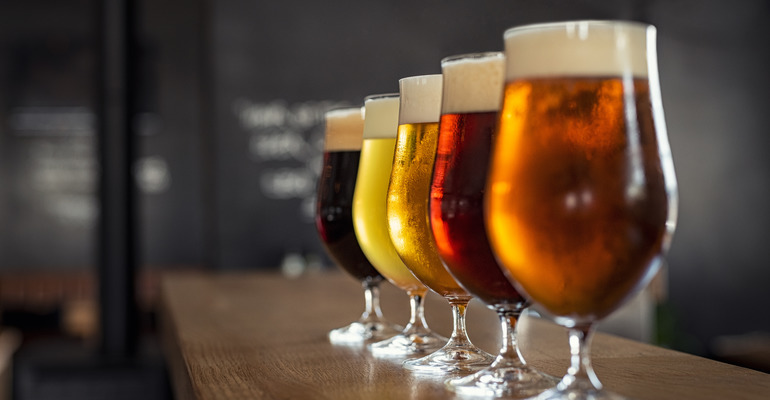
Led by Sotirios Kampranis, professor of biochemical engineering at the University of Copenhagen’s department of plant and environmental sciences, the scientists have engineered baker’s yeast, Saccharomyces cerevisiae, to produce geranyl diphosphate, a precursor of many high-value fragrance and flavours used in the food and cosmetics industries, according to an article published in Nature Biotechnology.
Kampranis and his colleague Simon Dusséaux co-founded a biotech company, EvodiaBio, to commercialise their findings. Dusséaux is the startup’s chief scientific officer while Kampranis holds a board member position.
Kampranis said: “When you remove the alcohol from the beer, for example by heating it up, you also kill the aroma that comes from hops. Other methods for making alcohol-free beer by minimizing fermentation also lead to poor aroma because alcohol is needed for hops to pass their unique flavour to the beer.”
“When the hop aroma molecules are released from yeast, we collect them and put them into the beer, giving back the taste of regular beer that so many of us know and love. It actually makes the use of aroma hops in brewing redundant, because we only need the molecules passing on the scent and flavour and not the actual hops.”
EvodiaBio’s method is already being tested in some Danish breweries in Denmark and the startup hopes to scale up its production to serve the global brewing industry in October 2022.
‘Rescuing’ non-alcoholic beer
The low- and no-alcohol category has exploded in recent years . Four percent of all beers and spirits launched globally in 2021 contained no alcohol at all, according to Innova Market Insight, rising to 7% among flavoured alcoholic beverages. Innova estimates that as much as one third of Generation Z consumers aged 18 to 25 never drink alcohol.
However, taste issues are holding the category back. Nearly one in five UK drinkers who have tried low- or no-alcohol drinks miss the intense and complex flavours of alcohol, according to Mintel.
Tony Hunter, food futurist consultant at Australia-headquartered Future Cubed said EvodiaBio’s synthetic biology process had the potential to “rescue” non-alcoholic beer.
“Non-alcoholic beer rarely tastes like conventionally brewed beer,” he wrote in a recent LinkedIn post. “This is mainly due to the loss of volatile hop flavours from dealcoholisation or lack of a full fermentation to extract hop flavours.
“Now synbio has come to the rescue by genetic engineering yeast to produce ‘small molecules called monoterpenoids’. These are the ingredients which provide the hop flavour in conventional beer. By adding them after the brewing process they add back the flavour lost in dealcoholisation or short fermentation.
“Synthetic biology will fundamentally change our world. From beer to food ingredients to cheese making we’ve barely scratched the surface of what synbio is capable of achieving,” Hunter said.
A more sustainable pint
The Denmark-based researchers say their ingredients could improve the sustainable credentials of beer by reducing the carbon emissions associated with transporting the commodity long distances and related refrigeration needs, and by removing the crop from the equation.
Farmers need around need 2,7 tons of water to grow one kilogram of hops, EvodiaBio said.
“With our method, we skip aroma hops altogether and thereby also the water and the transportation. This means that one kilogram of hops aroma can be produced with more than 10,000 times less water and more than 100 times less CO2,” said Kampranis.
According to data from the FAOSTAT database published by the Food and Agriculture Organization (FAO), three company dominate world production of hops. Ethiopia was the biggest global hops producer in 2020, with a production quantity of 47,323 tonnes, closely followed by the US (47,090t) and Germany (46,900t).

Get more of our news on Google
Set Ingredients Network as a 'Preferred Source' to get quicker access to the news you value.
Related news

Skimpflation: An ‘unfair’ and risky approach to keeping prices low
2 Sep 2026
Consumers see skimpflation – reducing the quality of ingredients due to rising costs – as more unfair than shrinkflation, making it a risky strategy according to recent research.
Read more
NielsenIQ’s EU barometer shows Britain leading in grocery inflation
31 Aug 2026
Britain was the only country to record grocery inflation above 2%, according to NielsenIQ data that compared Europe’s five biggest grocery markets from February to May 2026.
Read more
‘Urgent gaps’ in achieving 2030 food system goals
27 Aug 2026
Global food systems are failing to meet 2030 targets across indicators including health, environment, and resilience, according to a report co-authored by the Food and Agriculture Organisation (FAO).
Read more
China beverages: Is herbal innovation the future?
20 Aug 2026
Herbal and botanical innovation in China's drinks market continues to grow, with ingredients like astragalus root, ginger, and ginseng in the spotlight – and focus shifting far beyond refreshment.
Read more
Popular barbecue staples experience sharp price increases
19 Aug 2026
The typical cost of US shoppers’ barbecue baskets has risen by 12% over the past year – the fastest annual rise in a decade, figures from The Economist show.
Read more
Beyond 'nice to have': A spotlight on US functional beverages
12 Aug 2026
Functional beverage interest in the US is gaining important ground as consumers now expect function rather than see it as "nice to have", and there are clear market gaps for growth, according to Spate.
Read more
Manam Chocolate aims to bring premium Indian cacao to 'the world stage'
11 Aug 2026
Craft chocolate brand Manam Chocolate is investing in local expansion and supply chain innovation throughout India as it works to build out the premium reputation of its locally produced cacao products.
Read more
Digital twin technology gains ground in food manufacturing
6 Aug 2026
Food and beverage companies are increasingly turning to digital twins to optimise and automate manufacturing processes, but opportunities stretch far beyond this, say experts.
Read more
How Secon Taste is putting upcycled snacks on shelves
4 Aug 2026
Hungarian zero-waste startup Secon Taste is turning surplus food into upcycled snacks such as fibre-packed granola, instant porridge, and a circular coffee-tasting box.
Read more
Codex sets global thresholds for ‘may contain’ labels
3 Aug 2026
Codex Alimentarius has adopted its first global guidance on when to use “may contain” allergen warnings, setting thresholds intended to stop the label being used as blanket legal cover.
Read more