
Ingredients Categories
Finished Products
Finished Food Categories
- Bakery
- Beverages / Juices
- Cereal and grain products
- Confectionery
- Cooking Fats & Oils
- Dairy
- Egg products
- Fruits & Vegetables
- Infant & Baby food
- Meat, Poultry & Fish
- Nuts & Seeds products
- Other Finished Food Categories
- Pet Food
- Plant-based foods
- Prepared foods
- Sauces & Seasonings
- Sweet & Savoury Spreads
Specialised Finished Products
- Bee products
- Biotic products
- Dietary supplements
- Energy drinks
- Functional beverages
- Functional confectionery
- Functional food
- Functional powders
- Meal replacement products
- Nutricosmetics
- Other Specialised Finished Products
- Pet Dietary Supplements
- Pharma and OTC products
- Protein products
- Sugar replacers / Sweeteners
Health & Wellness Areas
Delivery Formats
Operations & Services
- 3D printing
- Analysis/ Testing
- Auditing & certifications
- Blending & mixing
- Bottling
- Certification
- Clinical trials
- Co-packing
- Coating
- Consulting
- Contract manufacturing
- Drying
- Electrospinning
- Encapsulating
- Enzymatic processing
- Extracting
- Extrusion
- Fat structuring
- Fermentation
- Filling
- Flavour development
- Freeze drying
- Granulating/ grinding/ milling / mixing
- High-pressure processing
- Labelling
- Other Operations & Services
- Packaging
- Packet filling
- Pasturising
- Quality assurance
- Saccharification
- Shear cell processing
- Spray drying
- Sterilisation
- Storage & Logistics
- Tabletting
- Toasting / roasting
- Ultra-high temperature processing
News
The UK considers new food labelling requirements
Natasha Spencer-Jolliffe, Freelance Journalist 29 Apr 2024The UK government is carrying out a consultation on “fairer and clearer” food labelling designed to provide transparency to consumers and support farmers by recognising their products.
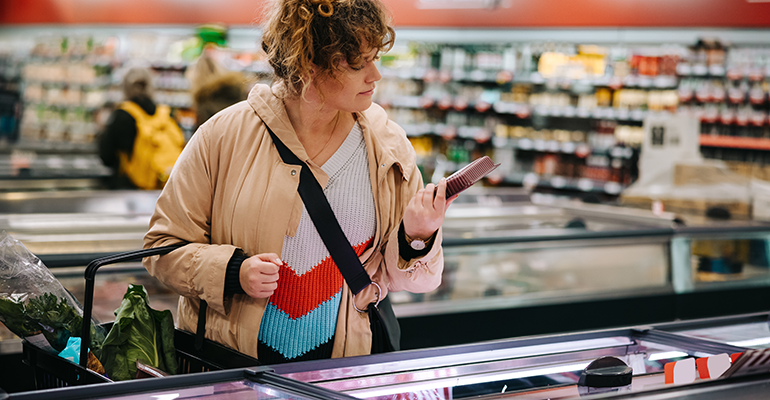
Launching the consultation process on 12 March 2024, Environment Secretary Steve Barclay wants to explore ideas on improving country of origin labelling and proposals to require ‘method of production’ labelling on certain products. The consultation, open until 7 May 2024, aims to support and recognise British farmers’ products and give shoppers more information about how and where their food is produced.
Beyond recently-announced measures
First announced at the Oxford Farming Conference in January 2024, the consultation comes after recently announced measures geared to support farmers and promote fairness in the supply chain.
Recent measures have included announcing new farming grants at the NFU conference in February 2024. Deemed the largest ever grant offer for farmers, they are expected to total £427 million and will include funding for technology and productivity schemes. There is also a proposal for new regulations to ensure fair and transparent contracts for dairy farmers.
Calls for clearer labelling
“Creating fairer labels that back British farmers is vital for the UK economy,” the UK government says. British farmers produce approximately 60% of the food consumers in the UK eat. The UK government adds that the nation’s agri-food and seafood sectors produce over £120 billion of value for the economy every year and employ more than four million people.
The current consultation aims to enhance the country of origin labelling for specific goods by evaluating the manner and location of displaying this information and determining the products to be included. Retailers are exploring whether this could be achieved by increasing the size of the country-of-origin text or placing it on the front of the packet.
For instance, if pork is imported and cured into bacon in the UK, and the packaging features a Union Jack, the consultation explores ways to make it more apparent to consumers that the pig was reared abroad.
Proposed by the UK’s environment secretary, the government is seeking opinions on different ways to update product labelling. The areas they are gathering insights on include mandatory origin labelling for minimally processed meat products such as bacon, increasing visibility of origin labelling, including mandatory origin labelling for certain foods in the out-of-home sector, and providing greater control of the use of national flags on labels.
Labels to indicate product origin
Current considerations also revolve around suggestions to include a requirement for ‘method of production’ labelling specifically for pork, chicken, and eggs. The plan is to implement a mandatory five-tier labelling system for domestic and imported products. They would relate to all unprocessed pork, chicken, and eggs and certain pre-packed and loose minimally processed products with pork, chicken, or egg.
“Food labels must be clear, simple and contain accurate information, including country of origin, to give shoppers easy access to the information they want and for those that want to, select products produced by British farmers and growers which they know are traceable, safe and produced to high animal welfare and environmental standards,” David Exwood, deputy president at NFU Mutual (National Farmers Union), a UK insurance composite, told Ingredients Network.
“Those eating out-of-home should also understand the provenance and standards with which their food is produced.”
The proposed ‘method of production’ labelling system will differentiate between products that fall below, meet and exceed relevant baseline UK animal welfare regulations.
Dairy, beef, and sheep meat labelling will be kept under review, subject to further consultation. In addition, the UK government is looking for general labelling insights regarding seafood.
Insufficient on its own?
“However, labelling on its own is not the answer to safeguarding our own high standards from imports that are produced under conditions that would be illegal in the UK,” Exwood says.
“That is why one of our asks in our election manifesto calls on the next government to enshrine a set of core environmental and animal welfare standards in law for all agri-food imports,” Exwood adds.
The NFU’s election manifesto, Farming for Britain’s Future, sets out the insurance group’s key points. It highlights how it aims to ensure the next government enables farmers and growers to continue delivering for the environment, economy and local communities while producing more food from the UK.
“The NFU will look closely at this consultation and seek the views of our members before responding,” Exwood says.

Get more of our news on Google
Set Ingredients Network as a 'Preferred Source' to get quicker access to the news you value.
Related news

M&S launches own-brand pet food range
11 Sep 2026
UK retailer Marks & Spencer has launched its own-brand pet food line Paws & Pals – a well-timed and strategic move that will appeal to loyal shoppers, says a marketing expert.
Read more
Do the US dietary guidelines put UPFs under pressure?
10 Sep 2026
Will the US dietary guidelines change the way Americans eat, swapping ultra-processed foods for whole foods? We asked Dr Barry Popkin, renowned nutrition and obesity researcher.
Read more
Food fraud costs UK economy £2bn each year
9 Sep 2026
Food fraud is costing the UK economy up to £2 billion (€2.3 billion) every year although the food sector is more “resilient” than others, according to a recent study.
Read more
Kellogg accelerates work to remove artificial colours from all US cereals
3 Sep 2026
WK Kellogg has announced an accelerated timeline to eliminate all artificial colours and the chemical preservative, BHT, across its full US portfolio of cereals and cereal packaging.
Read more
‘Urgent gaps’ in achieving 2030 food system goals
27 Aug 2026
Global food systems are failing to meet 2030 targets across indicators including health, environment, and resilience, according to a report co-authored by the Food and Agriculture Organisation (FAO).
Read more
Chimac’s fusion sauces bring Korean flavours to Europe
25 Aug 2026
Irish sauce brand Chimac is tapping into Korea’s culinary traditions, bringing its flavours and products to European consumers who want a taste of K-food.
Read more
Savoury protein snacks shake up the on-the-go market
10 Aug 2026
Sweet flavours have dominated the high-protein snack category but savoury snacks, such as cheese bars and meat sticks, can appeal to health-conscious consumers.
Read more
Nestlé invests in regeneratively farmed wheat for KitKat
5 Aug 2026
Nestlé will pay a premium for Wildfarmed’s regeneratively farmed wheat but the CPG remains reticent to promote the move on packs of its KitKat bars.
Read more
How Secon Taste is putting upcycled snacks on shelves
4 Aug 2026
Hungarian zero-waste startup Secon Taste is turning surplus food into upcycled snacks such as fibre-packed granola, instant porridge, and a circular coffee-tasting box.
Read more
Codex sets global thresholds for ‘may contain’ labels
3 Aug 2026
Codex Alimentarius has adopted its first global guidance on when to use “may contain” allergen warnings, setting thresholds intended to stop the label being used as blanket legal cover.
Read more