
Ingredients Categories
Finished Products
Finished Food Categories
- Bakery
- Beverages / Juices
- Cereal and grain products
- Confectionery
- Cooking Fats & Oils
- Dairy
- Egg products
- Fruits & Vegetables
- Infant & Baby food
- Meat, Poultry & Fish
- Nuts & Seeds products
- Other Finished Food Categories
- Pet Food
- Plant-based foods
- Prepared foods
- Sauces & Seasonings
- Sweet & Savoury Spreads
Specialised Finished Products
- Bee products
- Biotic products
- Dietary supplements
- Energy drinks
- Functional beverages
- Functional confectionery
- Functional food
- Functional powders
- Meal replacement products
- Nutricosmetics
- Other Specialised Finished Products
- Pet Dietary Supplements
- Pharma and OTC products
- Protein products
- Sugar replacers / Sweeteners
Health & Wellness Areas
Delivery Formats
Operations & Services
- 3D printing
- Analysis/ Testing
- Auditing & certifications
- Blending & mixing
- Bottling
- Certification
- Clinical trials
- Co-packing
- Coating
- Consulting
- Contract manufacturing
- Drying
- Electrospinning
- Encapsulating
- Enzymatic processing
- Extracting
- Extrusion
- Fat structuring
- Fermentation
- Filling
- Flavour development
- Freeze drying
- Granulating/ grinding/ milling / mixing
- High-pressure processing
- Labelling
- Other Operations & Services
- Packaging
- Packet filling
- Pasturising
- Quality assurance
- Saccharification
- Shear cell processing
- Spray drying
- Sterilisation
- Storage & Logistics
- Tabletting
- Toasting / roasting
- Ultra-high temperature processing
News
Unilever ups investment in more efficient logistics to make retailer interaction simpler
Simon Pitman, Freelance Journalist 8 Oct 2024Unilever says that the rollout of its new ‘direct dispatch’ logistical model to ship products from factories to retail customers has demonstrated significant improvements across several operational efficiencies.
Targeting its end-to-end supply chain, the company says that the new system helps to cut travel time and distance, while reducing touchpoints, improving the carbon footprint, and providing an enhanced and speedier service for its retail customers.
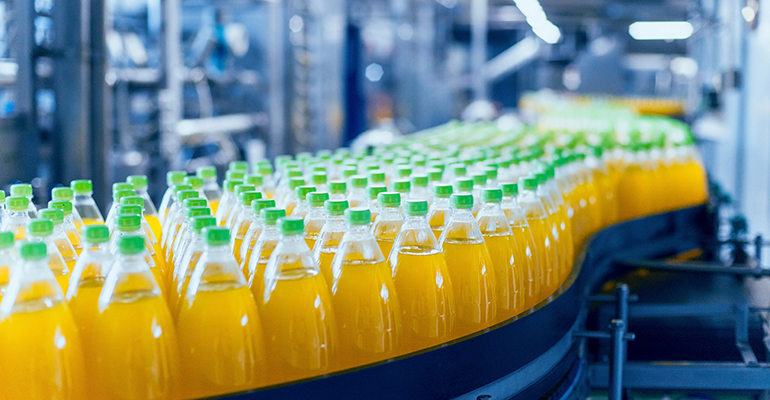
The company says that the rollout—currently underway in Europe, Northern Asia, Indonesia, and Southeast Asia—is just beginning and will be significantly expanded worldwide over the next few years.
Although direct dispatch is not entirely new to Unilever, evidence of its advantages has led to a wider rollout. In 2018 an estimated 8% of its deliveries relied on direct dispatch, with current estimates at 16%, and the projected uptake forecast to hit over 25% by 2026.
Direct dispatch meant a complete redesign of the old dispatch system
The conventional logistics system used by Unilever shifts products onto pallets via a distribution centre. This entails loading and unloading, as well as organising and storing before the products are then shipped to retailers. This invariably results in using a wide mix of products across different categories that meet retailers’ exact needs.
However, Unilever’s logistic team realised that several product categories are better suited to direct dispatch, distributing straight from the factory to the retailer. The benefits are numerous, including savings in fuel and energy to cut carbon emissions, with the added bonus of reduced delivery time, giving perishable products a longer retail shelf-life.
“Direct dispatch is a way for us to increase efficiencies in our end-to-end supply chain and help deliver on the cost savings and sustainability aspects of our Growth Action Plan,” said Michael O’Connor, home care global supply chain strategy & long-term planning manager, at Unilever.
The model is best suited to larger retailers and bulkier products
Unilever says the viability of the direct dispatch depends on sending full shipments of just one or two product lines from the factory to larger-scale retailer outlets. Equally, it is best suited to bulkier items, which means retailers could order one batch of boxed cereal in just one delivery truck, in turn filling the stock and store shelves rapidly and efficiently.
The sustainability benefits are mainly focused on energy savings, with truck fuel being amongst the biggest savings. All of this contributes to a significant reduction in greenhouse gas emissions and the overall carbon footprint of Unilever's supply chain.
“This is about finding what works best for each customer and tailoring the solution accordingly, whether it’s direct dispatch or a traditional model,” said O’Connor. “We’re constantly evaluating more sites and routes all over the world and, where it makes sense, implementing at speed. Each one we add to the list is another step in our logistics operation becoming more efficient, productive, and sustainable.”
Unilever has streamlined the business to enhance its logistical operations
Unilever’s June 2023 Supply Chain Report highlights the huge extent of the multinational supply chain, which is estimated to include around 52,000 suppliers and extends to a total investment of €43.2 billion. Of that total spend, 7% is attributed to logistics and operational costs, the equivalent of just over €3 billion.
In recent years the company has implemented several initiatives to help boost efficiency and make its processes more eco-friendly. Many of those improvements have come about from digital innovations and processes with these goals in mind.
The biggest changes have included the move away from a matrix operation to make the logistical processes more streamlined. This move saw the company split into better-defined business groups that include Beauty & Wellbeing, Personal Care, Home Care, Nutrition, and Ice Cream.
The shakeup also saw the company’s supply chain and IT divisions united under Unilever Business Operations, to support logistics on a global scale while also enhancing operational efficiencies.

Get more of our news on Google
Set Ingredients Network as a 'Preferred Source' to get quicker access to the news you value.
Related news

Do the US dietary guidelines put UPFs under pressure?
10 Sep 2026
Will the US dietary guidelines change the way Americans eat, swapping ultra-processed foods for whole foods? We asked Dr Barry Popkin, renowned nutrition and obesity researcher.
Read more
Skimpflation: An ‘unfair’ and risky approach to keeping prices low
2 Sep 2026
Consumers see skimpflation – reducing the quality of ingredients due to rising costs – as more unfair than shrinkflation, making it a risky strategy according to recent research.
Read more
‘Urgent gaps’ in achieving 2030 food system goals
27 Aug 2026
Global food systems are failing to meet 2030 targets across indicators including health, environment, and resilience, according to a report co-authored by the Food and Agriculture Organisation (FAO).
Read more
Seven-Eleven uses microbial testing tech to extend katsudon shelf life
26 Aug 2026
Japanese retail company Seven-Eleven has improved its factory’s microbial environment to keep comfort-food staple, katsudon, fresher for longer.
Read more
Chimac’s fusion sauces bring Korean flavours to Europe
25 Aug 2026
Irish sauce brand Chimac is tapping into Korea’s culinary traditions, bringing its flavours and products to European consumers who want a taste of K-food.
Read more
Global demand for instant noodles continues to rise
24 Aug 2026
Global demand for instant noodles reached 124.21 billion servings last year, representing a 0.7% year-on-year increase – or 900 million extra servings.
Read more
China beverages: Is herbal innovation the future?
20 Aug 2026
Herbal and botanical innovation in China's drinks market continues to grow, with ingredients like astragalus root, ginger, and ginseng in the spotlight – and focus shifting far beyond refreshment.
Read more
Popular barbecue staples experience sharp price increases
19 Aug 2026
The typical cost of US shoppers’ barbecue baskets has risen by 12% over the past year – the fastest annual rise in a decade, figures from The Economist show.
Read more
Hot NPD: Nissin launches first cold-water Cup Noodles
18 Aug 2026
Nissin is taking one of Japan’s most iconic instant meals in a completely new direction with the launch of the first cold water-only Cup Noodles in the brand’s 55-year history.
Read more
Manam Chocolate aims to bring premium Indian cacao to 'the world stage'
11 Aug 2026
Craft chocolate brand Manam Chocolate is investing in local expansion and supply chain innovation throughout India as it works to build out the premium reputation of its locally produced cacao products.
Read more