
Ingredients Categories
Finished Products
Finished Food Categories
- Bakery
- Beverages / Juices
- Cereal and grain products
- Confectionery
- Cooking Fats & Oils
- Dairy
- Egg products
- Fruits & Vegetables
- Infant & Baby food
- Meat, Poultry & Fish
- Nuts & Seeds products
- Other Finished Food Categories
- Pet Food
- Plant-based foods
- Prepared foods
- Sauces & Seasonings
- Sweet & Savoury Spreads
Specialised Finished Products
- Bee products
- Biotic products
- Dietary supplements
- Energy drinks
- Functional beverages
- Functional confectionery
- Functional food
- Functional powders
- Meal replacement products
- Nutricosmetics
- Other Specialised Finished Products
- Pet Dietary Supplements
- Pharma and OTC products
- Protein products
- Sugar replacers / Sweeteners
Health & Wellness Areas
Delivery Formats
Operations & Services
- 3D printing
- Analysis/ Testing
- Auditing & certifications
- Blending & mixing
- Bottling
- Certification
- Clinical trials
- Co-packing
- Coating
- Consulting
- Contract manufacturing
- Drying
- Electrospinning
- Encapsulating
- Enzymatic processing
- Extracting
- Extrusion
- Fat structuring
- Fermentation
- Filling
- Flavour development
- Freeze drying
- Granulating/ grinding/ milling / mixing
- High-pressure processing
- Labelling
- Other Operations & Services
- Packaging
- Packet filling
- Pasturising
- Quality assurance
- Saccharification
- Shear cell processing
- Spray drying
- Sterilisation
- Storage & Logistics
- Tabletting
- Toasting / roasting
- Ultra-high temperature processing
News
Value-seeking US consumers cut back on food spending
2 Jan 2023
Cheaper items, smaller sizes, and shorter grocery lists: inflationary effects coupled with a global long-term recession are set to continue shaping food spending habits, according to a recent Rabobank report.
According to a report by RaboResearch Food & Agribusiness, global events over the last 12 months have caused a shift in focus to value, as grocery discounters and warehouse clubs report a surge in popularity.

“Summer marked the start of a challenging trend for many retailers as post-Covid excitement waned and consumers increasingly sought value and affordability among rising prices and deteriorating consumer sentiment,” commented the report’s authors, JP Frossard and Thomas Bailey.
“Inflation is set to remain a problem into 2023. Therefore, we should expect similar spending behaviour to continue for some time.”
Retail acquisitions point to private label opportunities
The report pointed to moves made by the retail industry to meet consumers’ demand for value and affordability.
The authors cited Kroger’s bid to buy Albertsons as a way to generate “significant synergies” in private label brands, vertically integrated manufacturing, and shoring-up of technologies for digital engagement.
Kroger is the second-largest grocer by US market share after Walmart while Albertsons is fourth behind Costco. The deal would inevitably close the gap between Walmart and Kroger.
The $24.6bn (€23.7bn) purchase also adds to Kroger’s online presence as consumers switch between visiting store aisles, ordering home deliveries and curbside pickup.
Report illustrates shifting US consumer habits
In comparison’s to RaboResearch’s July report (The Earnest Files: Inflation Edition), this latest analysis provided further evidence of shifting consumer habits in the US.
The report noted that online groceries were the only subcategory to increase their average transaction size in the quarter (+1% September vs. June).
 © AdobeStock/terovesalainen
RaboResearch noted the increase was a continuation of an upward trajectory seen throughout the year. In absolute terms, average online transaction sizes were second only to those of warehouse clubs. However, order frequency has consistently dropped since April 2022, after a steady 2021.
In terms of total spending, discount grocers and warehouse clubs continued to have the strongest growth amid Q3’s heavy inflation environment.
Discounters have experienced solid growth in visits over the past six months (+6% YOY) as consumers look for value, the report highlighted. Warehouse clubs followed as the only other retailer subcategory with gains in visits (+5%), although growth was lower than in the first half of the year.
Meanwhile online, premium & natural, and big box stores – in that order – have been impacted the most.
Transactions at physical grocery stores decreased 2% in September compared to September 2021, when Covid restrictions were still in place.
Economising on groceries to cope in current climate
In addition to focus on value, the third quarter saw consumers prefer lower-priced items, cut out items from shopping lists, and selected smaller sizes.
 © AdobeStock/SkyLine
Frossard and Bailey noted anecdotally that they have heard retailers shifting formats to smaller, more affordable sizes. Consequently, the average transaction was $62.98 (€60.46) in September, from $63.75 (€61.19) in June.
“This 1.2% decline comes despite a 2.8% inflation in that period,” the report stated. “Higher prices typically mean higher average transactions, but the current rate at which consumers are cutting spending is more than offsetting these higher prices.”
Other findings revealed that discount grocers had the lowest drop in basket size in the quarter (-0.4%). This category had with the highest increase year-on-year (+11% vs. September 2021).
“These numbers show discounter clients manage to keep items on their shopping lists,” the report said. “On the other extreme of the value-proposition range, premium & natural stores grew baskets by only 1% in the year.”

Get more of our news on Google
Set Ingredients Network as a 'Preferred Source' to get quicker access to the news you value.
Related news

Skimpflation: An ‘unfair’ and risky approach to keeping prices low
2 Sep 2026
Consumers see skimpflation – reducing the quality of ingredients due to rising costs – as more unfair than shrinkflation, making it a risky strategy according to recent research.
Read more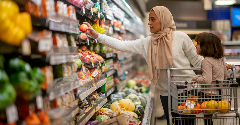
NielsenIQ’s EU barometer shows Britain leading in grocery inflation
31 Aug 2026
Britain was the only country to record grocery inflation above 2%, according to NielsenIQ data that compared Europe’s five biggest grocery markets from February to May 2026.
Read more
‘Urgent gaps’ in achieving 2030 food system goals
27 Aug 2026
Global food systems are failing to meet 2030 targets across indicators including health, environment, and resilience, according to a report co-authored by the Food and Agriculture Organisation (FAO).
Read more
China beverages: Is herbal innovation the future?
20 Aug 2026
Herbal and botanical innovation in China's drinks market continues to grow, with ingredients like astragalus root, ginger, and ginseng in the spotlight – and focus shifting far beyond refreshment.
Read more
Popular barbecue staples experience sharp price increases
19 Aug 2026
The typical cost of US shoppers’ barbecue baskets has risen by 12% over the past year – the fastest annual rise in a decade, figures from The Economist show.
Read more
Beyond 'nice to have': A spotlight on US functional beverages
12 Aug 2026
Functional beverage interest in the US is gaining important ground as consumers now expect function rather than see it as "nice to have", and there are clear market gaps for growth, according to Spate.
Read more
Manam Chocolate aims to bring premium Indian cacao to 'the world stage'
11 Aug 2026
Craft chocolate brand Manam Chocolate is investing in local expansion and supply chain innovation throughout India as it works to build out the premium reputation of its locally produced cacao products.
Read more
Digital twin technology gains ground in food manufacturing
6 Aug 2026
Food and beverage companies are increasingly turning to digital twins to optimise and automate manufacturing processes, but opportunities stretch far beyond this, say experts.
Read more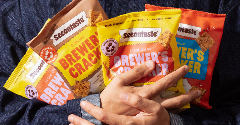
How Secon Taste is putting upcycled snacks on shelves
4 Aug 2026
Hungarian zero-waste startup Secon Taste is turning surplus food into upcycled snacks such as fibre-packed granola, instant porridge, and a circular coffee-tasting box.
Read more
Codex sets global thresholds for ‘may contain’ labels
3 Aug 2026
Codex Alimentarius has adopted its first global guidance on when to use “may contain” allergen warnings, setting thresholds intended to stop the label being used as blanket legal cover.
Read more