
Ingredients Categories
Finished Products
Finished Food Categories
- Bakery
- Beverages / Juices
- Cereal and grain products
- Confectionery
- Cooking Fats & Oils
- Dairy
- Egg products
- Fruits & Vegetables
- Infant & Baby food
- Meat, Poultry & Fish
- Nuts & Seeds products
- Other Finished Food Categories
- Pet Food
- Plant-based foods
- Prepared foods
- Sauces & Seasonings
- Sweet & Savoury Spreads
Specialised Finished Products
- Bee products
- Biotic products
- Dietary supplements
- Energy drinks
- Functional beverages
- Functional confectionery
- Functional food
- Functional powders
- Meal replacement products
- Nutricosmetics
- Other Specialised Finished Products
- Pet Dietary Supplements
- Pharma and OTC products
- Protein products
- Sugar replacers / Sweeteners
Health & Wellness Areas
Delivery Formats
Operations & Services
- 3D printing
- Analysis/ Testing
- Auditing & certifications
- Blending & mixing
- Bottling
- Certification
- Clinical trials
- Co-packing
- Coating
- Consulting
- Contract manufacturing
- Drying
- Electrospinning
- Encapsulating
- Enzymatic processing
- Extracting
- Extrusion
- Fat structuring
- Fermentation
- Filling
- Flavour development
- Freeze drying
- Granulating/ grinding/ milling / mixing
- High-pressure processing
- Labelling
- Other Operations & Services
- Packaging
- Packet filling
- Pasturising
- Quality assurance
- Saccharification
- Shear cell processing
- Spray drying
- Sterilisation
- Storage & Logistics
- Tabletting
- Toasting / roasting
- Ultra-high temperature processing
News
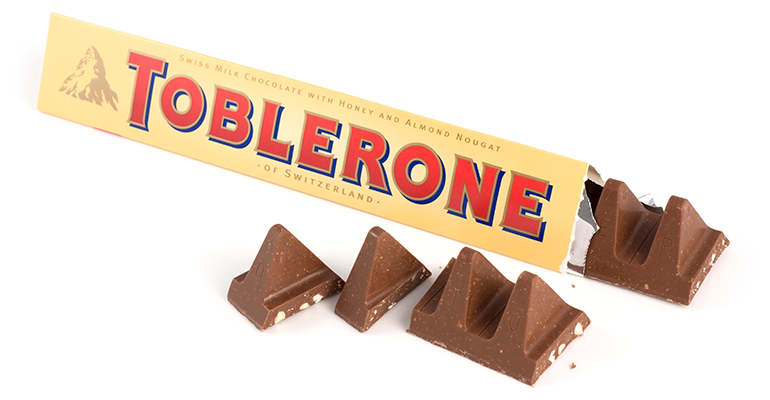
What does Toblerone’s shape lawsuit mean for challenger brands?
Tessa Wiles, Content Editor - Food 9 Nov 2026Mondelēz has sued a vegan chocolate brand over the shape of its bar. Two IP lawyers explain what this kind of case means for brands building around distinctive shapes.
Mondelēz International, the American multinational confectionery, food, beverage, and snack company, and owner of chocolate brands including Toblerone, Cadbury, and Milka, has taken a small vegan chocolate brand, Catherine’s Originals, to the High Court in London, alleging trademark infringement and “passing off”.
At a glance:
- Both lawyers recommend brands carry out clearance searches before launch, covering shape, packaging, and appearance.
- If copying can be proven in court, even significant differences in shape might not matter, one lawyer said.
- Large brands are entitled to protect IP. Size “doesn't determine whether the claim is justified”, an attorney said.
Maria Mohonea, trademark and design attorney at London law firm Barnes Law, said: “In short, trademark infringement protects registered rights, while passing off protects the goodwill a business has built up through trading.”
The O’bar, a 200-gram chocolate bar, is one of several products in Catherine’s Originals portfolio. The brand, founded by Catherine Dodd in 2021, sells a range of vegan chocolate online, via subscriptions, and through markets.
While Toblerone has triangular peaks, the O’bar is divided into break-apart, semi-oval segments. The 200g O’bar retails for £9.20, whereas a standard 200g milk chocolate Toblerone retails for around £2.50.
Mondelēz International, in a statement on 29 October, said: “The iconic Toblerone shape is one of the most recognised and distinctive product designs in the UK and across the world, and has been a hallmark of the brand since 1929.”
It said that while it had attempted to “resolve this matter constructively and directly with Catherine’s Originals over several months” it had been unable to reach an agreement.
Dodd, speaking to the Guardian, said: “We strongly disagree with the claim concerning O’bar and are working with our legal team to defend our position. Honestly, it’s fairly frightening for a small business we’ve put so much care and hard work into building. But being a smaller business does not mean being afraid to stand up for what we’ve created.”
What should brands do if they find themselves in a similar situation?
Ingredients Network spoke with two lawyers specialising in intellectual property (IP) about what this case means for brands who have built (or are thinking about building) products around distinctive shapes, and what to do if they find themselves in a similar situation.
Before cases like this head to court, a brand often receives a legal letter from the claimant setting out the basis of the claim, a summary of the facts, and what it is requesting the brand to do.
Asked what a brand should do if such a letter arrives in the mail, Peter Vaughan, associate professor at Nottingham Law School and practising chartered trademark attorney, said: “First, don’t panic. Second, don’t ignore it.”
What does a trademark infringement and passing off need to prove?
While passing off doesn’t require a trademark registration, Mohonea said, “Mondelēz would need to show that it has goodwill associated with Toblerone’s appearance, that the O’bar misleads or is likely to mislead consumers into thinking there’s a connection, and that this causes or is likely to cause damage to its goodwill”.
Vaughan said that famous trademarks such as those that are instantly recognisable or have a “reputation” can enjoy additional protection.
“In that instance, it is possible [for Mondelēz] to try and claim not that there is confusion, but that due to similarities between the two, in this instance, shapes, consumers would make a link and that this could benefit the smaller brand by having some of that reputation rub off on it,” he said.
Vaughan added that while there are several differences between trademark infringement and passing off, by alleging both, “Mondelēz has taken a broad brush approach to its action, effectively covering all bases and making for daunting reading to a small business.”
‘Should a large company be criticised simply for protecting its intellectual property?’
Mohonea said: “It’s very easy to look at this as a David versus Goliath situation, but should a large company be criticised simply for protecting its intellectual property?”
“Mondelēz has spent decades building Toblerone into a recognisable brand, and it has every right to protect that investment. The fact that Catherine's Originals is a smaller business doesn't determine whether the claim is justified,” she added.
If copying can be proven, significant differences like shape might not matter
Vaughan explained that if copying is involved, and if it can be proven, then significant differences, like the shape of the segments, might not matter.
“The question is whether a consumer sees the O’bar and makes a link with the Toblerone bar or is confused into believing a connection between the brands in a way that infringes,” he said.
Mohonea added: “The court won’t just ask whether both are long bars broken into pieces. It will consider the overall impression created by the registered mark and the O’bar, paying particular attention to the features that make the mark distinctive.”
Vaughan explained that having to argue all of this about the shape of a product makes the argument more complicated and “Mondelēz may well face a number of hurdles in seeking to make out its claim”.
Mondelēz has issued its claim in a court that does not enforce financial caps
Legal proceedings in the UK can be costly, depending on the complexity of a case and other factors including cost of representation and the specific court chosen for proceedings.
“The cost of litigation like this can run into the tens of thousands, if not hundreds of thousands of pounds,” Vaughan said.
Mohonea explained that Mondelēz’s claim was issued in the High Court's main Intellectual Property List, and not the Intellectual Property Enterprise Court (IPEC), which has a more streamlined procedure and caps on recoverable costs.
“There may be perfectly good reasons for that,” Mohonea said. “Depending on the complexity and value of the claim, but it does increase the potential financial exposure for a smaller business.”
As a comparison, in civil procedures such as this, IPEC has a scale cost cap of £60,000 for liability, and £30,000 for an inquiry as to damages. The High Court’s main Intellectual Property list enforces no financial caps.
“For a small business, litigation can be very expensive, and it's not just the legal fees. A High Court case can take a year or more to reach trial, and during that time the founder may be dealing with lawyers and preparing evidence rather than focusing on running the business,” Mohonea said.
Vaughan added that large brands will often be aware of this operational pressure.
He said: “It can be a tactic to try and resolve matters quickly. These cost and time pressures can be difficult to bear, and therefore some will choose to go quietly and quickly.”
Clearance checks before launching a product are recommend
Before launching a brand with a distinctively shaped product, there are several steps small brands can take.
Vaughan recommended brands keep records of their design process and ask themselves why they came up with the shape.
“If you can show that it was unrelated to another party, that might, in some situations, help,” he said.
Next, before launching, he advised brands to take these records to a lawyer experienced in trademarks.
Both Vaughan and Mohonea recommended clearance checks pre-launch.
Mohonea said: “I'd always recommend carrying out clearance searches before launching, and not just for the brand name or logo.
“The product's shape, packaging and overall appearance are just as important, particularly when you're entering a market with established brands. And if you've created something genuinely new, consider whether you can protect it through a registered design.”
These steps should help to reduce the risk of accusations of trademark infringement and passing off.
If a brand does receive a letter, Vaughan advised against disregarding it in the hope it will go away.
“This might force the big brand owner to escalate and file court action, when they were hoping it might be possible to come to an agreement,” he said.
“Several organisations offer, or can connect you with lawyers who offer, free (pro bono) advice. Even if this is on a one-off basis, the lawyer may be able to help you understand the claim and what the other side wants. It gives the letter a fresh pair of eyes and, importantly, may give you options,” Vaughan added.

Get more of our news on Google
Set Ingredients Network as a 'Preferred Source' to get quicker access to the news you value.
Related news

Could dropping several products make an entire food portfolio healthier and more sustainable?
5 Nov 2026
Researchers found that for some UK food manufacturers, swapping 10% or less of product lines could deliver more than 50% of potential nutritional quality or sustainability gains.
Read more
How manufacturers can reduce food loss in factory operations
4 Nov 2026
Small factory inefficiencies can send valuable ingredients down the drain, resulting in losses and prompting the sector to audit its waste-reduction methods. What solutions exist?
Read more
UK private label market ‘at its strongest yet’
2 Nov 2026
The UK's private label market is strong, but future success relies on smart own-label product design, innovative launches, and strong storytelling, says a marketing expert.
Read more
Organic for all: European retailers expand organic ranges and cut prices
29 Oct 2026
The organic category has “huge potential” in the UK, says premium retailer M&S, as Lidl also expands its range and reduces prices in Denmark.
Read more
Pressure grows on UK-EU SPS deal that promises price drops
27 Oct 2026
A new Sanitary and Phytosanitary (SPS) agreement could cut red tape and reduce costs, reviving agri-food trade between the UK and EU – but there are headaches on the horizon.
Read more
Manufacturers face volatility as food prices near four-year high
21 Oct 2026
Commodity pressures are mounting with the Food and Agriculture Organization’s (FAO) Food Price Index reaching its highest level since 2022.
Read more
Meet the finalists of the Fi Europe Innovation Awards 2026
14 Oct 2026
Which companies made the shortlist of the Fi Europe Innovation Awards 2026? Read on to find out who will be competing to win first prize in each category in November.
Read more
Brazil pushes forward on restricting ultra-processed foods
14 Oct 2026
The Brazilian government is pushing ahead with its proposal calling on the World Health Organization (WHO) to restrict the marketing of ultra-processed foods – a move causing a mixed response.
Read more
EU considers extending mandatory country-of-origin labelling
13 Oct 2026
The EU is considering expanding mandatory country-of-origin labelling to more food categories, but the scope of the potential rules remains undefined.
Read more
Tesco restricts or bans over 100 additives in UPF reformulation response
7 Oct 2026
Consumer concerns over ultra-processed foods have led Tesco, one of the world’s largest supermarkets, to ban or restrict 114 additives from its own-brand products.
Read more