
Ingredients Categories
Finished Products
Finished Food Categories
- Bakery
- Beverages / Juices
- Cereal and grain products
- Confectionery
- Cooking Fats & Oils
- Dairy
- Egg products
- Fruits & Vegetables
- Infant & Baby food
- Meat, Poultry & Fish
- Nuts & Seeds products
- Other Finished Food Categories
- Pet Food
- Plant-based foods
- Prepared foods
- Sauces & Seasonings
- Sweet & Savoury Spreads
Specialised Finished Products
- Bee products
- Biotic products
- Dietary supplements
- Energy drinks
- Functional beverages
- Functional confectionery
- Functional food
- Functional powders
- Meal replacement products
- Nutricosmetics
- Other Specialised Finished Products
- Pet Dietary Supplements
- Pharma and OTC products
- Protein products
- Sugar replacers / Sweeteners
Health & Wellness Areas
Delivery Formats
Operations & Services
- 3D printing
- Analysis/ Testing
- Auditing & certifications
- Blending & mixing
- Bottling
- Certification
- Clinical trials
- Co-packing
- Coating
- Consulting
- Contract manufacturing
- Drying
- Electrospinning
- Encapsulating
- Enzymatic processing
- Extracting
- Extrusion
- Fat structuring
- Fermentation
- Filling
- Flavour development
- Freeze drying
- Granulating/ grinding/ milling / mixing
- High-pressure processing
- Labelling
- Other Operations & Services
- Packaging
- Packet filling
- Pasturising
- Quality assurance
- Saccharification
- Shear cell processing
- Spray drying
- Sterilisation
- Storage & Logistics
- Tabletting
- Toasting / roasting
- Ultra-high temperature processing
News
Organic for all: European retailers expand organic ranges and cut prices
David Burrows, Freelance Journalist 29 Oct 2026The organic category has “huge potential” in the UK, says premium retailer M&S, as Lidl also expands its range and reduces prices in Denmark.
Marks & Spencer (M&S) is investing £4m (€4.74m) to lower prices on more than 50 organic products as the UK retailer looks to tap into the growing popularity of the products.
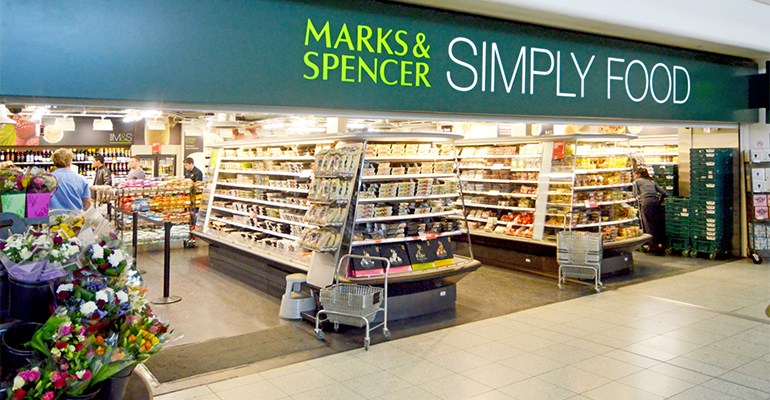
At a glance:
- M&S is investing £4m (€4.74m) in its organic range and lowering prices to make the category “more accessible”.
- Discounter Lidl is offering organic food at an affordable price in Denmark.
- The UK government has launched an organic action plan for England, aiming to triple organic production and reduce reliance on organic imports.
According to Worldpanel, the UK organic market is growing 4.4% year-on-year. More than a third of M&S customers say they buy more organic food than they did five years ago.
The upmarket retailer is aiming to double its share of the market “by making products more affordable and accessible without compromising on quality”. In larger, newer foodhalls, M&S is rolling out multi-temperature zones for organic food so consumers can shop frozen, chilled, and store cupboard organic food in one place.
“Organic is a category with huge potential,” said Alex Freudmann, managing director of M&S Food. He said the investment was “another important step in making M&S accessible to more customers while supporting our ambition to grow the food business".
Organic produce seen as natural and chemical-free
Other UK supermarkets — notably Tesco, the country’s largest supermarket chain — have also been expanding their organic ranges as shoppers look for “natural” products that are free from chemicals.
In Europe, supermarkets are also making efforts to ensure organic food is more accessible to a wider range of consumers. “We want to make it easier for Danes to make room for organics in everyday life, and here price plays an important role,” Lidl Denmark purchasing director Peer Sandtner told The Copenhagen Post in October.
Research by price-monitoring service Madprisluppen showed Lidl offers the lowest prices on a selected basket of organic groceries among seven Danish supermarket chains. A basket containing 22 organic products cost 355.20 DKK (€47.5) at the discounter, compared to 449.60 DKK (€60.1) at Meny, the most expensive chain in the comparison.
According to the latest figures (for 2024) published in February in ‘The World of Organic Agriculture: Statistics and Emerging Trends 2026’, Germany remained the largest organic market in Europe (€17bn), followed by France (€12.2bn) and Italy (€5.2bn).
Europe’s organic retail sales reached €58.7bn (European Union (EU) only €49.5bn), increasing by 4.1% in Europe (and 3.6% in the EU). Switzerland recorded the highest per capita consumption worldwide at €481 per person and the highest organic market share worldwide at 12.3% of total food sales.
In 2024, the EU imported approximately 2.64 million tonnes of organic agri-food products, with the Netherlands, Germany, and Belgium the largest importers by volume; Ecuador remained the leading supplier, and tropical fruit – especially bananas – dominated import volumes.
At October’s European Organic Congress, European Commission president Ursula von der Leyen and commissioner for agriculture and food Christophe Hansen highlighted organic’s contribution to Europe’s resilience and the importance of sustained policy support and investment to realise its potential.
Public procurement, shorter supply chains and retail partnerships could all help bring organic food to more tables, attendees heard, while affordability should go “hand in hand” with fair returns for farmers and processors, supported by transparency along the value chain, noted IFOAM Organics Europe in a summary of the event.
UK government launches Organic Action Plan
In October, the UK government published an Organic Action Plan for England (OAPE). Pitched as a joint initiative between the Department for Environment Food and Rural Affairs (DEFRA) and organic industry, the plan focuses on three areas:
● Supporting existing and new organic producers and processors;
● Bringing domestic supply more in line with demand; and
● Building demand for English organic products through greater consumer awareness and public sector procurement.
The plan also sets out ways to improve supply chains, putting “more organic products more swiftly” on supermarket shelves and into restaurants, as well as opening up new markets in the UK and abroad.
The plan includes “an ambition” to increase the share of agricultural land farmed organically from around 3.4% “towards 10%” by 2036. The target was welcomed, though it will need to be adequately funded, noted policy experts.
Most organic farmers (85%) report sales either growing or staying stable with less than 10% experiencing a sales drop, according to a farmer survey conducted as part of this year’s Organic Market Report, compiled by organic scheme Soil Association Certification. The report also showed that the frequency of organic purchases has increased in supermarkets, with shoppers, on average, buying organic once every three weeks.
Nevertheless, organic food still remains a small part of overall food and drink sales in the UK. Some companies are cutting back on their organic ranges as they look to keep prices as low as possible. Recent analysis of Assosia data showed organic SKUs were being reduced across some chains, with ambient and babyfood showing the most severe cuts.

Get more of our news on Google
Set Ingredients Network as a 'Preferred Source' to get quicker access to the news you value.
Related news

Pressure grows on UK-EU SPS deal that promises price drops
27 Oct 2026
A new Sanitary and Phytosanitary (SPS) agreement could cut red tape and reduce costs, reviving agri-food trade between the UK and EU – but there are headaches on the horizon.
Read more
Whey protein production struggles to keep pace with demand
22 Oct 2026
Despite high whey protein prices and strong demand, growing production pressures are prompting questions about pricing sustainability, processing capacity, and alternative dairy options.
Read more
Manufacturers face volatility as food prices near four-year high
21 Oct 2026
Commodity pressures are mounting with the Food and Agriculture Organization’s (FAO) Food Price Index reaching its highest level since 2022.
Read more
In India, a protein boom with a difference
20 Oct 2026
In India, rising interest in protein is more focused on lower-cost protein and local specialties – think protein-fortified atta, paneer, tikis, and chaap – than fitness.
Read more
Meet the finalists of the Fi Europe Innovation Awards 2026
14 Oct 2026
Which companies made the shortlist of the Fi Europe Innovation Awards 2026? Read on to find out who will be competing to win first prize in each category in November.
Read more
Brazil pushes forward on restricting ultra-processed foods
14 Oct 2026
The Brazilian government is pushing ahead with its proposal calling on the World Health Organization (WHO) to restrict the marketing of ultra-processed foods – a move causing a mixed response.
Read more
EU considers extending mandatory country-of-origin labelling
13 Oct 2026
The EU is considering expanding mandatory country-of-origin labelling to more food categories, but the scope of the potential rules remains undefined.
Read more
Tesco restricts or bans over 100 additives in UPF reformulation response
7 Oct 2026
Consumer concerns over ultra-processed foods have led Tesco, one of the world’s largest supermarkets, to ban or restrict 114 additives from its own-brand products.
Read more
UK biscuit maker pladis targets Chinese snack market for growth
6 Oct 2026
Pladis, the maker of iconic British biscuit brand McVitie’s, aims to boost disappointing profits by targeting China with products tailored to Chinese preferences.
Read more
Goodbye greenwashing? EU ban on vague claims comes into force
5 Oct 2026
Food and drink brands must comply with EU anti-greenwashing rules that ban vague claims – but they do not have to stay silent on sustainability.
Read more