
Ingredients Categories
Finished Products
Finished Food Categories
- Bakery
- Beverages / Juices
- Cereal and grain products
- Confectionery
- Cooking Fats & Oils
- Dairy
- Egg products
- Fruits & Vegetables
- Infant & Baby food
- Meat, Poultry & Fish
- Nuts & Seeds products
- Other Finished Food Categories
- Pet Food
- Plant-based foods
- Prepared foods
- Sauces & Seasonings
- Sweet & Savoury Spreads
Specialised Finished Products
- Bee products
- Biotic products
- Dietary supplements
- Energy drinks
- Functional beverages
- Functional confectionery
- Functional food
- Functional powders
- Meal replacement products
- Nutricosmetics
- Other Specialised Finished Products
- Pet Dietary Supplements
- Pharma and OTC products
- Protein products
- Sugar replacers / Sweeteners
Health & Wellness Areas
Delivery Formats
Operations & Services
- 3D printing
- Analysis/ Testing
- Auditing & certifications
- Blending & mixing
- Bottling
- Certification
- Clinical trials
- Co-packing
- Coating
- Consulting
- Contract manufacturing
- Drying
- Electrospinning
- Encapsulating
- Enzymatic processing
- Extracting
- Extrusion
- Fat structuring
- Fermentation
- Filling
- Flavour development
- Freeze drying
- Granulating/ grinding/ milling / mixing
- High-pressure processing
- Labelling
- Other Operations & Services
- Packaging
- Packet filling
- Pasturising
- Quality assurance
- Saccharification
- Shear cell processing
- Spray drying
- Sterilisation
- Storage & Logistics
- Tabletting
- Toasting / roasting
- Ultra-high temperature processing
News
Pressure grows on UK-EU SPS deal that promises price drops
David Burrows, Freelance Journalist 27 Oct 2026A new Sanitary and Phytosanitary (SPS) agreement could cut red tape and reduce costs, reviving agri-food trade between the UK and EU – but there are headaches on the horizon.
“Our ask is simple: to get the SPS deal over the line,” said Alex Freudmann, managing director of food at UK retailer Marks & Spencer (M&S) in October, writing on social media.

At a glance:
- UK and EU leaders will meet on 20 November with an agri-food agreement high on the agenda.
- The SPS Agreement is billed to reduce red tape and cut costs for businesses on either side of the Channel.
- Regulatory experts said SPS could represent the most significant regulatory change since Brexit for food businesses, ingredient suppliers, innovators, and product developers.
Freudmann explained how an SPS Agreement between the UK and EU would help ease pressure on prices.
Post-Brexit red tape: A 200-fold increase for some processes
“A shipment of M&S Food to Northern Ireland used to need one document. Now it needs over 200,” he wrote. “That paperwork doesn't make food any safer, it just makes it slower, more expensive, and more likely to go to waste.”
His comments followed confirmation that a second leaders’ summit between the UK and EU will take place on 20 November. The meeting was planned for July but postponed following the change in UK prime ministers this summer, with Andy Burnham replacing Sir Keir Starmer.
Burnham said: “A threadbare Brexit deal has damaged our economy. Britain can do so much better, so at this summit I want to take practical steps that pay off for the British public, cutting costs for our farmers, food producers, and families.”
UK exports to EU continue on their ‘downward trend’
According to documents published under Starmer’s government in December, post-Brexit exports were down 21% and imports down 7% in the period 201 to 2024. “Many businesses have scaled back or stopped trading altogether due to increased costs, paperwork, and delays at borders,” read the UK-EU summit explainer.
The Food and Drink Federation's (FDF) latest Trade Snapshot reveals that UK food and drink export volumes fell by more than a tenth (11.7%) in the first half of 2026. The data, published in October, showed exports to the EU remained “on a downward trend”, falling 0.9% in value terms.
“This is rooted in the additional costs and complexity of trading with our nearest partners since Brexit, with inconsistent application of rules across member states adding to the burden,” said FDF, which represents food manufacturers.
Delivering an agri-food deal will establish a UK-EU sanitary and phytosanitary zone, which the government said will remove red tape and cut business costs.
Removal of export health certificates, plant health certificates, and certificates of inspection for organic products are expected. Routine border checks on agri-food products would also stop, “so fresh produce can hit supermarket shelves faster, with less paperwork and fewer costs”.
Checks on British goods such as dairy, fish, eggs, and red meat, would also be removed, and so too routine checks on certain imports from the EU for products such as milk, dairy, eggs, red meat and potatoes. British products that were banned, such as fresh sausages and burgers, certain shellfish from domestic waters, and seed potatoes, will be able to resume trade to the EU, increasing markets for these goods, under the plans.
“The sooner this agreement is signed, the better,” said M&S’s Freudmann. “20th November is the moment finally to get the deal done,” he added.
Not just food safety: SPS to cover health claims, supplements, and novel foods
For food businesses, ingredient suppliers, innovators, and product developers, the proposed UK-EU SPS agreement could represent the most significant regulatory change since Brexit. “While much of the coverage has focused on reducing border friction, the implications go much deeper, particularly for companies developing, manufacturing, and commercialising food and food ingredients,” noted SPG Innovation, a UK food science consultancy.
Indeed, the agreement extends beyond traditional food safety controls, covering for example food additives, nutrition and health claims, food supplements, fortified foods, labelling, and regulations, including for novel foods.
There are 76 EU regulations and directives included in the agreement which are categorised under several headings including food, feed, animal welfare, transport, slaughter and health, plants and pesticides. “Major changes lie ahead for the food sector and businesses must start to plan now so they are not left behind,” said Ian Thomas from law firm Gough Square Chambers. “Strategic proactive change is usually more manageable, and cost effective, than a last-minute rushed approach,” he added.
Indeed, the timeline for implementation is relatively short, particularly for those who are in the process of new product development, refreshing labels or deciding on claims, or reformulating products. Draft regulation may come as soon as the new year, with an agreement taking effect from mid-2027.
Some parts of the UK food sector, including manufacturers, have been pushing for “early alignment” with the EU on market authorisation. Early access for British businesses to products which have EU market authorisations would enable them to begin reformulating products and switching packaging, for example, ahead of the agreement coming into force. The Food Standards Agency (FSA) is gathering evidence to make a case for such early access in its recommendations to ministers.
SPS divergences: Titanium dioxide, nitrites, and BPA
Since March, work to progress an SPS agreement has advanced with both sides working to develop and refine the detail. Where approaches have diverged there could be particular challenges.
Some divergence has been EU-led, for example titanium dioxide is no longer authorised as a food additive in the EU, permitted levels of nitrites and nitrates have been reduced in EU authorisations, substances such as Bisphenol A have been restricted, and the EU recently introduced a new authorisation regime for recycled plastics in food contact materials.
There has also been British-led divergence. For example certain feed additives are permitted for use in a broader range of animal species in Britain, certain novel foods have been approved to different conditions of use, and the UK has removed the requirement for periodic renewals of market authorisations for three regulated product regimes in Britain. The National Farmers Union in the UK has, for example, been pushing to secure an exemption that would preserve the current British framework for the authorisation and marketing of precision-bred products until the EU's new genomic techniques (NGT) regime is fully operational in mid-2028.
“We may continue to diverge from the EU as further authorisation decisions are taken by ministers in Great Britain; for example, the CBD products discussed in FSA 26/09/05 are not authorised in the EU,” the FSA noted in a September update. “Even where the same products may be authorised in both jurisdictions, the terms of authorisation may differ.”
In July, the UK government published the results of a survey it had conducted into the SPS agreement and its implications. The poll showed “an element of uncertainty due to the scope and coverage of the agreements”.
Food and drink manufacturers responding to the poll raised particular concerns around labelling, including the complexity of unwinding 'Not for EU' labelling: they noted that post-EU Exit decisions – such as investment in separate labelling runs – “mean that cost exposure varies considerably
between businesses even within the same sector. Some raised the risk of stock write-offs
if transition arrangements do not allow existing labelled stock to sell through,” the research summary reads.
The SPS agreement brings a sense of ‘déjà vu’, Thomas noted. “Ten years ago, the UK and EU were negotiating the final terms of the UK’s withdrawal. Now they are negotiating the terms of an agreement that will bring them closer together.”

Get more of our news on Google
Set Ingredients Network as a 'Preferred Source' to get quicker access to the news you value.
Related news

Whey protein production struggles to keep pace with demand
22 Oct 2026
Despite high whey protein prices and strong demand, growing production pressures are prompting questions about pricing sustainability, processing capacity, and alternative dairy options.
Read more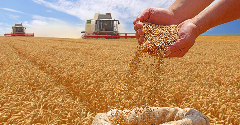
Manufacturers face volatility as food prices near four-year high
21 Oct 2026
Commodity pressures are mounting with the Food and Agriculture Organization’s (FAO) Food Price Index reaching its highest level since 2022.
Read more
In India, a protein boom with a difference
20 Oct 2026
In India, rising interest in protein is more focused on lower-cost protein and local specialties – think protein-fortified atta, paneer, tikis, and chaap – than fitness.
Read more
Meet the finalists of the Fi Europe Innovation Awards 2026
14 Oct 2026
Which companies made the shortlist of the Fi Europe Innovation Awards 2026? Read on to find out who will be competing to win first prize in each category in November.
Read more
Brazil pushes forward on restricting ultra-processed foods
14 Oct 2026
The Brazilian government is pushing ahead with its proposal calling on the World Health Organization (WHO) to restrict the marketing of ultra-processed foods – a move causing a mixed response.
Read more
EU considers extending mandatory country-of-origin labelling
13 Oct 2026
The EU is considering expanding mandatory country-of-origin labelling to more food categories, but the scope of the potential rules remains undefined.
Read more
Tesco restricts or bans over 100 additives in UPF reformulation response
7 Oct 2026
Consumer concerns over ultra-processed foods have led Tesco, one of the world’s largest supermarkets, to ban or restrict 114 additives from its own-brand products.
Read more
UK biscuit maker pladis targets Chinese snack market for growth
6 Oct 2026
Pladis, the maker of iconic British biscuit brand McVitie’s, aims to boost disappointing profits by targeting China with products tailored to Chinese preferences.
Read more
Goodbye greenwashing? EU ban on vague claims comes into force
5 Oct 2026
Food and drink brands must comply with EU anti-greenwashing rules that ban vague claims – but they do not have to stay silent on sustainability.
Read more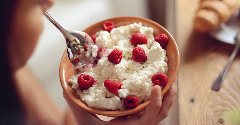
Cottage cheese alternative made from fermented apricot kernels
1 Oct 2026
Revo Foods ferments leftover apricot kernels from jam and juice products into a cottage cheese alternative that naturally contains both protein and fat.
Read more