
Ingredients Categories
Finished Products
Finished Food Categories
- Bakery
- Beverages / Juices
- Cereal and grain products
- Confectionery
- Cooking Fats & Oils
- Dairy
- Egg products
- Fruits & Vegetables
- Infant & Baby food
- Meat, Poultry & Fish
- Nuts & Seeds products
- Other Finished Food Categories
- Pet Food
- Plant-based foods
- Prepared foods
- Sauces & Seasonings
- Sweet & Savoury Spreads
Specialised Finished Products
- Bee products
- Biotic products
- Dietary supplements
- Energy drinks
- Functional beverages
- Functional confectionery
- Functional food
- Functional powders
- Meal replacement products
- Nutricosmetics
- Other Specialised Finished Products
- Pet Dietary Supplements
- Pharma and OTC products
- Protein products
- Sugar replacers / Sweeteners
Health & Wellness Areas
Delivery Formats
Operations & Services
- 3D printing
- Analysis/ Testing
- Auditing & certifications
- Blending & mixing
- Bottling
- Certification
- Clinical trials
- Co-packing
- Coating
- Consulting
- Contract manufacturing
- Drying
- Electrospinning
- Encapsulating
- Enzymatic processing
- Extracting
- Extrusion
- Fat structuring
- Fermentation
- Filling
- Flavour development
- Freeze drying
- Granulating/ grinding/ milling / mixing
- High-pressure processing
- Labelling
- Other Operations & Services
- Packaging
- Packet filling
- Pasturising
- Quality assurance
- Saccharification
- Shear cell processing
- Spray drying
- Sterilisation
- Storage & Logistics
- Tabletting
- Toasting / roasting
- Ultra-high temperature processing
News
Could dropping several products make an entire food portfolio healthier and more sustainable?
Tessa Wiles, Content Editor - Food 5 Nov 2026Researchers found that for some UK food manufacturers, swapping 10% or less of product lines could deliver more than 50% of potential nutritional quality or sustainability gains.
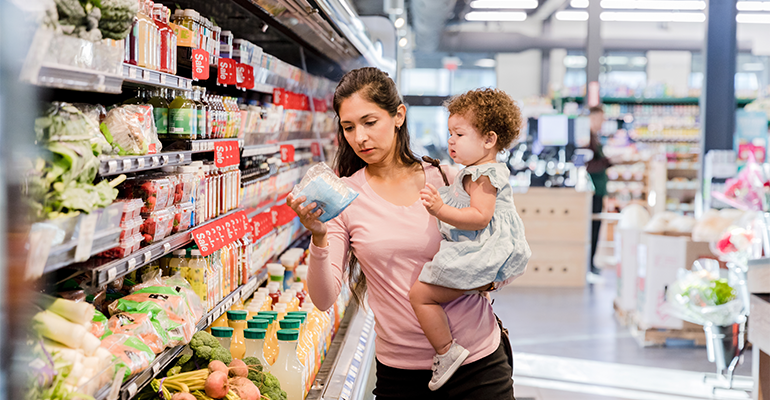
Researchers at the University of Oxford studied the product lines of 44 major UK food and drink manufacturers and found that by changing 10% or less of their product lines, 12 could achieve over 50% of their potential sustainability gains and 17 could reach 50% of their potential nutritional gains.
At a glance:
- Researchers analysed over 15,000 food and beverage products and scored them on nutritional and environmental impact.
- They found considerable variation in nutritional quality and environmental impacts across manufacturers.
- Product categories with the most room for improvement were confectionery, ready meals, and processed meat.
In the study, published in Nature Food, researchers used product and sales data from 2019 for more than 15,000 products and scored them on nutritional and environmental impact per 100 grams.
To determine the nutritional quality of products, the team used the UK’s nutrient profiling model – a model used by the government to classify foods and drinks based on their nutritional composition. For environmental impact, the researchers created a composite score based on four measures: greenhouse gas emissions, land use, water use, and eutrophication (nutrient buildup in a body of water).
Swapping products does not mean reformulation
Swaps, in the study, referred to replacing a product with a similar, but higher-scoring one within a manufacturer's range. As an example, the researchers pointed to swapping a Haribo gummy for another “more sustainable and nutritious gum confectionery”.
The worst-scoring items were replaced with median-scoring products in the same category; therefore, the gains came from swaps already in a manufacturer's portfolio.
The authors found considerable variation in nutritional quality and environmental impacts across manufacturers, and while overall gains were modest, for some manufacturers, the potential gains were large. For example, the same swaps could lower the environmental impact scores by 5% for 27 companies, but over 20% for five of them.
While swaps such as these would make an impact, the authors concluded they were “small compared with the changes we need to meet corporate, governmental, and societal targets”.
Co-author Dr Michael Clark, associate professor of sustainable food solutions at Oxford’s Smith School of Enterprise and Environment, in written answers prepared with co-authors Eleanor Hammond, research assistant, and Lauren Bandy, post-doc researcher, said that the swaps were a conservative approach.
“In reality, a manufacturer could actually be more ambitious and improve their worst-scoring products to become much better than their own medium-scoring products,” Clark told Ingredients Network.
“Another option for manufacturers is to introduce entirely new food products into their portfolio that are both nutritious and sustainable, thus improving their overall portfolio nutritional and environmental performance beyond what we simulated with our conservative assumption; the scope for improvement through this option is not limited by the size of a manufacturer’s current product range,” he added.
Confectionery, ready meals, and processed meat: Products with the most room for improvement
“Categories with largest potential gains are those that have a variety of products with large differences in their nutrition and environmental impact, because this means that changing only a small proportion of the worst-performing products can deliver considerable gains,” Clark said.
As a category example, Clark pointed to processed meat.
“Changing a small proportion of the worst-performing products for both nutrition and sustainability – for example, red meat products that are high in salt and saturated fat – would deliver considerable gains because other meat products can have considerably better nutrition and environment scores,” he explained.
In this case, a red meat product could be replaced by a low-salt and low-saturated fat poultry-based product.
“Other categories with large differences in impacts between products included confectionery and ready meals,” Clark added.
Heinz ready meal product lines have a lower average environmental impact than Princes
In the paper, the food manufacturer Princes had one of the highest average environmental impacts because its ready meals almost all contained meat, while Heinz, on average, had a more sustainable ready meal product line as its meals contained both more sustainable (spaghetti with tomato sauce) and less sustainable (beef lasagne) options.
“Previous research has shown that there is often a correlation between nutrition and environment, where more nutritious products are often more sustainable,” Clark said. “Some of the most unsustainable products are also some of the least nutritious – one good example is processed red meat products (or products that contain large amounts of processed red meats).”
Clark explained that while sustainability and health often go hand-in-hand, the two aren’t always aligned in certain categories.
“Many products are sustainable but not nutritious (for example, sugary beverages) or are nutritious but less sustainable (for example, certain types of fish),” he said.
Which UK retailers have the largest scope for improvement?
Two UK retailer brands, Tesco and Sainsbury’s, made up almost one third (28.9%) of the sales value in the study, and had among the largest scope to improve both the nutritional and environmental components of their products.
Clark said this was the case because the supermarkets’ own-label ranges contained a wide variety of products with a wide variety of nutritional and environmental scores.
“This variation in scores between products means that supermarkets (as manufacturers of their own-label ranges) have higher capacity to swap a 'worse' product for an 'average' or even 'better' product in ways that other manufacturers with narrower product ranges may not,” he said.
Official reporting could push manufacturers towards higher scores
Companies can score their own ranges against nutritional and environmental criteria, and many already are, according to Clark.
“More broadly, the UK government recently stated that they are considering mandatory reporting on the healthiness of the portfolios of food and beverage businesses through the Healthy Food Standards policy,” he said.
At the time of publication of this article, the UK government has yet to set out a timetable.
On the environmental front, the UK government considered environmental labelling of food products in 2022.
“If both of these are formalised into law, then UK corporations will have to have the information needed to do this combined nutrition and environmental analysis,” Clark added.

Get more of our news on Google
Set Ingredients Network as a 'Preferred Source' to get quicker access to the news you value.
Related news

How manufacturers can reduce food loss in factory operations
4 Nov 2026
Small factory inefficiencies can send valuable ingredients down the drain, resulting in losses and prompting the sector to audit its waste-reduction methods. What solutions exist?
Read more
UK private label market ‘at its strongest yet’
2 Nov 2026
The UK's private label market is strong, but future success relies on smart own-label product design, innovative launches, and strong storytelling, says a marketing expert.
Read more
Organic for all: European retailers expand organic ranges and cut prices
29 Oct 2026
The organic category has “huge potential” in the UK, says premium retailer M&S, as Lidl also expands its range and reduces prices in Denmark.
Read more
Pressure grows on UK-EU SPS deal that promises price drops
27 Oct 2026
A new Sanitary and Phytosanitary (SPS) agreement could cut red tape and reduce costs, reviving agri-food trade between the UK and EU – but there are headaches on the horizon.
Read more
Whey protein production struggles to keep pace with demand
22 Oct 2026
Despite high whey protein prices and strong demand, growing production pressures are prompting questions about pricing sustainability, processing capacity, and alternative dairy options.
Read more
Manufacturers face volatility as food prices near four-year high
21 Oct 2026
Commodity pressures are mounting with the Food and Agriculture Organization’s (FAO) Food Price Index reaching its highest level since 2022.
Read more
In India, a protein boom with a difference
20 Oct 2026
In India, rising interest in protein is more focused on lower-cost protein and local specialties – think protein-fortified atta, paneer, tikis, and chaap – than fitness.
Read more
Meet the finalists of the Fi Europe Innovation Awards 2026
14 Oct 2026
Which companies made the shortlist of the Fi Europe Innovation Awards 2026? Read on to find out who will be competing to win first prize in each category in November.
Read more
Brazil pushes forward on restricting ultra-processed foods
14 Oct 2026
The Brazilian government is pushing ahead with its proposal calling on the World Health Organization (WHO) to restrict the marketing of ultra-processed foods – a move causing a mixed response.
Read more
EU considers extending mandatory country-of-origin labelling
13 Oct 2026
The EU is considering expanding mandatory country-of-origin labelling to more food categories, but the scope of the potential rules remains undefined.
Read more