
Ingredients Categories
Finished Products
Finished Food Categories
- Bakery
- Beverages / Juices
- Cereal and grain products
- Confectionery
- Cooking Fats & Oils
- Dairy
- Egg products
- Fruits & Vegetables
- Infant & Baby food
- Meat, Poultry & Fish
- Nuts & Seeds products
- Other Finished Food Categories
- Pet Food
- Plant-based foods
- Prepared foods
- Sauces & Seasonings
- Sweet & Savoury Spreads
Specialised Finished Products
- Bee products
- Biotic products
- Dietary supplements
- Energy drinks
- Functional beverages
- Functional confectionery
- Functional food
- Functional powders
- Meal replacement products
- Nutricosmetics
- Other Specialised Finished Products
- Pet Dietary Supplements
- Pharma and OTC products
- Protein products
- Sugar replacers / Sweeteners
Health & Wellness Areas
Delivery Formats
Operations & Services
- 3D printing
- Analysis/ Testing
- Auditing & certifications
- Blending & mixing
- Bottling
- Certification
- Clinical trials
- Co-packing
- Coating
- Consulting
- Contract manufacturing
- Drying
- Electrospinning
- Encapsulating
- Enzymatic processing
- Extracting
- Extrusion
- Fat structuring
- Fermentation
- Filling
- Flavour development
- Freeze drying
- Granulating/ grinding/ milling / mixing
- High-pressure processing
- Labelling
- Other Operations & Services
- Packaging
- Packet filling
- Pasturising
- Quality assurance
- Saccharification
- Shear cell processing
- Spray drying
- Sterilisation
- Storage & Logistics
- Tabletting
- Toasting / roasting
- Ultra-high temperature processing
News
What’s next for Australia and New Zealand’s alternative protein scene?
20 Jan 2023
Australian and New Zealand brands in the growing alternative protein sector turn their attention to local production and precision dairy fermentation.
The Australasian alternative proteins sector has seen steady growth between 2017 and 2022, expanding from less than five plant-based meat brands to over 30. During this time, the market has also seen its cellular agriculture space go from one company to eleven, operating in cultivated meat and precision fermentation.
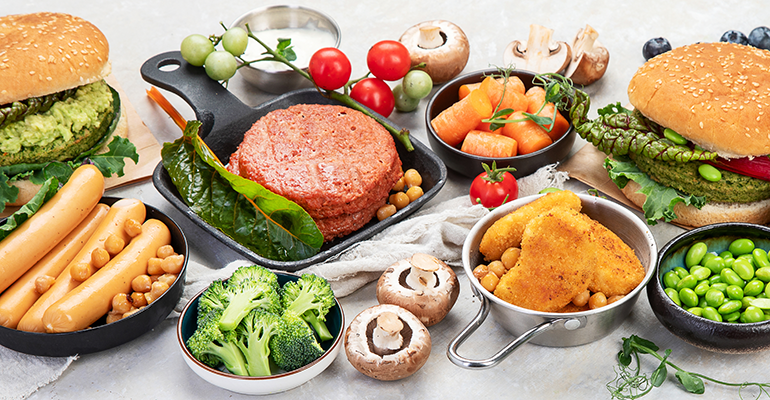
“While there is a significant presence of international brands in the commercial market in Australia and New Zealand, plant-based meat brands make up more than half of the 320 products on retail shelves nationwide,” Jane Sydenham-Clarke, CEO of Food Frontier, an independent think tank on alternative proteins in Australia and New Zealand, told Ingredients Network.
The sector is, however, recognised for its diverse players, with founders including award-winning chefs, former fast-moving consumer goods (FMCG) executives and family-run meat businesses. Brands have also launched off the back of Australia’s national science agency, CSIRO, which seeks to commercialise research and development (R&D) in the plant protein and precision fermentation space.
vEEF is a chef-led company producing carbon-neutral plant-based mince, Vow is set to launch its cultivated quail product ‘Morsel’ in Singapore, and Nourish Ingredients produces animal-free fats using precision fermentation, which may play a significant role in future ‘hybrid’ products.
A first for alternative proteins
On the new product development (NPD) side, Food Frontier heard from companies seeking to catalyse the protein ingredient sector by considering a wide range of Australian-grown plants grown beyond the standard soy and pea crops. Manufacturers are looking to leverage partnerships with the beer and wine sector to use their equipment for precision fermentation. Producers are also looking to solve human breast milk supply challenges through cellular agriculture.
The event also spotlighted growing government investment in the sector, with key developments in early 2022, including new protein fractionation facilities in South Australia and plant protein R&D facilities in Victoria.
Since the event, Food Frontier has seen further developments, such as the Victorian Government’s 2030 Manufacturing Statement, including alternative proteins becoming, for the first time, a priority area for investment. The New South Wales (NSW) Government has released a report, which includes a recommendation to investigate opportunities to promote the growth of the plant-based protein manufacturing industry in NSW, Sydenham-Clarke says.
“Demand for protein is growing, particularly in Asia, which is right on our doorstep,” she adds.
Food Frontier wants to see Australian and New Zealand alternative protein producers steadily grow and succeed in capturing these export opportunities. The independent think tank has partnered with Mintel to develop research exploring five key Asia markets for a report set to launch early 2023.
Value-add opportunities co-exist with cost challenges
“Australia and New Zealand are global leaders in food and agriculture production, with significant natural resources to leverage in becoming leaders in alternative proteins,” says Sydenham-Clarke. In particular, there is space in the Australasia region to lead in growing and processing plant proteins.
Food Frontier confirms that its nations’ grains and legumes producers are beginning to consider the opportunity to value-add their crops rather than sell them into volatile global commodity markets.
Many Australian plant-based meat manufacturers have expressed a desire to purchase and use more Australian-grown plant proteins in their products, representing both an opportunity and a challenge. There has been only one commercial-scale pulse protein extraction facility, though significant government investment has been announced to build another in South Australia.
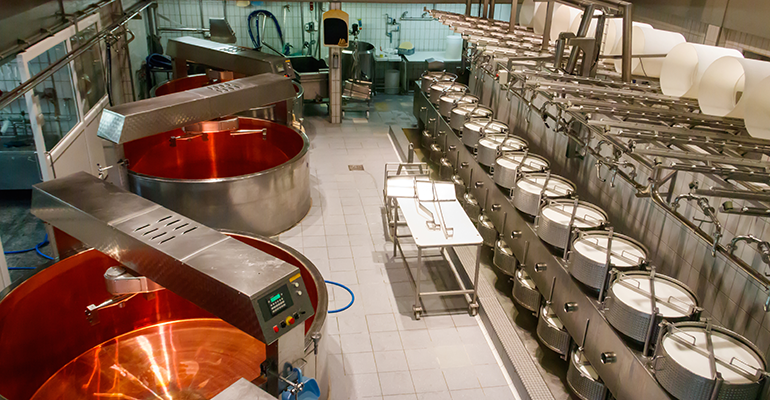 Pictured: Precision fermentation dairy plant equipment © AdobeStock/olyasolodenko
A key regional challenge is reaching price parity with conventional meat. Rising costs, particularly of red meat, have made alternatives reach closer price parity. Cost concerns are even more significant for some brands, such as v2food, which base their positioning on launching their products at price parity. “However, without scale, smaller players have a journey to reach parity with animal meat,” says Sydenham-Clarke.
She also expects to see more precision fermentation dairy companies forming as the products progress through the regulatory process and get closer to market. In Australia, animal-free milk made by Eden Brew is expected to be on shelves in the next 12 to 18 months.

Get more of our news on Google
Set Ingredients Network as a 'Preferred Source' to get quicker access to the news you value.
Related news

Kellogg accelerates work to remove artificial colours from all US cereals
3 Sep 2026
WK Kellogg has announced an accelerated timeline to eliminate all artificial colours and the chemical preservative, BHT, across its full US portfolio of cereals and cereal packaging.
Read more
Skimpflation: An ‘unfair’ and risky approach to keeping prices low
2 Sep 2026
Consumers see skimpflation – reducing the quality of ingredients due to rising costs – as more unfair than shrinkflation, making it a risky strategy according to recent research.
Read more
‘Urgent gaps’ in achieving 2030 food system goals
27 Aug 2026
Global food systems are failing to meet 2030 targets across indicators including health, environment, and resilience, according to a report co-authored by the Food and Agriculture Organisation (FAO).
Read more
Popular barbecue staples experience sharp price increases
19 Aug 2026
The typical cost of US shoppers’ barbecue baskets has risen by 12% over the past year – the fastest annual rise in a decade, figures from The Economist show.
Read more
Savoury protein snacks shake up the on-the-go market
10 Aug 2026
Sweet flavours have dominated the high-protein snack category but savoury snacks, such as cheese bars and meat sticks, can appeal to health-conscious consumers.
Read more
Digital twin technology gains ground in food manufacturing
6 Aug 2026
Food and beverage companies are increasingly turning to digital twins to optimise and automate manufacturing processes, but opportunities stretch far beyond this, say experts.
Read more
Nestlé invests in regeneratively farmed wheat for KitKat
5 Aug 2026
Nestlé will pay a premium for Wildfarmed’s regeneratively farmed wheat but the CPG remains reticent to promote the move on packs of its KitKat bars.
Read more
Codex sets global thresholds for ‘may contain’ labels
3 Aug 2026
Codex Alimentarius has adopted its first global guidance on when to use “may contain” allergen warnings, setting thresholds intended to stop the label being used as blanket legal cover.
Read more
EU sets maximum MOAH levels to protect human health
28 Jul 2026
The EU will adopt maximum levels for mineral oil aromatic hydrocarbons (MOAH) in food to protect human health. What do manufacturers need to know?
Read more
UK publishes guidance on SPS food trade agreement with EU
27 Jul 2026
The UK government has shared guidance on how food businesses can prepare for its upcoming Sanitary and Phytosanitary (SPS) agreement with the EU.
Read more