
Ingredients Categories
Finished Products
Finished Food Categories
- Bakery
- Beverages / Juices
- Cereal and grain products
- Confectionery
- Cooking Fats & Oils
- Dairy
- Egg products
- Fruits & Vegetables
- Infant & Baby food
- Meat, Poultry & Fish
- Nuts & Seeds products
- Other Finished Food Categories
- Pet Food
- Plant-based foods
- Prepared foods
- Sauces & Seasonings
- Sweet & Savoury Spreads
Specialised Finished Products
- Bee products
- Biotic products
- Dietary supplements
- Energy drinks
- Functional beverages
- Functional confectionery
- Functional food
- Functional powders
- Meal replacement products
- Nutricosmetics
- Other Specialised Finished Products
- Pet Dietary Supplements
- Pharma and OTC products
- Protein products
- Sugar replacers / Sweeteners
Health & Wellness Areas
Delivery Formats
Operations & Services
- 3D printing
- Analysis/ Testing
- Auditing & certifications
- Blending & mixing
- Bottling
- Certification
- Clinical trials
- Co-packing
- Coating
- Consulting
- Contract manufacturing
- Drying
- Electrospinning
- Encapsulating
- Enzymatic processing
- Extracting
- Extrusion
- Fat structuring
- Fermentation
- Filling
- Flavour development
- Freeze drying
- Granulating/ grinding/ milling / mixing
- High-pressure processing
- Labelling
- Other Operations & Services
- Packaging
- Packet filling
- Pasturising
- Quality assurance
- Saccharification
- Shear cell processing
- Spray drying
- Sterilisation
- Storage & Logistics
- Tabletting
- Toasting / roasting
- Ultra-high temperature processing
News
Chobani develops shelf-stable, prebiotic-enriched Super Milk
Will Chu, Freelance Journalist 12 Sep 2024Chobani has launched a prebiotic-enriched, shelf-stable, high-protein dairy milk to support people in disaster zones who need a nutritious drink that does not require refrigeration.
Developed to help the American Red Cross, Chobani Super Milk provides access to a nutrient-dense, high-protein, dairy-based product to those who need it most, the US company said.
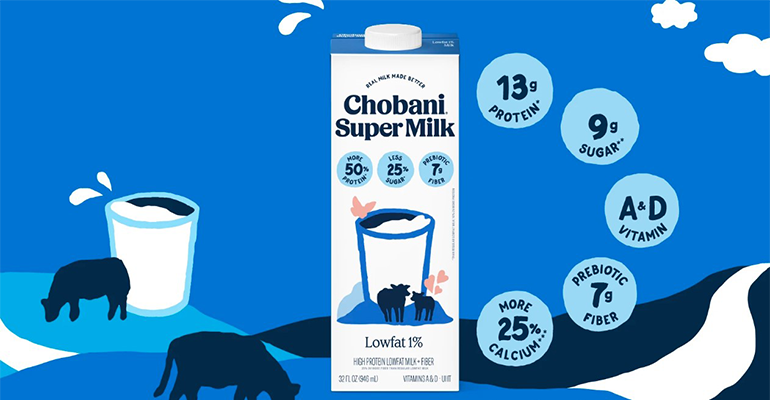
The product has a shelf life of up to nine months without the need for refrigeration and includes seven grams (g) of prebiotic fibre per eight fluid ounces (around 235 ml) to help those impacted by natural disasters or food insecurity maintain gut health.
“We all know food is essential but it becomes urgent need in times of disaster,” said Hamdi Ulukaya, founder, chairman, and CEO of Chobani. “How do we design a solution, a high protein, high fibre nutritious milk that is shelf stable, where it can be deployed all over the world? That's what super milk is. We concentrated the protein level and reduced the sugar by converting it into a fibre.
Along with its prebiotic content, Chobani Super Milk also contains 13 g of protein (which is 50% more protein than traditional milk), 9 g of sugar (25% less sugar than traditional milk), and no sugar added. The product also contains 400 milligrams (mg) of calcium, which 25% more than traditional milk, and is fortified with vitamins A and D.
The concept for Super Milk was formed after a deadly earthquake hit Turkey last year, where Ulukaya was born. Chobani intends to produce around 145,000 pounds of Chobani Super Milk per month, where the American Red Cross will distribute it nationally in areas facing natural disasters. The New York State-based firm added that it would only donate the product and would not sell it in stores where its other products are typically found.
No issues on prebiotic viability expected when included in a shelf stable milk
Commenting on Chobani’s Super Milk, Kara Landau, nutrition advisor to the Global Prebiotic Association, said that while the full ingredient deck has not been made publicly available, she would not expect reduced prebiotic viability when added to a shelf stable milk that is not kept refrigerated.
“Most prebiotic fibre ingredients are shelf stable and will not be negatively influenced by being incorporated into shelf stable rather than refrigerated dairy,” she said. “Alternative prebiotics, such as those that come in the form of polyphenolic compounds are more heat sensitive and fragile in nature, so may be better suited to refrigerated options.
“Considering soluble fibres are the most commonly incorporated, dual prebiotic and fibre ingredient, this stability issue would be expected to be negated.”
It is important to review whether the dairy contains live active cultures
With regards to prebiotics utilised within dairy products, Landau, known as "The Prebiotic Dietitian," said that it was more important to review whether the dairy contained live active cultures, as it was these probiotics that may end up utilising the prebiotics that are present as a fuel source, resulting in further probiotic growth.
However, this could cause fewer prebiotic numbers being present within the finished good consumed by the consumer as time from manufacturing goes on.
While Chobani has no plans to make its Super Milk available for retail, Landau said she thought the idea of adding prebiotics into dairy products had a clear pathway, with many prebiotic ingredients being generally recognised as safe (GRAS), soluble, and not bearing any regulatory issues.
“There could be various demographics that take interest in a gut health supported milk, such as children, weight loss focused customers, menopausal women seeking digestive support amongst others,” she said. “Dairy alternatives could also look to incorporate prebiotics into their offerings and provide an option for those that are allergic or seeking to avoid dairy.”

Get more of our news on Google
Set Ingredients Network as a 'Preferred Source' to get quicker access to the news you value.
Related news

Do the US dietary guidelines put UPFs under pressure?
10 Sep 2026
Will the US dietary guidelines change the way Americans eat, swapping ultra-processed foods for whole foods? We asked Dr Barry Popkin, renowned nutrition and obesity researcher.
Read more
Food fraud costs UK economy £2bn each year
9 Sep 2026
Food fraud is costing the UK economy up to £2 billion (€2.3 billion) every year although the food sector is more “resilient” than others, according to a recent study.
Read more
Kellogg accelerates work to remove artificial colours from all US cereals
3 Sep 2026
WK Kellogg has announced an accelerated timeline to eliminate all artificial colours and the chemical preservative, BHT, across its full US portfolio of cereals and cereal packaging.
Read more
Skimpflation: An ‘unfair’ and risky approach to keeping prices low
2 Sep 2026
Consumers see skimpflation – reducing the quality of ingredients due to rising costs – as more unfair than shrinkflation, making it a risky strategy according to recent research.
Read more
‘Urgent gaps’ in achieving 2030 food system goals
27 Aug 2026
Global food systems are failing to meet 2030 targets across indicators including health, environment, and resilience, according to a report co-authored by the Food and Agriculture Organisation (FAO).
Read more
Popular barbecue staples experience sharp price increases
19 Aug 2026
The typical cost of US shoppers’ barbecue baskets has risen by 12% over the past year – the fastest annual rise in a decade, figures from The Economist show.
Read more
Savoury protein snacks shake up the on-the-go market
10 Aug 2026
Sweet flavours have dominated the high-protein snack category but savoury snacks, such as cheese bars and meat sticks, can appeal to health-conscious consumers.
Read more
Digital twin technology gains ground in food manufacturing
6 Aug 2026
Food and beverage companies are increasingly turning to digital twins to optimise and automate manufacturing processes, but opportunities stretch far beyond this, say experts.
Read more
Nestlé invests in regeneratively farmed wheat for KitKat
5 Aug 2026
Nestlé will pay a premium for Wildfarmed’s regeneratively farmed wheat but the CPG remains reticent to promote the move on packs of its KitKat bars.
Read more
Codex sets global thresholds for ‘may contain’ labels
3 Aug 2026
Codex Alimentarius has adopted its first global guidance on when to use “may contain” allergen warnings, setting thresholds intended to stop the label being used as blanket legal cover.
Read more