
Ingredients Categories
Finished Products
Finished Food Categories
- Bakery
- Beverages / Juices
- Cereal and grain products
- Confectionery
- Cooking Fats & Oils
- Dairy
- Egg products
- Fruits & Vegetables
- Infant & Baby food
- Meat, Poultry & Fish
- Nuts & Seeds products
- Other Finished Food Categories
- Pet Food
- Plant-based foods
- Prepared foods
- Sauces & Seasonings
- Sweet & Savoury Spreads
Specialised Finished Products
- Bee products
- Biotic products
- Dietary supplements
- Energy drinks
- Functional beverages
- Functional confectionery
- Functional food
- Functional powders
- Meal replacement products
- Nutricosmetics
- Other Specialised Finished Products
- Pet Dietary Supplements
- Pharma and OTC products
- Protein products
- Sugar replacers / Sweeteners
Health & Wellness Areas
Delivery Formats
Operations & Services
- 3D printing
- Analysis/ Testing
- Auditing & certifications
- Blending & mixing
- Bottling
- Certification
- Clinical trials
- Co-packing
- Coating
- Consulting
- Contract manufacturing
- Drying
- Electrospinning
- Encapsulating
- Enzymatic processing
- Extracting
- Extrusion
- Fat structuring
- Fermentation
- Filling
- Flavour development
- Freeze drying
- Granulating/ grinding/ milling / mixing
- High-pressure processing
- Labelling
- Other Operations & Services
- Packaging
- Packet filling
- Pasturising
- Quality assurance
- Saccharification
- Shear cell processing
- Spray drying
- Sterilisation
- Storage & Logistics
- Tabletting
- Toasting / roasting
- Ultra-high temperature processing
News
Could the Strait of Hormuz supply shock boost regenerative farming?
David Burrows, Freelance Journalist 31 Mar 2026The Iran war has exposed the frailties of a fossil fuel-dependent food system. Could regenerative agriculture benefit from soaring fertiliser prices?
The frailties of the food system have once again been exposed following the war on Iran by the US and Israel. Fertiliser prices have jumped as supplies fall to a trickle and there is little doubt there will be a knock-on financial impact for food ingredients – and availability.
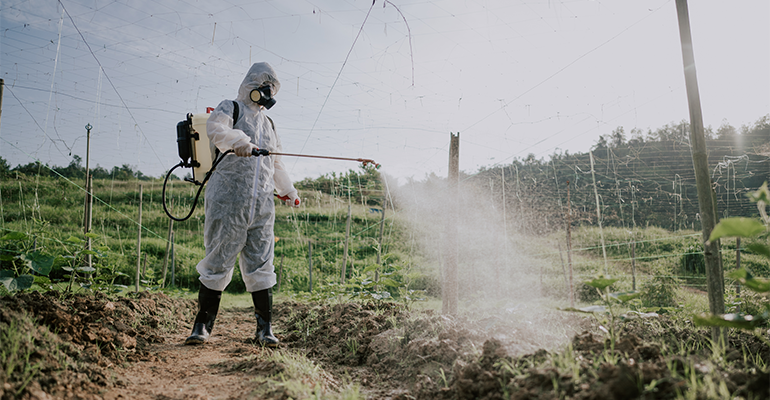
As reported recently by Ingredients Network, fertilisers are entwined with the global food system, which has left many businesses exposed to higher prices and, likely, constrained supplies. Those that have not done so already are being urged to map their exposure to their chemical inputs.
This year’s conflict in the Middle East has provided another shock to the food system, but some believe it is also another shot in the arm for transitioning food production to systems that rely far less on chemical fuel inputs.
“[...] we need to take these warning signs seriously,” explained Jim Mellon, investor and chief executive of Agronomics, a VC firm focused on supporting solutions to strengthen the global food system. The choice in 2026 is “clear”, he said in an email to Ingredients Network: “Treat food shocks as a new normal, or use them as the catalyst to build a cleaner, smarter future for our food."
Some experts believe that the conflict in Iran offers more than food for thought for food and ingredients companies. Mapping exposure to supply risks born of conflict, geopolitics, and climate is a decent start. However, unhooking the chains from chemical inputs in the medium and long-term is the bolder step.
Shock for the system; shot in the arm for agroecology?
Fertiliser and feed prices rises following Russia’s invasion of Ukraine helped swell interest in regenerative approaches to farming. Companies including Nestlé, Cargill, and PepsiCo set out targets to convert millions of hectares of land to so-called “regen ag”, which should see their suppliers rely far less on chemical inputs.
Raj Patel, food system expert at the Lyndon B. Johnson School of Public Affairs, University of Texas, US, this month posted a fertiliser import vulnerability map on his website, showing the chokepoints and seasonal vulnerability of different countries to import shocks. What the map does not show, he noted, is that “agroecological food systems are resilient to exactly these kinds of geopolitical shocks”.
Indeed, the Fuel to fork report published by IPES Food in May last year showed how food systems are “hooked” on fossil fuels, which run through fertilisers and pesticides as well as ultra-processed foods, long-haul cold chains and plastic packaging. Food systems now consume 40% of all petrochemicals and 15% of fossil fuels globally, the report highlighted.
PepsiCo has talked of “meaningful reductions” in fertiliser use among farms in its regen ag programme.
Nestlé UK & Ireland and Cargill are running a programme to assess whether cocoa shells from a confectionery site in York could be used to create a low carbon fertiliser. If successful, up to 7,000 tonnes of low carbon fertiliser could be produced in York and offered to farmers in Nestlé UK and Ireland’s supply chain.
More and more companies are realising that investing in soil means lowering dependence on synthetic fertilisers and stabilising yields in the long term. According to a Joint Research Centre study in 2024, regenerative wheat systems can reduce fertiliser costs by 18% while maintaining — or even slightly increasing — yields by around 5% over time. In addition, regenerated soils store carbon and enhance functional biodiversity – key factors in emerging environmental credit markets and corporate ESG accounting frameworks, noted the Ecowheataly project, taking place in Italy.
Governments are ‘propping up’ fossil fuel-intensive farming
So far, however, the movement to regenerative approaches remains piecemeal rather than mainstream. Reliance on inputs, like fertiliser, pesticides, and fossil fuels, remains heavy. Governments are also trying to work out how to support this transition when results and data of its benefits remain thin on the ground.
As such, governments continue to “prop up” the current fragile, fossil fuel reliant model, wrote Greenpeace Aotearoa (New Zealand) campaigner Amanda Larsson in an article about the war on Iran’s impact on food prices.
“Right now, billions in public subsidies keep the industrial meat and chemical fertiliser pipeline flowing – and that money must be redirected,” she said.
Other solutions to reduce reliance on chemical inputs like fertilisers and pesticides include green ammonia, nature-based nutrients like biofertilisers and regenerative practices, and “smarter use”, noted Christine Gould, founder of Giga futures, which works with agri-food companies of all sizes on future solutions.
“Each of these can be produced locally or regionally, strengthening food sovereignty, expanding farmer choice, and reducing exposure to vulnerable global trade routes. We just need to direct capital, policies, and value chain support towards them,” she added.

Get more of our news on Google
Set Ingredients Network as a 'Preferred Source' to get quicker access to the news you value.
Related news

Do the US dietary guidelines put UPFs under pressure?
10 Sep 2026
Will the US dietary guidelines change the way Americans eat, swapping ultra-processed foods for whole foods? We asked Dr Barry Popkin, renowned nutrition and obesity researcher.
Read more
Health and wellness engagement matures across Middle East and Africa
4 Sep 2026
Many consumers in the Middle East and Africa are now proactively engaged in health and wellness, looking to integrate better habits and products into their daily lives, say experts.
Read more
Skimpflation: An ‘unfair’ and risky approach to keeping prices low
2 Sep 2026
Consumers see skimpflation – reducing the quality of ingredients due to rising costs – as more unfair than shrinkflation, making it a risky strategy according to recent research.
Read more
‘Urgent gaps’ in achieving 2030 food system goals
27 Aug 2026
Global food systems are failing to meet 2030 targets across indicators including health, environment, and resilience, according to a report co-authored by the Food and Agriculture Organisation (FAO).
Read more
Seven-Eleven uses microbial testing tech to extend katsudon shelf life
26 Aug 2026
Japanese retail company Seven-Eleven has improved its factory’s microbial environment to keep comfort-food staple, katsudon, fresher for longer.
Read more
Chimac’s fusion sauces bring Korean flavours to Europe
25 Aug 2026
Irish sauce brand Chimac is tapping into Korea’s culinary traditions, bringing its flavours and products to European consumers who want a taste of K-food.
Read more
Global demand for instant noodles continues to rise
24 Aug 2026
Global demand for instant noodles reached 124.21 billion servings last year, representing a 0.7% year-on-year increase – or 900 million extra servings.
Read more
Popular barbecue staples experience sharp price increases
19 Aug 2026
The typical cost of US shoppers’ barbecue baskets has risen by 12% over the past year – the fastest annual rise in a decade, figures from The Economist show.
Read more
Hot NPD: Nissin launches first cold-water Cup Noodles
18 Aug 2026
Nissin is taking one of Japan’s most iconic instant meals in a completely new direction with the launch of the first cold water-only Cup Noodles in the brand’s 55-year history.
Read more
Manam Chocolate aims to bring premium Indian cacao to 'the world stage'
11 Aug 2026
Craft chocolate brand Manam Chocolate is investing in local expansion and supply chain innovation throughout India as it works to build out the premium reputation of its locally produced cacao products.
Read more