
Ingredients Categories
Finished Products
Finished Food Categories
- Bakery
- Beverages / Juices
- Cereal and grain products
- Confectionery
- Cooking Fats & Oils
- Dairy
- Egg products
- Fruits & Vegetables
- Infant & Baby food
- Meat, Poultry & Fish
- Nuts & Seeds products
- Other Finished Food Categories
- Pet Food
- Plant-based foods
- Prepared foods
- Sauces & Seasonings
- Sweet & Savoury Spreads
Specialised Finished Products
- Bee products
- Biotic products
- Dietary supplements
- Energy drinks
- Functional beverages
- Functional confectionery
- Functional food
- Functional powders
- Meal replacement products
- Nutricosmetics
- Other Specialised Finished Products
- Pet Dietary Supplements
- Pharma and OTC products
- Protein products
- Sugar replacers / Sweeteners
Health & Wellness Areas
Delivery Formats
Operations & Services
- 3D printing
- Analysis/ Testing
- Auditing & certifications
- Blending & mixing
- Bottling
- Certification
- Clinical trials
- Co-packing
- Coating
- Consulting
- Contract manufacturing
- Drying
- Electrospinning
- Encapsulating
- Enzymatic processing
- Extracting
- Extrusion
- Fat structuring
- Fermentation
- Filling
- Flavour development
- Freeze drying
- Granulating/ grinding/ milling / mixing
- High-pressure processing
- Labelling
- Other Operations & Services
- Packaging
- Packet filling
- Pasturising
- Quality assurance
- Saccharification
- Shear cell processing
- Spray drying
- Sterilisation
- Storage & Logistics
- Tabletting
- Toasting / roasting
- Ultra-high temperature processing
News
Partnership between Tesco and Buy Women Built spotlights female-founded brands
Tessa Wiles, Content Editor - Food 2 Apr 2026The partnership featured dedicated Buy Women Built in-store displays across more than 150 Tesco UK stores, showcasing female-founded brands.
Tesco has officially joined Buy Women Built, a movement founded in 2021 by Sahar Hashemi, the entrepreneur behind the British coffee bar and deli franchise chain, Coffee Republic.
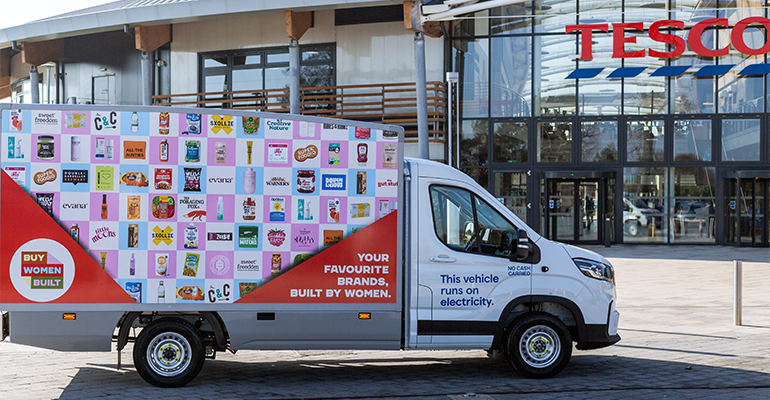
The UK-based consumer movement is designed to build visibility in stores by spotlighting brands built by women, connecting shoppers to the products and the stories behind them.
For International Women’s Day 2026, which was celebrated worldwide on 8 March, Tesco partnered with the movement, launching dedicated “stacks”, which are physical out-of-aisle displays. The stacks were placed in over 150 stores across the UK, and highlighted brands including Pip & Nut, Bio & Me, Bold Beans, Fearne & Rosie, Sauce Shop, and Little Moons, among others.
According to the Buy Women Built website, there is “lots more to come” regarding the partnership with Tesco.
Hashemi, who was appointed Officer of the Order of the British Empire (OBE) for services to the UK economy and to charity, told Ingredients Network that the partnership is part of the movement seeking to bridge the £200 billion (€2.3 bn) economic gap caused by the UK’s low female entrepreneurship rates.
Speaking on the significance of the retail giant’s involvement, Hashemi said: “We don't have enough [female] entrepreneurs. We talk about how women don't get enough funding. But you know, the issue is not actually that. The issue is you can't be what you can't see.
“What we need to do is first show people how many brands are built by women; how wonderful those brands are. They [consumers] probably already know the brands. As we can see, they're already stocked in Tesco and all these retailers.”
The power of visibility for female entrepreneurs and founders
The core mission of the movement and of the Tesco and Buy Women Built partnership is to bridge the visibility gap that currently hinders female entrepreneurs and founders.
Hashemi explained that many beloved brands people are consuming daily are female-founded: “And yet consumers don’t know they’re women-built”.
“Why is that a problem? It's a problem because in the UK, we don't have enough female entrepreneurs. If you look up the 2019 Rose Review of Entrepreneurship, the UK is 30% behind other developed countries […] and that costs the UK economy £200 billion,” she said.
By putting these founders front and centre in stores, the movement aims to change consumers' perceptions and show the world what women have built, rather than focusing on what is missing, such as funding.
Retailers as gatekeepers of change
Hashemi explained that she began Buy Women Built to bring female-founded brands together.
“But the retailers have so much power, right? Because they control what the consumer sees,” she said, adding that to have one of the UK’s biggest retailers on board sends a powerful and inspiring message for female entrepreneurs.
Tesco follows other retail pioneers like Ocado, which was the first to launch a dedicated Buy Women Built aisle; Planet Organic, which on International Women’s Day 2025 transformed every shelf and window across all its stores to spotlight women build brands; and Whole Foods Market, which, according to the website, “was the first to put the stories of women-built brands front and centre. In March 2023, its High Street Kensington store dedicated every window to showcasing the founders behind the brands, and not just the products they had created”.
Advice to the next generation: ‘Just take the bloody leap’
One important pillar of the partnership is to inspire more women to enter the food and consumer brand ecosystem.
Reflecting on her own journey from law to founding Coffee Republic, Hashemi’s advice to aspiring female entrepreneurs is simple: “Leap and the net will appear.”
She encourages women not to wait for the perfect moment, not to over-analyse their plans, but to “just bloody take the leap”.
Hashemi is not suggesting quitting a job outright and diving into entrepreneurship.
“If you’re in a role and you’re thinking of starting a business, the best place is to dip your toe into the water before you leave your job to see if it is going to work,” she said.
“At one point, you might think, actually, you know what, I’ve been in this apprenticeship mode, and it looks like it's worth spending my full time on this… Then you could make the proper leap and go over to it.”

Get more of our news on Google
Set Ingredients Network as a 'Preferred Source' to get quicker access to the news you value.
Related news

Do the US dietary guidelines put UPFs under pressure?
10 Sep 2026
Will the US dietary guidelines change the way Americans eat, swapping ultra-processed foods for whole foods? We asked Dr Barry Popkin, renowned nutrition and obesity researcher.
Read more
Food fraud costs UK economy £2bn each year
9 Sep 2026
Food fraud is costing the UK economy up to £2 billion (€2.3 billion) every year although the food sector is more “resilient” than others, according to a recent study.
Read more
Kellogg accelerates work to remove artificial colours from all US cereals
3 Sep 2026
WK Kellogg has announced an accelerated timeline to eliminate all artificial colours and the chemical preservative, BHT, across its full US portfolio of cereals and cereal packaging.
Read more
Skimpflation: An ‘unfair’ and risky approach to keeping prices low
2 Sep 2026
Consumers see skimpflation – reducing the quality of ingredients due to rising costs – as more unfair than shrinkflation, making it a risky strategy according to recent research.
Read more
NielsenIQ’s EU barometer shows Britain leading in grocery inflation
31 Aug 2026
Britain was the only country to record grocery inflation above 2%, according to NielsenIQ data that compared Europe’s five biggest grocery markets from February to May 2026.
Read more
‘Urgent gaps’ in achieving 2030 food system goals
27 Aug 2026
Global food systems are failing to meet 2030 targets across indicators including health, environment, and resilience, according to a report co-authored by the Food and Agriculture Organisation (FAO).
Read more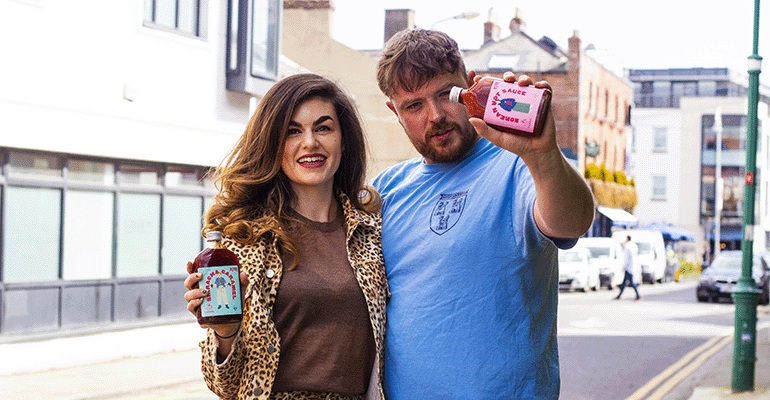
Chimac’s fusion sauces bring Korean flavours to Europe
25 Aug 2026
Irish sauce brand Chimac is tapping into Korea’s culinary traditions, bringing its flavours and products to European consumers who want a taste of K-food.
Read more
Global demand for instant noodles continues to rise
24 Aug 2026
Global demand for instant noodles reached 124.21 billion servings last year, representing a 0.7% year-on-year increase – or 900 million extra servings.
Read more
Popular barbecue staples experience sharp price increases
19 Aug 2026
The typical cost of US shoppers’ barbecue baskets has risen by 12% over the past year – the fastest annual rise in a decade, figures from The Economist show.
Read more
Hot NPD: Nissin launches first cold-water Cup Noodles
18 Aug 2026
Nissin is taking one of Japan’s most iconic instant meals in a completely new direction with the launch of the first cold water-only Cup Noodles in the brand’s 55-year history.
Read more