
Ingredients Categories
Finished Products
Finished Food Categories
- Bakery
- Beverages / Juices
- Cereal and grain products
- Confectionery
- Cooking Fats & Oils
- Dairy
- Egg products
- Fruits & Vegetables
- Infant & Baby food
- Meat, Poultry & Fish
- Nuts & Seeds products
- Other Finished Food Categories
- Pet Food
- Plant-based foods
- Prepared foods
- Sauces & Seasonings
- Sweet & Savoury Spreads
Specialised Finished Products
- Bee products
- Biotic products
- Dietary supplements
- Energy drinks
- Functional beverages
- Functional confectionery
- Functional food
- Functional powders
- Meal replacement products
- Nutricosmetics
- Other Specialised Finished Products
- Pet Dietary Supplements
- Pharma and OTC products
- Protein products
- Sugar replacers / Sweeteners
Health & Wellness Areas
Delivery Formats
Operations & Services
- 3D printing
- Analysis/ Testing
- Auditing & certifications
- Blending & mixing
- Bottling
- Certification
- Clinical trials
- Co-packing
- Coating
- Consulting
- Contract manufacturing
- Drying
- Electrospinning
- Encapsulating
- Enzymatic processing
- Extracting
- Extrusion
- Fat structuring
- Fermentation
- Filling
- Flavour development
- Freeze drying
- Granulating/ grinding/ milling / mixing
- High-pressure processing
- Labelling
- Other Operations & Services
- Packaging
- Packet filling
- Pasturising
- Quality assurance
- Saccharification
- Shear cell processing
- Spray drying
- Sterilisation
- Storage & Logistics
- Tabletting
- Toasting / roasting
- Ultra-high temperature processing
News
Coffee smallholders more sustainable than large-scale producers: Fairtrade
Natasha Spencer-Jolliffe, Freelance Journalist 18 Dec 2024Smallholder coffee plantations in Latin America are more climate-friendly than large-scale operations, according to an environment-focused study by Fairtrade Foundation.
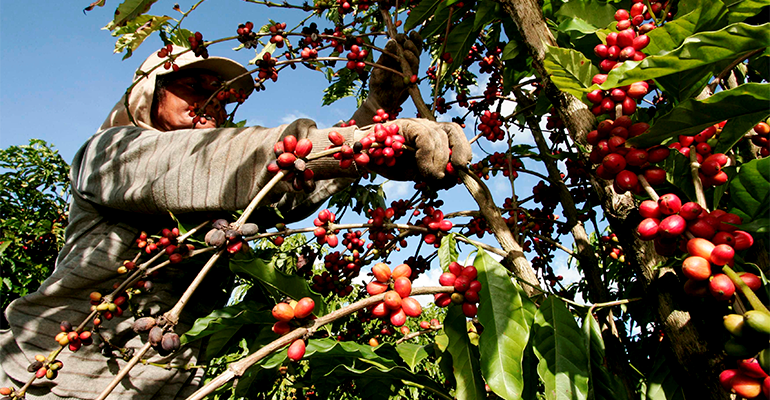
The new Fairtrade study, Understanding the Climate and Environmental Impacts of Smallholder Coffee Farming, investigated existing academic and sector-based research regarding the environmental sustainability of small-scale coffee production in five Latin American countries: Brazil, Colombia, Peru, Nicaragua and Honduras.
Fairtrade Foundation, the organisation behind the sustainability certification and labelling system, compared findings with large-scale production. “It showed that small-scale coffee production in Latin America is, on average, more environmentally friendly than large-scale production,” Max Milward, Fairtrade Foundation’s sustainable sourcing manager for coffee, told Ingredients Network.
“Large plantations in the region often produce coffee using unshaded monoculture, mechanisation and chemical inputs, but the situation on small-scale coffee farms is often quite different,” said Milward. Small-scale coffee producers in Colombia, Peru, Nicaragua and Honduras generally use less energy than larger plantations because farms are often less mechanised.
Promoting small-scale production
Small-scale coffee farmers produce around 60% of the world’s coffee. While the numbers indicate that coffee production favours small-scale operations, more can be done to increase the presence of this manufacturing method in the food industry.
Fairtrade International, which works with small-scale coffee farming co-operatives and does not certify plantations, has certified over 800,000 smallholder coffee farmers in over 600 organisations across 32 countries.
Agroecological practices are highlighted as a core way to improve the food security of smallholder coffee farmers. “Agroecological practices enhance environmental sustainability through reducing GHG emissions and storing carbon, using less water and boosting biodiversity on smallholder coffee farms,” said Milward.
Agroecological farming enables smallholders to use fewer chemical inputs and grow more diverse crops. “This can create considerable input savings for small producers, who can also rely on a diversified income and improve their households’ food security, which is the best way to face climatic changes and price shocks,” Milward added.
Agroforestry, where shade and other trees are planted alongside coffee plants, also plays a vital part in the sustainability of coffee growing. The nature-enriching production method can address the environmental, social and economic challenges smallholder coffee farmers face in Central and South America while significantly contributing to climate adaptation and mitigation.
Smallholder coffee farmers in Honduras, Nicaragua, Colombia and Peru mainly practise diversified shaded agriculture. Adopting this coffee production approach helps preserve and enhance coffee, storing carbon and conserving soil and water.
Fairtrade has adopted agroecology as its framework for sustainable agriculture. As part of its advocacy for the production method, the organisation states it is working to support coffee farmers to adopt agroecological practices.
R&D: The future of coffee production
Fairtrade’s findings may impact how large and small-scale farmers approach coffee production in the coming years. Research and development (R&D) is a crucial part of implementing agricultural methods that prioritise a sustainability lens.
“It demonstrates why small-scale coffee farmers urgently need fair terms of trade so that they can cover their production costs and earn sustainable livelihoods,” said Milward. Farmers living on the frontline of climate change are already seeing how changing weather patterns are having devastating impacts on their ability to grow the crops they depend upon.
“Without fair prices and long-term contracts, many producers will not be able to continue farming in the future, leading to increased poverty in many parts of the world and threatening the availability of food staples such as coffee,” he added. The ability of producers to earn a living income through higher prices for their produce is expected to be a key enabler and a precondition for ensuring effective climate action.
“Smallholder coffee farmers’ fundamental role in climate adaptation and mitigation should be acknowledged across the value chain,” Milward added. Fairtrade hopes that different players, including commercial partners, producer organisations and its organisation, can collaborate to face global environmental challenges and support sustainable coffee production in the future.
Recommendations for producers
“We are faced with challenges of a greater complexity than ever before,” said the sustainable sourcing manager. For those manufacturers and brands using coffee as a key ingredient in their food products, actions centre around the importance of sustainable operations. “We’d urge all coffee businesses, from coffee roasters to café brands and retailers, to consider responsible sourcing.”
Fairtrade has launched a Shared Impact initiative that allows brands and retailers to build closer ties to a smaller pool of coffee, cocoa and banana producers. It is designed to provide better supply chain insights for businesses and longer-term commitments for producers, enabling them to invest more strategically in the salient risks in their supply chains, such as climate and living incomes.
Through its impact-led model, Shared Impact, Fairtrade strives to provide businesses with the bridge to connect both ends of the supply chain, providing transparency, security, and the opportunity to collaborate on risk and facilitating compliance with upcoming due diligence legislation.
“Producers who benefit from the full package of Fairtrade Standards, pricing, Premium and programmes have been found to be more resilient in times of global crisis,” said Milward. On average, the organisations found households from Fairtrade-certified producer organisations were less affected by COVID-19 than those at non-Fairtrade-certified producer organisations (36% versus 48%, respectively).
Programmes like the Fairtrade Alliance for Climate Smart Supply Chains in Africa (FACSCA) have been designed in partnership with producers to help increase their knowledge of sustainable agriculture land management practices. It strives to boost productivity and reduce water consumption and carbon footprints.
“The climate crisis is putting in jeopardy the future of farming and we are facing multi-faceted problems in our global supply chains,” Milward said. “We must push forward on fair prices and equitable power structures and increase the pace of change.”

Get more of our news on Google
Set Ingredients Network as a 'Preferred Source' to get quicker access to the news you value.
Related news

Do the US dietary guidelines put UPFs under pressure?
10 Sep 2026
Will the US dietary guidelines change the way Americans eat, swapping ultra-processed foods for whole foods? We asked Dr Barry Popkin, renowned nutrition and obesity researcher.
Read more
EU's ban on Brazilian meat expected to raise prices
7 Sep 2026
Around 25% of the EU’s imported chicken and beef comes from Brazil. From September, products that fail to meet the EU antimicrobial resistance rules will be banned.
Read more
Skimpflation: An ‘unfair’ and risky approach to keeping prices low
2 Sep 2026
Consumers see skimpflation – reducing the quality of ingredients due to rising costs – as more unfair than shrinkflation, making it a risky strategy according to recent research.
Read more
‘Urgent gaps’ in achieving 2030 food system goals
27 Aug 2026
Global food systems are failing to meet 2030 targets across indicators including health, environment, and resilience, according to a report co-authored by the Food and Agriculture Organisation (FAO).
Read more
Seven-Eleven uses microbial testing tech to extend katsudon shelf life
26 Aug 2026
Japanese retail company Seven-Eleven has improved its factory’s microbial environment to keep comfort-food staple, katsudon, fresher for longer.
Read more
Chimac’s fusion sauces bring Korean flavours to Europe
25 Aug 2026
Irish sauce brand Chimac is tapping into Korea’s culinary traditions, bringing its flavours and products to European consumers who want a taste of K-food.
Read more
Global demand for instant noodles continues to rise
24 Aug 2026
Global demand for instant noodles reached 124.21 billion servings last year, representing a 0.7% year-on-year increase – or 900 million extra servings.
Read more
Popular barbecue staples experience sharp price increases
19 Aug 2026
The typical cost of US shoppers’ barbecue baskets has risen by 12% over the past year – the fastest annual rise in a decade, figures from The Economist show.
Read more
Hot NPD: Nissin launches first cold-water Cup Noodles
18 Aug 2026
Nissin is taking one of Japan’s most iconic instant meals in a completely new direction with the launch of the first cold water-only Cup Noodles in the brand’s 55-year history.
Read more
Manam Chocolate aims to bring premium Indian cacao to 'the world stage'
11 Aug 2026
Craft chocolate brand Manam Chocolate is investing in local expansion and supply chain innovation throughout India as it works to build out the premium reputation of its locally produced cacao products.
Read more