
Ingredients Categories
Finished Products
Finished Food Categories
- Bakery
- Beverages / Juices
- Cereal and grain products
- Confectionery
- Cooking Fats & Oils
- Dairy
- Egg products
- Fruits & Vegetables
- Infant & Baby food
- Meat, Poultry & Fish
- Nuts & Seeds products
- Other Finished Food Categories
- Pet Food
- Plant-based foods
- Prepared foods
- Sauces & Seasonings
- Sweet & Savoury Spreads
Specialised Finished Products
- Bee products
- Biotic products
- Dietary supplements
- Energy drinks
- Functional beverages
- Functional confectionery
- Functional food
- Functional powders
- Meal replacement products
- Nutricosmetics
- Other Specialised Finished Products
- Pet Dietary Supplements
- Pharma and OTC products
- Protein products
- Sugar replacers / Sweeteners
Health & Wellness Areas
Delivery Formats
Operations & Services
- 3D printing
- Analysis/ Testing
- Auditing & certifications
- Blending & mixing
- Bottling
- Certification
- Clinical trials
- Co-packing
- Coating
- Consulting
- Contract manufacturing
- Drying
- Electrospinning
- Encapsulating
- Enzymatic processing
- Extracting
- Extrusion
- Fat structuring
- Fermentation
- Filling
- Flavour development
- Freeze drying
- Granulating/ grinding/ milling / mixing
- High-pressure processing
- Labelling
- Other Operations & Services
- Packaging
- Packet filling
- Pasturising
- Quality assurance
- Saccharification
- Shear cell processing
- Spray drying
- Sterilisation
- Storage & Logistics
- Tabletting
- Toasting / roasting
- Ultra-high temperature processing
News
Unilever-McCormick: Is the $65bn megamerger worth its salt?
David Burrows, Freelance Journalist 21 Apr 2026Unilever is to merge with spice giant McCormick & Company in a $65bn (€48bn) deal – but is it “the deal the market got wrong”, as one analyst suggests?
This makes it the fourth largest FMCG merger and acquisition deal since 2000 (excluding tobacco), behind those involving ABInBev-SAB Miller, P&G-Gillette and Kraft-Heinz, and the largest since the $36bn (€27bn) Mars-Kellanova deal two years ago.
Optimists viewed the deal, which must still be approved by governing authorities in the US, EU and UK, as the creation of a $20bn (€15bn) revenue global flavour powerhouse positioned to touch every cuisine, channel, and occasion on a global scale.
This is about “one company [with] one mission,” noted Frederic Fernandez, managing director and partner at Frederic Fernandez and Associates, an FMCG strategy and M&A consulting business, based in Switzerland. But it also be “the deal the market got wrong”, he suggested.
Unilever shares drop following McCormick merger news
Indeed, Unilever shares dropped following the announcement on March 31st, as investors pulled away due to the complex set of terms involved in a deal that will not close until the middle of next year.
“A key gripe was the perceived messiness of the agreement,” reported Investors Chronicle, as analysts predicted a “complex and uncertain” 15 months.
Unilever wants to cut costs and become a pure home, beauty, and personal care business.
The combination with McCormick “will create a scaled, global flavour powerhouse, bringing together two industry-leading, culturally-aligned foods businesses with strong momentum, superior top line growth and enhanced value creation”, read Unilever’s statement on the agreement.
The combined business will house leading, iconic brands including McCormick, Knorr and Hellmann’s, plus those with what Unilever called “high growth potential” such as Cholula, Maille, and Frank’s. Unilever boss Fernando Fernández said McCormick has “a history of acquiring brands, integrating them properly, and growing them”.
Public scepticism as US corporate takes over iconic European brands
Consumers in Europe appear sceptical: that another set of brands with unique European identities are being swallowed by a US food manufacturing corporate is hard to stomach. This includes Marmite, Maille mustard and Aromat - which has been the subject of a petition in Switzerland where the spice mix is reportedly as important as the toothbrush in homes.
“Most Europeans also haven’t heard of the new owner, McCormick, which makes Cholula hot sauce and French’s mustard in the US,” reported Bloomberg.
Those behind the merger will certainly have their work cut out convincing consumers, customers, staff, and investors that the new company is the perfect mix during turbulent times for food companies and their supply chains.
Inflation, changing consumer demands – not least thanks to the rise of appetite-suppressing drugs and the backlash against ultra-processed foods – and climate change are all placing unprecedented strain on even the largest of manufacturers.
Will the McCormick-Unilever deal fall foul of ‘the mega-deal curse’?
Merger and acquisition expert Fernandez wrote this this week that the Unilever-McCormick tie-up has “a real shot at beating the mega-deal curse”, as he pointed to the year three target for the combined business of “$100m reinvestment into growth – not taken out of the business to make short-term numbers look good”.
“This is the difference between a deal built to grow and a deal built to strip,” he added.
Consider for example the Kraft Heinz deal and the fallout from a very different approach.
The deal ‘makes sense’ for tax efficiency
Some believe the structure of the McCormick-Unilever deal also makes perfect sense: it is being done as a Reverse Morris Trust, which is essentially all about tax efficiency.
However, soon-to-be-published research by Wharton and Dartmouth Tuck Schools in the US, and reported by Wall Street Journal shows RMT-created companies “often look like losers initially”, posting shareholder losses in the first six months after completion. However, they tend to turn the corner decisively by the 24-month mark, outperforming comparable, traditional mergers by nearly 18 percentage points.
On an investor call the day the deal was announced, Brendan Foley, chairman, president, and CEO at McCormick talked of the creation of “a strong, scaled, and growth-oriented company that will be flavour-focused and exceptionally well-positioned to succeed in today’s dynamic environment. We have always seen the logic of this combination”, he said, as he highlighted flavour as “a structurally advantaged category”.
“When you think about food, we strongly believe flavour is the best place to be. It is the number one purchase driver across dishes, trends, and occasions,” Foley added. “It transcends age, culture, dietary preferences, and income levels, making it both resilient and highly relevant in a dynamic consumer environment.”
McCormick CEO: Both parties bring complementary technologies and ingredients
The two businesses also complement one another, Foley explained, leaving them well-equipped to tap into changing consumer demands, especially those of younger consumers, across both grocery and foodservice. “We bring our leadership in seasonings and heat and our expertise in natural ingredients,” he said. “Unilever brings their emulsion technology, which enhances texture, and their ability to leverage protein as a flavour. All of this positions us to support customers to deliver on consumers’ evolving dietary needs, as well as accelerate innovation across the portfolio.”
Foley said that “by combining our technology, culinary, and scientific expertise, we are building a differentiated flavour innovation engine designed to sustain growth and reinforce category leadership over the long term”.
Whether the deal is easy to digest or proves unpalatable, only time will tell. As WSJ put it: “Big food mergers typically sound great on paper but look terrible in reality. The deals often saddle the merged company with complexity, stagnant brands and crushing debt.”

Get more of our news on Google
Set Ingredients Network as a 'Preferred Source' to get quicker access to the news you value.
Related news

Do the US dietary guidelines put UPFs under pressure?
10 Sep 2026
Will the US dietary guidelines change the way Americans eat, swapping ultra-processed foods for whole foods? We asked Dr Barry Popkin, renowned nutrition and obesity researcher.
Read more
Health and wellness engagement matures across Middle East and Africa
4 Sep 2026
Many consumers in the Middle East and Africa are now proactively engaged in health and wellness, looking to integrate better habits and products into their daily lives, say experts.
Read more
Skimpflation: An ‘unfair’ and risky approach to keeping prices low
2 Sep 2026
Consumers see skimpflation – reducing the quality of ingredients due to rising costs – as more unfair than shrinkflation, making it a risky strategy according to recent research.
Read more
‘Urgent gaps’ in achieving 2030 food system goals
27 Aug 2026
Global food systems are failing to meet 2030 targets across indicators including health, environment, and resilience, according to a report co-authored by the Food and Agriculture Organisation (FAO).
Read more
Seven-Eleven uses microbial testing tech to extend katsudon shelf life
26 Aug 2026
Japanese retail company Seven-Eleven has improved its factory’s microbial environment to keep comfort-food staple, katsudon, fresher for longer.
Read more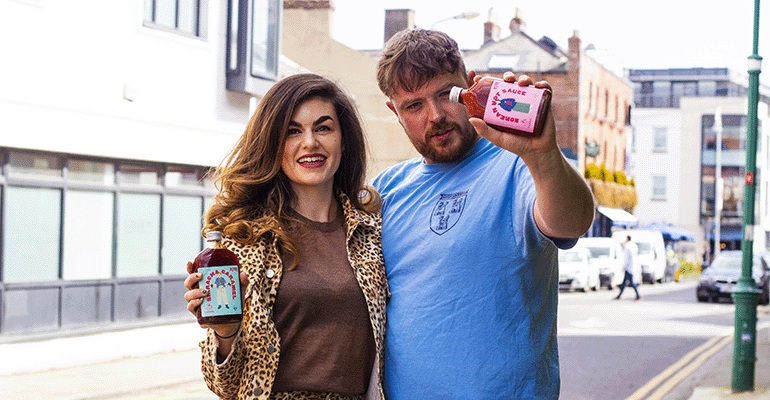
Chimac’s fusion sauces bring Korean flavours to Europe
25 Aug 2026
Irish sauce brand Chimac is tapping into Korea’s culinary traditions, bringing its flavours and products to European consumers who want a taste of K-food.
Read more
Global demand for instant noodles continues to rise
24 Aug 2026
Global demand for instant noodles reached 124.21 billion servings last year, representing a 0.7% year-on-year increase – or 900 million extra servings.
Read more
Popular barbecue staples experience sharp price increases
19 Aug 2026
The typical cost of US shoppers’ barbecue baskets has risen by 12% over the past year – the fastest annual rise in a decade, figures from The Economist show.
Read more
Hot NPD: Nissin launches first cold-water Cup Noodles
18 Aug 2026
Nissin is taking one of Japan’s most iconic instant meals in a completely new direction with the launch of the first cold water-only Cup Noodles in the brand’s 55-year history.
Read more
Manam Chocolate aims to bring premium Indian cacao to 'the world stage'
11 Aug 2026
Craft chocolate brand Manam Chocolate is investing in local expansion and supply chain innovation throughout India as it works to build out the premium reputation of its locally produced cacao products.
Read more