
Ingredients Categories
Finished Products
Finished Food Categories
- Bakery
- Beverages / Juices
- Cereal and grain products
- Confectionery
- Cooking Fats & Oils
- Dairy
- Egg products
- Fruits & Vegetables
- Infant & Baby food
- Meat, Poultry & Fish
- Nuts & Seeds products
- Other Finished Food Categories
- Pet Food
- Plant-based foods
- Prepared foods
- Sauces & Seasonings
- Sweet & Savoury Spreads
Specialised Finished Products
- Bee products
- Biotic products
- Dietary supplements
- Energy drinks
- Functional beverages
- Functional confectionery
- Functional food
- Functional powders
- Meal replacement products
- Nutricosmetics
- Other Specialised Finished Products
- Pet Dietary Supplements
- Pharma and OTC products
- Protein products
- Sugar replacers / Sweeteners
Health & Wellness Areas
Delivery Formats
Operations & Services
- 3D printing
- Analysis/ Testing
- Auditing & certifications
- Blending & mixing
- Bottling
- Certification
- Clinical trials
- Co-packing
- Coating
- Consulting
- Contract manufacturing
- Drying
- Electrospinning
- Encapsulating
- Enzymatic processing
- Extracting
- Extrusion
- Fat structuring
- Fermentation
- Filling
- Flavour development
- Freeze drying
- Granulating/ grinding/ milling / mixing
- High-pressure processing
- Labelling
- Other Operations & Services
- Packaging
- Packet filling
- Pasturising
- Quality assurance
- Saccharification
- Shear cell processing
- Spray drying
- Sterilisation
- Storage & Logistics
- Tabletting
- Toasting / roasting
- Ultra-high temperature processing
News
Could UK-EU agreement turn the tide for agri-food trade?
David Burrows, Freelance Journalist 17 Jun 2025The UK Government is to scrap border checks on fruit and vegetables imported from the European Union in an early move to ease trade ahead of its new deal with the bloc.
The sanitary and phytosanitary (SPS) agreement will make food trade with the UK’s biggest market cheaper and easier, according to those involved. However, it will take months to thrash out.
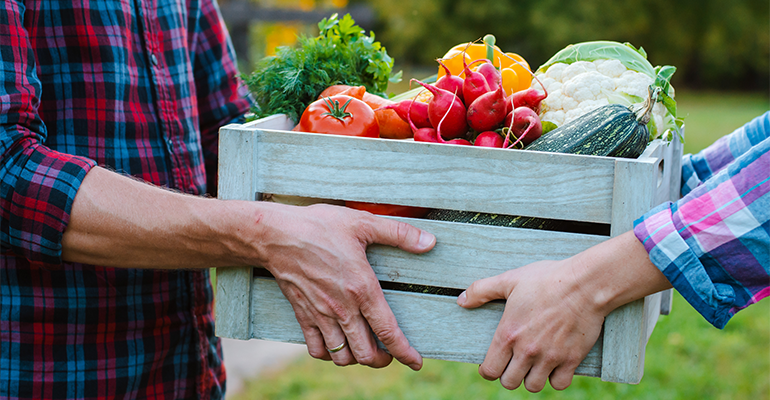
Food businesses and agricultural traders last month welcomed news that the EU and UK is to establish the SPS zone, which will cut costs, ease pressure on food prices, and eliminate routine SPS border checks for food exports and imports.
This is part of a new UK-EU trade deal to bring the two markets closer together after a chaotic few years following Brexit – the UK’s departure from the EU.
“As each other’s most important trading partners, both EU and UK food and drink manufacturers stand to benefit significantly from reduced administrative burdens, lower costs, and fewer delays at borders,” said FoodDrinkEurope (FDE), a trade body that represents many of Europe’s food and drink manufacturers.
“This would help streamline the flow of goods and enhance the efficiency of cross-border supply chains.”
The EU exported €43 billion of food and drink to the UK in 2023. Data published in June showed that global food exports from the UK continue to struggle to return to pre-pandemic levels, currently down a fifth in volume terms (20.4%) in the first quarter of the year, compared with 2020 levels.
The Food and Drink Federation (FDF), which represents UK manufacturers, said trade negotiations with the EU and other nations “suggest potential positivity ahead”.
Export volumes of food and non-alcoholic drinks to the EU – the UK’s biggest and most important trade partner – were down by 3.7% and 1.7% respectively compared with Q1 2024.
The negotiations on a UK/EU SPS agreement are expected to have a positive impact and could boost UK-EU exports by almost a quarter (22.5%), the FDF said. However, this will not affect exports until 2027 at the earliest.
Tom Bradshaw, president at the National Farmers’ Union (NFU) in the UK, said: “This deal will deliver many benefits for agri-food exports to the EU.
“However, there remain important questions about what is within the scope of this agreement and, where current rules and regulations do differ, if there will be any exclusions.”
Clash over cultured meat policies?
SPS checks on meat, dairy, and fish have been in force since 2024. The checks on fresh produce have been delayed while the UK and EU thrash out a new trade deal.
Checks on medium-risk fruit and vegetables (including tomatoes, grapes, plums, cherries, peaches, peppers, and more) imported from the EU will be eased temporarily from 1 July this year to 31 January 2027. Any associated fees will also be dropped.
The NFU explained: “The UK has agreed to dynamically align on sanitary, phytosanitary, food safety, general consumer protection rules applicable to the production, distribution, and consumption of agri-food products, the regulation of live animals and pesticides, the rules on organics as well as marketing standards applicable to certain sectors or products.”
Dynamic alignment essentially means there will be a single rulebook on the agreed areas of law that are within the scope of the agreement. If there is a disagreement over the rules within the scope of the agreement, the EU Court of Justice will have the final say.
There are concerns in some quarters that full dynamic alignment will result in the UK having to adopt EU rules in which it has little say. The UK is hoping to accelerate progress in areas like gene-editing and cultured meats, which could put it at odds with the more conservative approach in the EU.
“Gene-editing regulations stand out as a potential sticking point,” the Centre for Inclusive Trade Policy wrote in a May blog. “The EU and UK have promised that a common SPS area will cover ‘sanitary, phytosanitary, food safety, and general consumer protection rules’, which appears to include gene-editing regulation. This implies that the UK would be required to align with the EU.”
The UK is also aiming to be the first European country to approve cultured meat for human consumption. In February, the first cultured meat dog treat went on sale in the UK.
Ed Barker, head of policy and external affairs at the Agricultural Industries Confederation in the UK, supported the exclusion of wider policy issues like environmental targets and agricultural policy matters from the scope of the agreement.
He said: “It is important that England’s Precision Breeding Act continues to operate independently as the EU develops its own New Genomics Techniques proposals.”
Academics from the Brexit and Environment group, a network of independent researchers from across the UK and the EU, said alignment on climate policies should be relatively straightforward.
“As the EU and UK have similar climate ambitions the reset presents an opportunity for them to reiterate their commitment to net zero and to present a united front in international negotiations,” they explained.
“The retreat of the US from international climate action certainly provides plenty of space and opportunity for greater EU-UK climate leadership and cooperation.”

Get more of our news on Google
Set Ingredients Network as a 'Preferred Source' to get quicker access to the news you value.
Related news

M&S launches own-brand pet food range
11 Sep 2026
UK retailer Marks & Spencer has launched its own-brand pet food line Paws & Pals – a well-timed and strategic move that will appeal to loyal shoppers, says a marketing expert.
Read more
Do the US dietary guidelines put UPFs under pressure?
10 Sep 2026
Will the US dietary guidelines change the way Americans eat, swapping ultra-processed foods for whole foods? We asked Dr Barry Popkin, renowned nutrition and obesity researcher.
Read more
Food fraud costs UK economy £2bn each year
9 Sep 2026
Food fraud is costing the UK economy up to £2 billion (€2.3 billion) every year although the food sector is more “resilient” than others, according to a recent study.
Read more
EU's ban on Brazilian meat expected to raise prices
7 Sep 2026
Around 25% of the EU’s imported chicken and beef comes from Brazil. From September, products that fail to meet the EU antimicrobial resistance rules will be banned.
Read more
Skimpflation: An ‘unfair’ and risky approach to keeping prices low
2 Sep 2026
Consumers see skimpflation – reducing the quality of ingredients due to rising costs – as more unfair than shrinkflation, making it a risky strategy according to recent research.
Read more
NielsenIQ’s EU barometer shows Britain leading in grocery inflation
31 Aug 2026
Britain was the only country to record grocery inflation above 2%, according to NielsenIQ data that compared Europe’s five biggest grocery markets from February to May 2026.
Read more
‘Urgent gaps’ in achieving 2030 food system goals
27 Aug 2026
Global food systems are failing to meet 2030 targets across indicators including health, environment, and resilience, according to a report co-authored by the Food and Agriculture Organisation (FAO).
Read more
Seven-Eleven uses microbial testing tech to extend katsudon shelf life
26 Aug 2026
Japanese retail company Seven-Eleven has improved its factory’s microbial environment to keep comfort-food staple, katsudon, fresher for longer.
Read more
Chimac’s fusion sauces bring Korean flavours to Europe
25 Aug 2026
Irish sauce brand Chimac is tapping into Korea’s culinary traditions, bringing its flavours and products to European consumers who want a taste of K-food.
Read more
Global demand for instant noodles continues to rise
24 Aug 2026
Global demand for instant noodles reached 124.21 billion servings last year, representing a 0.7% year-on-year increase – or 900 million extra servings.
Read more