
Ingredients Categories
Finished Products
Finished Food Categories
- Bakery
- Beverages / Juices
- Cereal and grain products
- Confectionery
- Cooking Fats & Oils
- Dairy
- Egg products
- Fruits & Vegetables
- Infant & Baby food
- Meat, Poultry & Fish
- Nuts & Seeds products
- Other Finished Food Categories
- Pet Food
- Plant-based foods
- Prepared foods
- Sauces & Seasonings
- Sweet & Savoury Spreads
Specialised Finished Products
- Bee products
- Biotic products
- Dietary supplements
- Energy drinks
- Functional beverages
- Functional confectionery
- Functional food
- Functional powders
- Meal replacement products
- Nutricosmetics
- Other Specialised Finished Products
- Pet Dietary Supplements
- Pharma and OTC products
- Protein products
- Sugar replacers / Sweeteners
Health & Wellness Areas
Delivery Formats
Operations & Services
- 3D printing
- Analysis/ Testing
- Auditing & certifications
- Blending & mixing
- Bottling
- Certification
- Clinical trials
- Co-packing
- Coating
- Consulting
- Contract manufacturing
- Drying
- Electrospinning
- Encapsulating
- Enzymatic processing
- Extracting
- Extrusion
- Fat structuring
- Fermentation
- Filling
- Flavour development
- Freeze drying
- Granulating/ grinding/ milling / mixing
- High-pressure processing
- Labelling
- Other Operations & Services
- Packaging
- Packet filling
- Pasturising
- Quality assurance
- Saccharification
- Shear cell processing
- Spray drying
- Sterilisation
- Storage & Logistics
- Tabletting
- Toasting / roasting
- Ultra-high temperature processing
News
Critics slam ‘chaotic’ response to cyclosporiasis outbreak after first deaths reported
David Burrows, Freelance Journalist 7 Aug 2026Questions have been raised over the “chaotic” response to the cyclosporiasis outbreak in the US after two deaths were reported.
According to medical records, both individuals had significant underlying health conditions that may have been impacted by cyclosporiasis and dehydration, according to the Michigan health and human services website.
At a glance:
- The first deaths linked to the cyclosporiasis outbreak in the US have been identified.
- Experts have criticised the “chaotic” response from regulators and industry, highlighting cuts in regulatory staff and voluntary checks.
- The centralisation of food systems is also now under the microscope
They became ill prior to the voluntary recall of iceberg lettuce announced by the US Food and Drug Administration (FDA) on 17 July. The Centers for Disease Control and Prevention (CDC) said it was working closely with the FDA and state health authorities to investigate multiple clusters of cyclosporiasis.
The CDC, FDA, and public health officials in several states are investigating the multistate outbreak of Cyclospora infections.
At the start of August, it was announced that the scope of the investigation had been extended to a further six US states. Other sources of the outbreak are also being investigated.
“This outbreak is remarkable, not only for the large number of people affected, but also because of the inadequate, delayed, and chaotic oversight and response,” wrote Marion Nestle, Paulette Goddard professor of nutrition, food studies, and public health at New York University, Emerita, on her Food Politics blog.
‘Lettuce-gate’: The story so far
Cyclospora cayetanensis is a protozoan parasite that can cause severe gastrointestinal illness in those who become infected. Infection can cause frequent, watery diarrhoea, abdominal cramping, bloating, nausea, flatulence, low-grade fever, and loss of appetite and weight.
While cyclosporiasis is usually mild and self-limiting for most people, infections can be more serious or prolonged in immunocompromised individuals. The infection is transmitted through consumption of food or drink that is contaminated with infected human faeces.
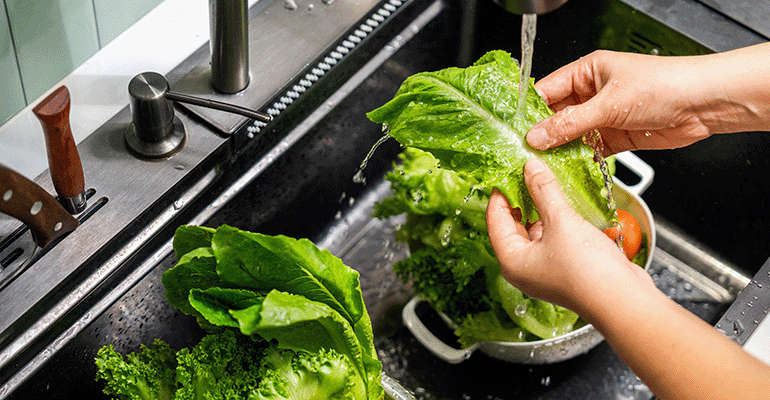
On 17 July, Taylor Farms de Mexico recalled all iceberg lettuce sourced from central Mexico. The recall notice read: “Taylor Farms de Mexico of Guanajuato, Mexico, is voluntarily removing all iceberg lettuce sourced from central Mexico from the US market, because it has the potential to be contaminated with Cyclospora. This action was prompted by the multistate Cyclospora outbreak.”
On 3 August, a CDC update showed the number of cases had reached “at least 1,947”, with 98 hospitalisations.
However, these figures appear to be lagging far behind what is happening on the ground across the US, with some experts noting that newspapers are reporting ahead of official government channels.
Food safety approach questioned as outbreak spreads
The 15 states now reportedly involved in the investigation have reported 21,393 cases (Michigan alone reports 11,508), according to Bill Marler, from law firm Marler Clark.
He has spent the past three decades representing victims of every large foodborne illness outbreak in the US, and consulted on cases in Europe, Asia, and Africa.
Marler, who has filed lawsuits against companies including Cargill, Chipotle, ConAgra, Dole, KFC, Taco Bell, and Wendy’s, explained how the response to the outbreak from regulators and Taco Bell so far had raised alarming questions.
He wrote: “The company at the centre of [the outbreak] will not say how much lettuce it recalled, or where the lettuce went in the weeks before the recall window it drew for itself.”
In an update to her blog on 3 August, Nestle outlined her wishlist on what should have been done and still could be done.
“The point here is that our food supply needs to be a whole lot safer,” she wrote. “When food safety rules are in place, followed, and inspected to make sure they are followed, food poisoning incidents go down. We saw that with meat safety in the 1990s.
“Leafy greens have been a food safety problem for a long time. It’s way past time to get that problem addressed.”
Much is being made of how the outbreak has spiralled, catching the regulators and the food companies involved off guard.
This has led to inevitable criticism of cuts to food safety staff, funding, and surveillance that have reduced opportunities to identify the outbreak's source and stop its spread.
Experts from the Bloomberg School of Health at Johns Hopkins University noted that with reporting in some cases now voluntary and federal staff reduced at agencies like FDA, the connections between state and federal surveillance have “frayed”.
“‘We had it coming’: Cyclosporiasis outbreak reveals holes in food safety system,” they warned in a July article.
Kellogg Schwab, the School’s Abel Wolman Professor in environmental health and engineering, explained that, when it comes to foodborne illnesses, cyclosporiasis “is not the major player by any stretch”, but once it has entered the industrial food system, it is hard to contain.
Experts have also pointed to the country’s industrialised food supply chain, which exacerbates the consequences of the gaps exposed during such outbreaks.
Lucy Sears, communications director at Farm Action, a US farmer-led watchdog, explained that just four companies – Taylor Fresh Foods, Cultrale-Safra, Itochu, and Bonduelle – control 54% of the US fresh-cut salad market.
Produce from many small farms is routed to centralised processing plants and then mixed, bagged, and shipped nationwide. This means a single contamination event does not stay local.
“It’s an efficient way to produce lettuce at a large scale. It’s also a very efficient way to spread disease,” said Dave Love, a research professor at the Johns Hopkins Center for a Livable Future.
Fresh-cut salad is not unique, either. The same pattern of consolidation has played out across the produce industry.
Driscoll’s controls roughly 90% of raspberry sales in conventional supermarkets, for example, while just two companies – Bolthouse and Grimmway – produce about 60% of US carrots.
“When so much of the nation’s produce moves through so few suppliers, a contamination event involving one major company has the potential to affect consumers across multiple states before investigators can identify the source,” Sears added.

Get more of our news on Google
Set Ingredients Network as a 'Preferred Source' to get quicker access to the news you value.
Related news

Do the US dietary guidelines put UPFs under pressure?
10 Sep 2026
Will the US dietary guidelines change the way Americans eat, swapping ultra-processed foods for whole foods? We asked Dr Barry Popkin, renowned nutrition and obesity researcher.
Read more
Food fraud costs UK economy £2bn each year
9 Sep 2026
Food fraud is costing the UK economy up to £2 billion (€2.3 billion) every year although the food sector is more “resilient” than others, according to a recent study.
Read more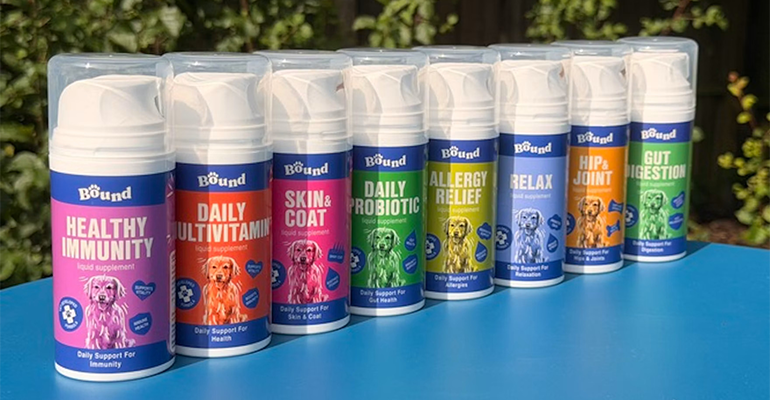
Pump-based liquid pet supplement focuses on health and convenience
8 Sep 2026
Prefera Pet Food uses a plastic pump-based packaging to make administering its liquid supplements for cats and dogs easier, healthier, and more accurate.
Read more
Health and wellness engagement matures across Middle East and Africa
4 Sep 2026
Many consumers in the Middle East and Africa are now proactively engaged in health and wellness, looking to integrate better habits and products into their daily lives, say experts.
Read more
Kellogg accelerates work to remove artificial colours from all US cereals
3 Sep 2026
WK Kellogg has announced an accelerated timeline to eliminate all artificial colours and the chemical preservative, BHT, across its full US portfolio of cereals and cereal packaging.
Read more
Royal Canin launches ‘freshly-cooked’ therapeutic dog food
1 Sep 2026
Mars-owned Royal Canin has moved into the therapeutic diet sector with the launch of its Fresh Veterinary Diets range for dogs with health conditions. We asked a veterinary nutritionist for her opinion.
Read more
‘Urgent gaps’ in achieving 2030 food system goals
27 Aug 2026
Global food systems are failing to meet 2030 targets across indicators including health, environment, and resilience, according to a report co-authored by the Food and Agriculture Organisation (FAO).
Read more
Seven-Eleven uses microbial testing tech to extend katsudon shelf life
26 Aug 2026
Japanese retail company Seven-Eleven has improved its factory’s microbial environment to keep comfort-food staple, katsudon, fresher for longer.
Read more
Chimac’s fusion sauces bring Korean flavours to Europe
25 Aug 2026
Irish sauce brand Chimac is tapping into Korea’s culinary traditions, bringing its flavours and products to European consumers who want a taste of K-food.
Read more
China beverages: Is herbal innovation the future?
20 Aug 2026
Herbal and botanical innovation in China's drinks market continues to grow, with ingredients like astragalus root, ginger, and ginseng in the spotlight – and focus shifting far beyond refreshment.
Read more