
Ingredients Categories
Finished Products
Finished Food Categories
- Bakery
- Beverages / Juices
- Cereal and grain products
- Confectionery
- Cooking Fats & Oils
- Dairy
- Egg products
- Fruits & Vegetables
- Infant & Baby food
- Meat, Poultry & Fish
- Nuts & Seeds products
- Other Finished Food Categories
- Pet Food
- Plant-based foods
- Prepared foods
- Sauces & Seasonings
- Sweet & Savoury Spreads
Specialised Finished Products
- Bee products
- Biotic products
- Dietary supplements
- Energy drinks
- Functional beverages
- Functional confectionery
- Functional food
- Functional powders
- Meal replacement products
- Nutricosmetics
- Other Specialised Finished Products
- Pet Dietary Supplements
- Pharma and OTC products
- Protein products
- Sugar replacers / Sweeteners
Health & Wellness Areas
Delivery Formats
Operations & Services
- 3D printing
- Analysis/ Testing
- Auditing & certifications
- Blending & mixing
- Bottling
- Certification
- Clinical trials
- Co-packing
- Coating
- Consulting
- Contract manufacturing
- Drying
- Electrospinning
- Encapsulating
- Enzymatic processing
- Extracting
- Extrusion
- Fat structuring
- Fermentation
- Filling
- Flavour development
- Freeze drying
- Granulating/ grinding/ milling / mixing
- High-pressure processing
- Labelling
- Other Operations & Services
- Packaging
- Packet filling
- Pasturising
- Quality assurance
- Saccharification
- Shear cell processing
- Spray drying
- Sterilisation
- Storage & Logistics
- Tabletting
- Toasting / roasting
- Ultra-high temperature processing
News
Editors’ choice: Our roundup of the most innovative global beverages
24 Oct 2022
From molecular coffee in the US to sparkling mood drinks in the UK, the global beverage industry is constantly evolving and elevating even the most mundane of drinking experiences.
The products below were cited during the Beverages Deep Dive Day, held as part of the Fi Webinar Series, and include barley milk, a superfood berry and vegetable smoothie, molecular coffee, sparkling mood drinks, Dutch-grown tea and vitamin D drinks.
Let’s take a closer look…

Innocent: Superfood berry and vegetable smoothie
Made from berries and vegetables, UK juice brand Innocent’s berry and vegetable smoothie is said to offer an ‘extra burst of goodness’ and contain vitamins B1, B2, B3 and B6 which help contribute to normal energy yielding metabolism.
“...one product launch that caught my eye is Innocent’s berry and vegetable smoothie, launched in Spain. It’s made with some ‘superfoods’ such as goji berries and has added guarana and vitamins for a natural source of caffeine and energy. It can make a health claim [in the EU] thanks to the vitamin content and says that it helps maintain normal energetic metabolism and reduce tiredness and fatigue,” said Niamh Michail, senior content editor at Fi Global.
Take Two: Barley milk
Take Two barley milk is made with rejuvenated spent barley, upcycled into an ancient nutrient-dense, low-carbon, plant-based protein and is said to be “creamy, delicious and nourishing”. It taps into the upcycling trend, said Kinga Swiderska, head of content at Fi Global. The Oregon-based company uses rescued spent grain from the beer-brewing process that is historically viewed as a ‘leftover’ and used to feed livestock or sent to landfills.
The barley milk range consists of five flavours that “provide 50% more calcium per serving than dairy milk”, (with the exception of the barista variety which offers 30%) and it is a good source of protein. According to the company, one carton of original barley milk saves “nearly 35kg of spent grain from going to waste”. The line-up includes – original, unsweetened, barista, chocolate, and vanilla.
Atomo: Molecular Coffee
Seattle-based company, Atomo produces ‘molecular coffee’ without the coffee beans using a process that it refers to as ‘reverse flavour engineering’. By analysing the taste, flavour, and aroma profile of coffee it ‘recreates’ this flavour using other plant-based ingredients that it roasts and extracts, such as date seeds, grape skins and chicory root. The coffee is then processed into a concentrate and made ready to drink.
“Atomo also says its drink is more sustainable than coffee as the bulk of the ingredients it uses are upcycled side streams and are therefore not creating additional demand for land use. Coffee is grown in tropical areas and some research has shown that its expanded cultivation is associated with deforestation. I don’t think Atomo will ever replace coffee, but it could be an interesting addition,” said Michail.
Peak Rise: Pink Grapefruit Mint
Peak creates non-alcoholic sparkling drinks based on moods. The UK startup’s first two mood-altering drinks offer mental clarity (under the product name Peak Rise) and mindful calm (called Peak Unwind). The brand describes the pink grapefruit mint flavour as an all-natural “pick-me-up to elevate the mood and mind”. This vegan, plant-based product with adaptogens and nootropics is formulated with guayusa, black pepper, ashwagandha, L-Theanine and turmeric. Peak Rise flavours include pink grapefruit mint and raspberry lime. Whilst Peak Unwind features peach rose and blackberry hibiscus.
Local Tea: Dutch-grown tea
Dutch tea brand, Local Tea makes tea that has been grown locally in Northern Europe using tea plants that, thanks to the work of botanists, have been developed to resist the Dutch climate. It took the company eight years to develop the tea variety but there are now around 60,000 tea plants growing on its plantation in Zundert, Netherlands.
The tea range is made up of two formats – pyramid bags which are biodegradable and loose tea leaves. It comes in six flavours – chamomile, red fruit, ginger, citrus, chai and forest fruit.
“I think it’s really interesting to see how, thanks to efforts in agronomy research, we are able to develop varieties of crops that are suited to climates all around the world, helping to make our food system more sustainable by making local food production possible – even for crops that traditionally couldn’t be grown in certain climates. It’s important to point out that Local Tea does not need to heat its greenhouses, which makes it even more environmentally friendly,” said Michail.
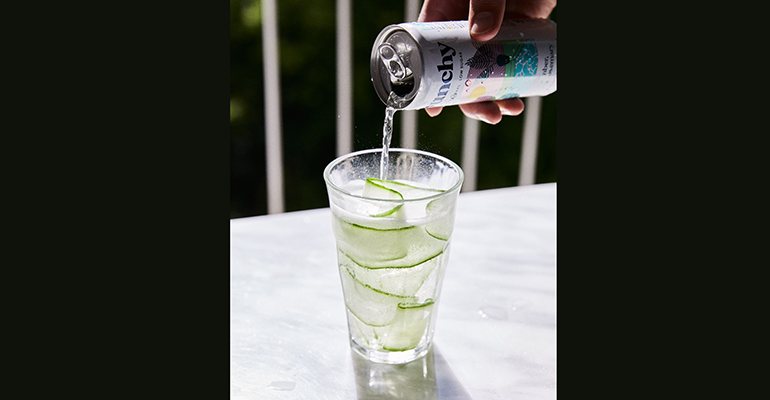 © Copyright Credit: Punchy Drinks
Punchy: Vitamin D drinks
UK startup, Punchy produces low-calorie soft drinks with all-natural ingredients and added vitamin D “to help you catch the sun all year round’, it says on the company website. With a drink offering inspired by the sun, content editor Segi Adewusi, thought Punchy’s sourcing of ingredients and aromatics as well as basing the concept of the drink solely around sunnier climates as quite unique. The line-up includes – blood orange, bitters & cardamom; peach ginger & chai; and cucumber yuzu rosemary.
“Punchy is inspired by the role of the sun in terms of ingredients and health benefits other drinks. To make up for half of the year when there is little sunlight in the UK, they ensure every can has 200 IU vitamin D (50% recommended intake) which is enough to give a balanced diet an extra boost,” said Segi Adewusi, content editor at Fi Global.
Product information taken from Mintel’s Global New Product Database and/or from company websites.

Get more of our news on Google
Set Ingredients Network as a 'Preferred Source' to get quicker access to the news you value.
Related news

Skimpflation: An ‘unfair’ and risky approach to keeping prices low
2 Sep 2026
Consumers see skimpflation – reducing the quality of ingredients due to rising costs – as more unfair than shrinkflation, making it a risky strategy according to recent research.
Read more
NielsenIQ’s EU barometer shows Britain leading in grocery inflation
31 Aug 2026
Britain was the only country to record grocery inflation above 2%, according to NielsenIQ data that compared Europe’s five biggest grocery markets from February to May 2026.
Read more
‘Urgent gaps’ in achieving 2030 food system goals
27 Aug 2026
Global food systems are failing to meet 2030 targets across indicators including health, environment, and resilience, according to a report co-authored by the Food and Agriculture Organisation (FAO).
Read more
China beverages: Is herbal innovation the future?
20 Aug 2026
Herbal and botanical innovation in China's drinks market continues to grow, with ingredients like astragalus root, ginger, and ginseng in the spotlight – and focus shifting far beyond refreshment.
Read more
Popular barbecue staples experience sharp price increases
19 Aug 2026
The typical cost of US shoppers’ barbecue baskets has risen by 12% over the past year – the fastest annual rise in a decade, figures from The Economist show.
Read more
Beyond 'nice to have': A spotlight on US functional beverages
12 Aug 2026
Functional beverage interest in the US is gaining important ground as consumers now expect function rather than see it as "nice to have", and there are clear market gaps for growth, according to Spate.
Read more
Manam Chocolate aims to bring premium Indian cacao to 'the world stage'
11 Aug 2026
Craft chocolate brand Manam Chocolate is investing in local expansion and supply chain innovation throughout India as it works to build out the premium reputation of its locally produced cacao products.
Read more
Digital twin technology gains ground in food manufacturing
6 Aug 2026
Food and beverage companies are increasingly turning to digital twins to optimise and automate manufacturing processes, but opportunities stretch far beyond this, say experts.
Read more
How Secon Taste is putting upcycled snacks on shelves
4 Aug 2026
Hungarian zero-waste startup Secon Taste is turning surplus food into upcycled snacks such as fibre-packed granola, instant porridge, and a circular coffee-tasting box.
Read more
Codex sets global thresholds for ‘may contain’ labels
3 Aug 2026
Codex Alimentarius has adopted its first global guidance on when to use “may contain” allergen warnings, setting thresholds intended to stop the label being used as blanket legal cover.
Read more