
Ingredients Categories
Finished Products
Finished Food Categories
- Bakery
- Beverages / Juices
- Cereal and grain products
- Confectionery
- Cooking Fats & Oils
- Dairy
- Egg products
- Fruits & Vegetables
- Infant & Baby food
- Meat, Poultry & Fish
- Nuts & Seeds products
- Other Finished Food Categories
- Pet Food
- Plant-based foods
- Prepared foods
- Sauces & Seasonings
- Sweet & Savoury Spreads
Specialised Finished Products
- Bee products
- Biotic products
- Dietary supplements
- Energy drinks
- Functional beverages
- Functional confectionery
- Functional food
- Functional powders
- Meal replacement products
- Nutricosmetics
- Other Specialised Finished Products
- Pet Dietary Supplements
- Pharma and OTC products
- Protein products
- Sugar replacers / Sweeteners
Health & Wellness Areas
Delivery Formats
Operations & Services
- 3D printing
- Analysis/ Testing
- Auditing & certifications
- Blending & mixing
- Bottling
- Certification
- Clinical trials
- Co-packing
- Coating
- Consulting
- Contract manufacturing
- Drying
- Electrospinning
- Encapsulating
- Enzymatic processing
- Extracting
- Extrusion
- Fat structuring
- Fermentation
- Filling
- Flavour development
- Freeze drying
- Granulating/ grinding/ milling / mixing
- High-pressure processing
- Labelling
- Other Operations & Services
- Packaging
- Packet filling
- Pasturising
- Quality assurance
- Saccharification
- Shear cell processing
- Spray drying
- Sterilisation
- Storage & Logistics
- Tabletting
- Toasting / roasting
- Ultra-high temperature processing
News
Europe expands vitamin D fortification for Canadian company
Katja Knox, Editorial Account Manager 20 Aug 2021Canadian ingredients producer Lallemand received permission from the European Food Safety Authority to expand the number of compatible food products in which its Lalmin Vitamin D yeast is permitted for use.
Lallemand’s vitamin D yeast has been approved for use in the EU since 2014, but its use has been limited to baked good products and food supplements. However, with this new approval, the company can now provide its fortified yeast to producers across 34 food categories, including protein products, fermented milk, diet foods, cereal, meat analogs and dairy imitations.

Currently, the Canadian company is also pursuing approval from the U.S. Food and Drug Administration to expand the permitted uses of its vitamin D yeast across 18 categories. Approval is expected in 2022.
Vitamin D is a nutrient in which Europeans are chronically deficient. According to a study published in the Journal of Clinical & Translational Endocrinology, vitamin D deficiency occurs in about 20% of the population in Northern Europe and between 30% to 60% of the population in Western, Southern and Eastern Europe.
However, rectifying this deficiency at scale would require an immense amount of resources from animal-sourced foods that would generate a carbon footprint that few consumers would be willing to swallow. A recent Swiss study published in the journal Nutrients, found that it is impossible to obtain adequate vitamin D through dietary shifts alone. The study found that more vitamin D-fortified foods are a necessary part of the diet to achieve optimum nutrient levels.
When examining a baseline Dutch diet, researchers found that the food intake provided about one-fifth of the adequate intake of vitamin D from natural food sources and voluntary vitamin D-fortified foods. To reach optimal Vitamin D consumption levels, carbon emission and calorie intake were increased almost 3-fold and 2-fold, respectively. The majority of vitamin-D-rich foods are animal-derived, such as oily fish, meat, dairy and eggs.
Lallemand’s fortified yeast presents an alternative solution to increasing vitamin D consumption without increasing calorie intake or carbon emissions.

Get more of our news on Google
Set Ingredients Network as a 'Preferred Source' to get quicker access to the news you value.
Related news

M&S launches own-brand pet food range
11 Sep 2026
UK retailer Marks & Spencer has launched its own-brand pet food line Paws & Pals – a well-timed and strategic move that will appeal to loyal shoppers, says a marketing expert.
Read more
Do the US dietary guidelines put UPFs under pressure?
10 Sep 2026
Will the US dietary guidelines change the way Americans eat, swapping ultra-processed foods for whole foods? We asked Dr Barry Popkin, renowned nutrition and obesity researcher.
Read more
Food fraud costs UK economy £2bn each year
9 Sep 2026
Food fraud is costing the UK economy up to £2 billion (€2.3 billion) every year although the food sector is more “resilient” than others, according to a recent study.
Read more
Kellogg accelerates work to remove artificial colours from all US cereals
3 Sep 2026
WK Kellogg has announced an accelerated timeline to eliminate all artificial colours and the chemical preservative, BHT, across its full US portfolio of cereals and cereal packaging.
Read more
‘Urgent gaps’ in achieving 2030 food system goals
27 Aug 2026
Global food systems are failing to meet 2030 targets across indicators including health, environment, and resilience, according to a report co-authored by the Food and Agriculture Organisation (FAO).
Read more
Chimac’s fusion sauces bring Korean flavours to Europe
25 Aug 2026
Irish sauce brand Chimac is tapping into Korea’s culinary traditions, bringing its flavours and products to European consumers who want a taste of K-food.
Read more
Savoury protein snacks shake up the on-the-go market
10 Aug 2026
Sweet flavours have dominated the high-protein snack category but savoury snacks, such as cheese bars and meat sticks, can appeal to health-conscious consumers.
Read more
Nestlé invests in regeneratively farmed wheat for KitKat
5 Aug 2026
Nestlé will pay a premium for Wildfarmed’s regeneratively farmed wheat but the CPG remains reticent to promote the move on packs of its KitKat bars.
Read more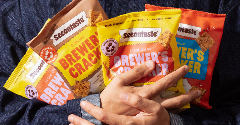
How Secon Taste is putting upcycled snacks on shelves
4 Aug 2026
Hungarian zero-waste startup Secon Taste is turning surplus food into upcycled snacks such as fibre-packed granola, instant porridge, and a circular coffee-tasting box.
Read more
Codex sets global thresholds for ‘may contain’ labels
3 Aug 2026
Codex Alimentarius has adopted its first global guidance on when to use “may contain” allergen warnings, setting thresholds intended to stop the label being used as blanket legal cover.
Read more