
Ingredients Categories
Finished Products
Finished Food Categories
- Bakery
- Beverages / Juices
- Cereal and grain products
- Confectionery
- Cooking Fats & Oils
- Dairy
- Egg products
- Fruits & Vegetables
- Infant & Baby food
- Meat, Poultry & Fish
- Nuts & Seeds products
- Other Finished Food Categories
- Pet Food
- Plant-based foods
- Prepared foods
- Sauces & Seasonings
- Sweet & Savoury Spreads
Specialised Finished Products
- Bee products
- Biotic products
- Dietary supplements
- Energy drinks
- Functional beverages
- Functional confectionery
- Functional food
- Functional powders
- Meal replacement products
- Nutricosmetics
- Other Specialised Finished Products
- Pet Dietary Supplements
- Pharma and OTC products
- Protein products
- Sugar replacers / Sweeteners
Health & Wellness Areas
Delivery Formats
Operations & Services
- 3D printing
- Analysis/ Testing
- Auditing & certifications
- Blending & mixing
- Bottling
- Certification
- Clinical trials
- Co-packing
- Coating
- Consulting
- Contract manufacturing
- Drying
- Electrospinning
- Encapsulating
- Enzymatic processing
- Extracting
- Extrusion
- Fat structuring
- Fermentation
- Filling
- Flavour development
- Freeze drying
- Granulating/ grinding/ milling / mixing
- High-pressure processing
- Labelling
- Other Operations & Services
- Packaging
- Packet filling
- Pasturising
- Quality assurance
- Saccharification
- Shear cell processing
- Spray drying
- Sterilisation
- Storage & Logistics
- Tabletting
- Toasting / roasting
- Ultra-high temperature processing
News
Eco-Score labels improve consumer identification of sustainable foods
Tessa Wiles, Content Editor - Food 22 Sep 2025The presence of a front-of-pack Eco-Score label improves consumers' accuracy in identifying sustainable food products from 52% to 72%, a study suggests.
With more than 300 sustainability labels and logos currently used in supermarkets in the Netherlands alone, covering various aspects of sustainability, from animal and social welfare to environmental impact, it is little surprise that consumers are confused about what each one means.
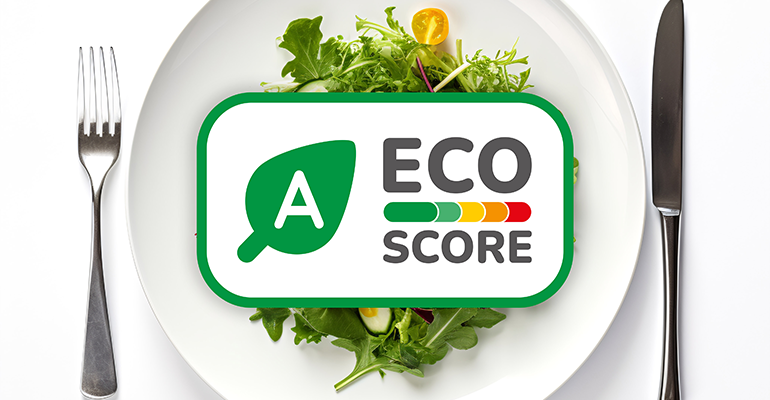
Without clear labelling, consumers' ability to correctly identify sustainable products was essentially a coin flip (52%), the study, published in Appetite, found. However, once a front-of-pack (FOP) Eco-Score label was added, their accuracy increased to 72%.
Simplifying label formats for better consumer understanding
Today's consumers are increasingly keen to make sustainable food choices, yet they often struggle to identify which products align with their values.
The researchers, from Wageningen University & Research in the Netherlands, also examined two label formats, discovering that single-letter labels slightly outperformed traffic light formats, particularly among lower-educated consumers.
Their findings highlighted a challenge: when Eco-Scores and Nutri-Scores conflicted – for example, the Nutri-Score was A but the Eco-Score was E – consumer confusion increased.
Consumers show limited understanding of foods’ sustainability
In the study, 1,201 participants were presented with 20 pairs of food product photos within the same category. For each pair, participants were asked to indicate which product was the most sustainable as quickly as possible.
Half of the pairs shown had an Eco-Score label, while the remaining 10 did not. This allowed researchers to compare the impact a label has on sustainable product identification.
The sustainability of a product was defined by its Eco-Score, which ranged from A (most sustainable) to E (least sustainable). Two label formats – a single-letter version and a traffic light version – were tested. The effectiveness of the Eco-Score was measured using two metrics: correctness and reaction time, with longer reaction times indicating greater difficulty in identification.
“This study showed that without a label, even for motivated consumers, it might be very hard to choose environmentally friendly products,” lead author Dieuwerke Bolhuis told Ingredients Network.
Understanding ‘does not equal purchase’
While the findings indicated that consumers may be more likely to identify the more sustainable option based on its label, Bolhuis, a sensory scientist and expertise leader in food consumer behaviour at Wageningen Food & Biobased Research, emphasised that “understanding does not equal purchase”.
She believes the first step is education.
“If consumers do not understand the label, it is unlikely to influence their purchasing behaviour in the way it was intended,” she said.
“The point here is that for consumers, it was hard to indicate the most sustainable product out of two products within a category, which means that consumers have limited knowledge about the sustainability of food products.”
Navigating conflicting health and sustainability messages
In a follow-up study, Bolhuis and her colleagues examined how consumers interpreted the presence of an Eco-Score label when co-presented with a Nutri-Score label.
They found that when the two scores conflicted, sustainability identification decreased by 5%, and reaction times increased. This suggests that Nutri-Score was not entirely disregarded by some consumers when focusing on sustainability
When asked for advice for food producers and retailers dealing with products where healthiness and environmental impact diverge, Bolhuis said: “Of course, we hope that food producers and retailers aim for green Nutri- and Eco-Scores.
“If scores are conflicting, I would trust that most consumers are able to identify the difference and make an informed choice when they are familiar with both label systems.”
How can brands cut through consumer confusion?
While a potential solution could be to combine the two labels, Bolhuis advocated for keeping them separate.
She said: “Although consumers value simplicity, I think health and sustainability should remain separate labels because they represent different values.
“A health label informs about personal well-being, while a sustainability label reflects environmental or social impact. Keeping them separate ensures clarity and allows consumers to weigh these values according to their own priorities.”
She did offer one way to cut through the confusion: design and placement.
“Consistency in the design and placement of both labels could still support ease of use and help consumers quickly recognise and interpret them,” she added.
Bolhuis also suggested that the addition of QR codes to sustainability labels could improve consumer understanding. QR codes would allow shoppers to access detailed information about how scores are calculated, without cluttering the FOP with an overload of information.
“Being transparent about how scores or labels are determined can strengthen trust, as consumers feel more confident when they understand what the label is based on,” she said.

Get more of our news on Google
Set Ingredients Network as a 'Preferred Source' to get quicker access to the news you value.
Related news

M&S launches own-brand pet food range
11 Sep 2026
UK retailer Marks & Spencer has launched its own-brand pet food line Paws & Pals – a well-timed and strategic move that will appeal to loyal shoppers, says a marketing expert.
Read more
Do the US dietary guidelines put UPFs under pressure?
10 Sep 2026
Will the US dietary guidelines change the way Americans eat, swapping ultra-processed foods for whole foods? We asked Dr Barry Popkin, renowned nutrition and obesity researcher.
Read more
Food fraud costs UK economy £2bn each year
9 Sep 2026
Food fraud is costing the UK economy up to £2 billion (€2.3 billion) every year although the food sector is more “resilient” than others, according to a recent study.
Read more
Kellogg accelerates work to remove artificial colours from all US cereals
3 Sep 2026
WK Kellogg has announced an accelerated timeline to eliminate all artificial colours and the chemical preservative, BHT, across its full US portfolio of cereals and cereal packaging.
Read more
‘Urgent gaps’ in achieving 2030 food system goals
27 Aug 2026
Global food systems are failing to meet 2030 targets across indicators including health, environment, and resilience, according to a report co-authored by the Food and Agriculture Organisation (FAO).
Read more
Chimac’s fusion sauces bring Korean flavours to Europe
25 Aug 2026
Irish sauce brand Chimac is tapping into Korea’s culinary traditions, bringing its flavours and products to European consumers who want a taste of K-food.
Read more
Savoury protein snacks shake up the on-the-go market
10 Aug 2026
Sweet flavours have dominated the high-protein snack category but savoury snacks, such as cheese bars and meat sticks, can appeal to health-conscious consumers.
Read more
Nestlé invests in regeneratively farmed wheat for KitKat
5 Aug 2026
Nestlé will pay a premium for Wildfarmed’s regeneratively farmed wheat but the CPG remains reticent to promote the move on packs of its KitKat bars.
Read more
How Secon Taste is putting upcycled snacks on shelves
4 Aug 2026
Hungarian zero-waste startup Secon Taste is turning surplus food into upcycled snacks such as fibre-packed granola, instant porridge, and a circular coffee-tasting box.
Read more
Codex sets global thresholds for ‘may contain’ labels
3 Aug 2026
Codex Alimentarius has adopted its first global guidance on when to use “may contain” allergen warnings, setting thresholds intended to stop the label being used as blanket legal cover.
Read more