
Ingredients Categories
Finished Products
Finished Food Categories
- Bakery
- Beverages / Juices
- Cereal and grain products
- Confectionery
- Cooking Fats & Oils
- Dairy
- Egg products
- Fruits & Vegetables
- Infant & Baby food
- Meat, Poultry & Fish
- Nuts & Seeds products
- Other Finished Food Categories
- Pet Food
- Plant-based foods
- Prepared foods
- Sauces & Seasonings
- Sweet & Savoury Spreads
Specialised Finished Products
- Bee products
- Biotic products
- Dietary supplements
- Energy drinks
- Functional beverages
- Functional confectionery
- Functional food
- Functional powders
- Meal replacement products
- Nutricosmetics
- Other Specialised Finished Products
- Pet Dietary Supplements
- Pharma and OTC products
- Protein products
- Sugar replacers / Sweeteners
Health & Wellness Areas
Delivery Formats
Operations & Services
- 3D printing
- Analysis/ Testing
- Auditing & certifications
- Blending & mixing
- Bottling
- Certification
- Clinical trials
- Co-packing
- Coating
- Consulting
- Contract manufacturing
- Drying
- Electrospinning
- Encapsulating
- Enzymatic processing
- Extracting
- Extrusion
- Fat structuring
- Fermentation
- Filling
- Flavour development
- Freeze drying
- Granulating/ grinding/ milling / mixing
- High-pressure processing
- Labelling
- Other Operations & Services
- Packaging
- Packet filling
- Pasturising
- Quality assurance
- Saccharification
- Shear cell processing
- Spray drying
- Sterilisation
- Storage & Logistics
- Tabletting
- Toasting / roasting
- Ultra-high temperature processing
News
Supplement shoppers seek storytelling and science-backed suppliers
Natasha Spencer-Jolliffe, Freelance Journalist 17 Oct 2025Supplement consumers want specific health benefits that focus on prevention and personalisation, according to data from HealthFocus International.
In its latest global report on consumer attitudes towards supplements, the research company details how shoppers feel about safety and efficacy, barriers to adoption and use, and the emerging area of personalisation.

Today, almost half (45%) of global consumers report using supplements to support their general health at least twice a week, its findings show.
Following a continued surge in popularity since the Covid-19 pandemic, specific health benefits such as immunity and gut health are driving shoppers’ supplement purchases.
“A big driver right now is the shift toward preventative and personalised health,” Julie Johnson, president of HealthFocus International, told Ingredients Network.
Health attitudes shift supplement development
Several health influences are shaping the development of new supplements.
Instead of solely purchasing supplements to address prevalent health concerns, consumers want to stay ahead of potential future health issues, with supplements formulated to target specific health concerns holding appeal.
HealthFocus International predicts that the increased interest in nootropics or “cognitive enhancers” will result in more consumers seeking supplements for specific benefits.
Its report found that immunity tops the list of benefits consumers want to see in supplements, appealing to 60% of those asked. Supplements that support digestive/gut health, energy and mental performance were also favoured among 56%, 55%, and 55% of shoppers, respectively.
More than half (51%) of respondents stated that appearance was a perceived supplement benefit that influenced their purchasing decisions.
In addition to the specific nature of these claims, consumers also value the ability to match supplements’ benefits with their life stage, health goals, or personal biology.
The report found that 61% of global consumers are aware of personalised supplements, offering a key opportunity for supplement products to cater to shoppers’ individual health needs, lifestyles, and wellness approaches. Half of generation Z and millennial respondents were “extremely” or “very” interested in personalised supplements.
“Another big influence is the push for clean label and ingredient transparency,” Johnson said.
Supplement consumers value clean label profiles and want to recognise the contents listed on packaging. They also seek products that have undergone minimal processing and are responsibly sourced.
“This is opening the door for more whole-food-based supplements and brands that can tell a strong sourcing story,” added Johnson.
Moving from suppliers to storytellers in 2026
As we move closer to 2026, the spotlight will shine brighter on supplement manufacturers – their messaging will increasingly matter as much as what they make.
Globally, cost remains the biggest hurdle to supplement adoption and purchasing. Therefore, quality of communications and clarity of claims are crucial to convey value.
“One of the biggest shifts is that ingredient suppliers are becoming storytellers,” Johnson said.
In 2026, HealthFocus International anticipates that the role of supplement suppliers will expand beyond selling a botanical or fermented ingredient. Instead, they will need to lean into co-branded partnerships and highlight the clinical research behind their products to
garner trust, credibility, and interest.
Adopting an evidence-backed approach will help brands stand out in an increasingly crowded and competitive space.
Dietary sufficiency is a significant challenge, and it is the primary reason consumers avoid supplements in South Asia, the Middle East, and Africa.
Alternatively, 75% of consumers in Saudi Arabia agree that supplements are beneficial in supporting nutritional deficits. These differences indicate the prominent role that cultural perceptions play in supplement uptake.
Science-backed supplement launches are critical
Supplement safety and efficacy are not recognised as key obstacles to use. However, although half of global consumers view supplements as effective and 45% perceive them as safe, there is a significant gap when compared with consumers’ attitudes towards food and beverage.
Manufacturers formulating whole-food supplements and more natural alternatives have an opportunity to plug this gap, drawing on shoppers’ trust in products that fit into the clean, green, and natural space.
However, as suppliers apply strategy and creativity to their launches, they will draw regulatory attention.
“The more new ingredients hit the market, the more regulatory eyes will be on them,” Johnson said.
As we head toward 2026, brands can expect to see higher levels of scrutiny around safety, labelling and substantiation. Supplement brands will need to balance the need for novel and appealing campaigns with accurate, evidence-backed product launches.
“Telling a good story will matter, but backing it up with real science will be non-negotiable,” Johnson added.

Get more of our news on Google
Set Ingredients Network as a 'Preferred Source' to get quicker access to the news you value.
Related news

M&S launches own-brand pet food range
11 Sep 2026
UK retailer Marks & Spencer has launched its own-brand pet food line Paws & Pals – a well-timed and strategic move that will appeal to loyal shoppers, says a marketing expert.
Read more
Do the US dietary guidelines put UPFs under pressure?
10 Sep 2026
Will the US dietary guidelines change the way Americans eat, swapping ultra-processed foods for whole foods? We asked Dr Barry Popkin, renowned nutrition and obesity researcher.
Read more
Food fraud costs UK economy £2bn each year
9 Sep 2026
Food fraud is costing the UK economy up to £2 billion (€2.3 billion) every year although the food sector is more “resilient” than others, according to a recent study.
Read more
Kellogg accelerates work to remove artificial colours from all US cereals
3 Sep 2026
WK Kellogg has announced an accelerated timeline to eliminate all artificial colours and the chemical preservative, BHT, across its full US portfolio of cereals and cereal packaging.
Read more
‘Urgent gaps’ in achieving 2030 food system goals
27 Aug 2026
Global food systems are failing to meet 2030 targets across indicators including health, environment, and resilience, according to a report co-authored by the Food and Agriculture Organisation (FAO).
Read more
Chimac’s fusion sauces bring Korean flavours to Europe
25 Aug 2026
Irish sauce brand Chimac is tapping into Korea’s culinary traditions, bringing its flavours and products to European consumers who want a taste of K-food.
Read more
Savoury protein snacks shake up the on-the-go market
10 Aug 2026
Sweet flavours have dominated the high-protein snack category but savoury snacks, such as cheese bars and meat sticks, can appeal to health-conscious consumers.
Read more
Nestlé invests in regeneratively farmed wheat for KitKat
5 Aug 2026
Nestlé will pay a premium for Wildfarmed’s regeneratively farmed wheat but the CPG remains reticent to promote the move on packs of its KitKat bars.
Read more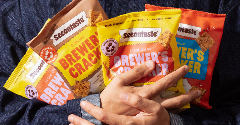
How Secon Taste is putting upcycled snacks on shelves
4 Aug 2026
Hungarian zero-waste startup Secon Taste is turning surplus food into upcycled snacks such as fibre-packed granola, instant porridge, and a circular coffee-tasting box.
Read more
Codex sets global thresholds for ‘may contain’ labels
3 Aug 2026
Codex Alimentarius has adopted its first global guidance on when to use “may contain” allergen warnings, setting thresholds intended to stop the label being used as blanket legal cover.
Read more