
Ingredients Categories
Finished Products
Finished Food Categories
- Bakery
- Beverages / Juices
- Cereal and grain products
- Confectionery
- Cooking Fats & Oils
- Dairy
- Egg products
- Fruits & Vegetables
- Infant & Baby food
- Meat, Poultry & Fish
- Nuts & Seeds products
- Other Finished Food Categories
- Pet Food
- Plant-based foods
- Prepared foods
- Sauces & Seasonings
- Sweet & Savoury Spreads
Specialised Finished Products
- Bee products
- Biotic products
- Dietary supplements
- Energy drinks
- Functional beverages
- Functional confectionery
- Functional food
- Functional powders
- Meal replacement products
- Nutricosmetics
- Other Specialised Finished Products
- Pet Dietary Supplements
- Pharma and OTC products
- Protein products
- Sugar replacers / Sweeteners
Health & Wellness Areas
Delivery Formats
Operations & Services
- 3D printing
- Analysis/ Testing
- Auditing & certifications
- Blending & mixing
- Bottling
- Certification
- Clinical trials
- Co-packing
- Coating
- Consulting
- Contract manufacturing
- Drying
- Electrospinning
- Encapsulating
- Enzymatic processing
- Extracting
- Extrusion
- Fat structuring
- Fermentation
- Filling
- Flavour development
- Freeze drying
- Granulating/ grinding/ milling / mixing
- High-pressure processing
- Labelling
- Other Operations & Services
- Packaging
- Packet filling
- Pasturising
- Quality assurance
- Saccharification
- Shear cell processing
- Spray drying
- Sterilisation
- Storage & Logistics
- Tabletting
- Toasting / roasting
- Ultra-high temperature processing
News
What does MAHA mean for the US nutraceutical industry?
Rik Moors 30 Sep 2025Industry associations have expressed mixed reactions to new policy directions on health and nutrition under the Make America Health Again (MAHA) banner.
In early September, the Department of Health and Human Services (HHS) published its Make Our Children Healthy Again report, in the latest development in nutrition and health policy under HHS Secretary Robert F Kennedy Jr.

The document sets out proposals to tackle childhood chronic disease through regulatory reform, improved dietary guidance, and expanded access to food-based interventions.
It also calls for research into “select high-quality supplements” within a broader National Institutes of Health (NIH) “Whole-Person Health framework”.
CRN welcomes inclusion of supplements in public health agenda
The Council for Responsible Nutrition (CRN), a US trade association for manufacturers of (dietary) supplement ingredients and products, issued a public statement in response to the final MAHA report on 10 September.
It said: “The report brings attention to nutrition and the connections it identifies between proactive healthy behaviours and disease prevention, areas CRN has long emphasised as critical to improving public health.”
The group added that it “look[s] forward to working with HHS Secretary Kennedy and the administration to ensure supplements are given appropriate regulatory attention and [are] considered as part of any initiatives that encompass nutrition whether through health education, access programmes like SNAP [Supplemental Nutrition Assistance Program], or healthcare savings tools such as FSAs and HSAs [Flexible Spending Accounts and Health Savings Accounts].”
IRS reimbursement debate shaped early industry engagement
Prior to the strategy’s release, trade groups voiced concerns over the evolving nutrition policy under the MAHA agenda.
Earlier in September, CRN joined the American Herbal Products Association (AHPA), the Consumer Healthcare Products Association (CHPA), and the United Natural Products Alliance (UNPA) in calling on the Internal Revenue Service (IRS) to revise Publication 502 to consider all supplements with a legally compliant Supplement Facts panel as reimbursable medical expenses under FSAs and HSAs.
CRN explained this approach was simpler to administer and would avoid excluding widely used products that lack structure or function claims.
The Natural Products Association (NPA) submitted a separate, narrower proposal that would restrict eligibility to supplements bearing a US Food and Drug Administration (FDA)-authorised health claim, a structure or function claim, or a substantiated mechanism of action.
NPA president Daniel Fabricant argued this would preserve scientific credibility while aligning with preventive health goals.
Industry reacts to proposals on ingredient scrutiny
The broader MAHA strategy also includes reforms to the generally recognised as safe (GRAS) process.
According to the New York City Food Policy Center, this process, which involves self-determination and voluntary notification, “is often used to fast-track novel ingredients that later appear in dietary supplements”.
The FDA is planning to introduce “a mandatory GRAS notification programme” and close what it describes as the “GRAS loophole”.
The FDA has also been tasked with reviewing the use of petroleum-based colour additives and removing synthetic dyes from the food supply. This proposal has raised concerns within the supplement industry, where dyes are widely used in gummies and tablets.
In comments reported by Politico in July, CRN president Steve Mister questioned whether such decisions were being guided by science.
“Red gummies don’t get to be red on their own,” he said. “Are these decisions going to be science-based? Or are they going to be politically motivated by a base that doesn’t trust colourings?”

Get more of our news on Google
Set Ingredients Network as a 'Preferred Source' to get quicker access to the news you value.
Related news

M&S launches own-brand pet food range
11 Sep 2026
UK retailer Marks & Spencer has launched its own-brand pet food line Paws & Pals – a well-timed and strategic move that will appeal to loyal shoppers, says a marketing expert.
Read more
Do the US dietary guidelines put UPFs under pressure?
10 Sep 2026
Will the US dietary guidelines change the way Americans eat, swapping ultra-processed foods for whole foods? We asked Dr Barry Popkin, renowned nutrition and obesity researcher.
Read more
Food fraud costs UK economy £2bn each year
9 Sep 2026
Food fraud is costing the UK economy up to £2 billion (€2.3 billion) every year although the food sector is more “resilient” than others, according to a recent study.
Read more
Kellogg accelerates work to remove artificial colours from all US cereals
3 Sep 2026
WK Kellogg has announced an accelerated timeline to eliminate all artificial colours and the chemical preservative, BHT, across its full US portfolio of cereals and cereal packaging.
Read more
‘Urgent gaps’ in achieving 2030 food system goals
27 Aug 2026
Global food systems are failing to meet 2030 targets across indicators including health, environment, and resilience, according to a report co-authored by the Food and Agriculture Organisation (FAO).
Read more
Chimac’s fusion sauces bring Korean flavours to Europe
25 Aug 2026
Irish sauce brand Chimac is tapping into Korea’s culinary traditions, bringing its flavours and products to European consumers who want a taste of K-food.
Read more
Savoury protein snacks shake up the on-the-go market
10 Aug 2026
Sweet flavours have dominated the high-protein snack category but savoury snacks, such as cheese bars and meat sticks, can appeal to health-conscious consumers.
Read more
Nestlé invests in regeneratively farmed wheat for KitKat
5 Aug 2026
Nestlé will pay a premium for Wildfarmed’s regeneratively farmed wheat but the CPG remains reticent to promote the move on packs of its KitKat bars.
Read more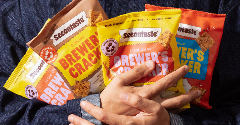
How Secon Taste is putting upcycled snacks on shelves
4 Aug 2026
Hungarian zero-waste startup Secon Taste is turning surplus food into upcycled snacks such as fibre-packed granola, instant porridge, and a circular coffee-tasting box.
Read more
Codex sets global thresholds for ‘may contain’ labels
3 Aug 2026
Codex Alimentarius has adopted its first global guidance on when to use “may contain” allergen warnings, setting thresholds intended to stop the label being used as blanket legal cover.
Read more