
Ingredients Categories
Finished Products
Finished Food Categories
- Bakery
- Beverages / Juices
- Cereal and grain products
- Confectionery
- Cooking Fats & Oils
- Dairy
- Egg products
- Fruits & Vegetables
- Infant & Baby food
- Meat, Poultry & Fish
- Nuts & Seeds products
- Other Finished Food Categories
- Pet Food
- Plant-based foods
- Prepared foods
- Sauces & Seasonings
- Sweet & Savoury Spreads
Specialised Finished Products
- Bee products
- Biotic products
- Dietary supplements
- Energy drinks
- Functional beverages
- Functional confectionery
- Functional food
- Functional powders
- Meal replacement products
- Nutricosmetics
- Other Specialised Finished Products
- Pet Dietary Supplements
- Pharma and OTC products
- Protein products
- Sugar replacers / Sweeteners
Health & Wellness Areas
Delivery Formats
Operations & Services
- 3D printing
- Analysis/ Testing
- Auditing & certifications
- Blending & mixing
- Bottling
- Certification
- Clinical trials
- Co-packing
- Coating
- Consulting
- Contract manufacturing
- Drying
- Electrospinning
- Encapsulating
- Enzymatic processing
- Extracting
- Extrusion
- Fat structuring
- Fermentation
- Filling
- Flavour development
- Freeze drying
- Granulating/ grinding/ milling / mixing
- High-pressure processing
- Labelling
- Other Operations & Services
- Packaging
- Packet filling
- Pasturising
- Quality assurance
- Saccharification
- Shear cell processing
- Spray drying
- Sterilisation
- Storage & Logistics
- Tabletting
- Toasting / roasting
- Ultra-high temperature processing
News
Europe gravitates to African spices
Natasha Spencer-Jolliffe, Freelance Journalist 19 Aug 2024Shipping delays, limited production output and climate change impact Europe’s spice supply, creating opportunities for African brands to enter the captive market.
Spices have long been a hallmark within the European food landscape. Yet, various supply issues risk disrupting the continent’s ability to access in-demand spices in the required quantities.
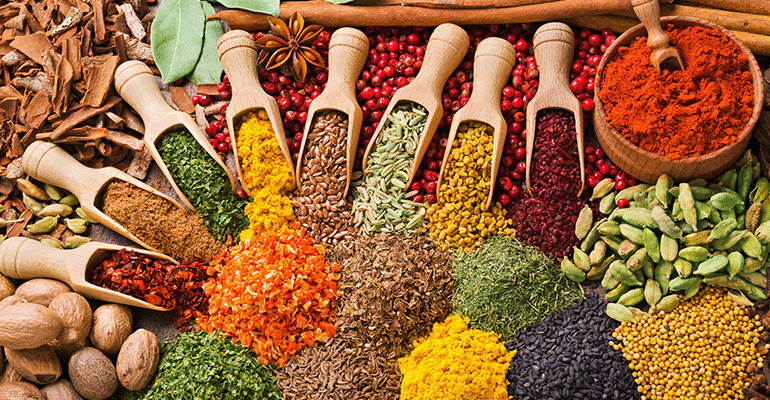
Speaking at the Centre for the Promotion of Imports from developing countries (CBI) webinar African Spices-Seizing Opportunities in Europe, Luz Maria Barrientos, International trade consultant at Globally Cool says that while Europe currently has a steady spice demand, the supply dynamics are changing. These changes are prompting the market to look to Africa to provide a diverse and ample spice supply, propping up its current quantities.
Global disruption affects the spice supply
“Shipping issues like the obstruction of the Red Sea have been causing delays and extra supply costs,” Barrientos says. European producers are subsequently looking to other markets to provide sufficient spice quantities.
Consumption is also outstripping production output levels in some markets. “We also have the very big issue that key producing countries, for example, Indonesia, India, and China, are increasing their consumption faster than production, meaning they have fewer spices that they can put into the international market,” Barrientos says.
Global importers, including Europe, might be empty-handed or unable to source all the necessary spices. “That, of course, is driving them to look for alternate origins to mitigate that risk,” adds Barrientos.
Climate change is another significant factor impacting crops worldwide and spice and herb development. As a result, this creates more risk in the supply chain, opening opportunities for new products and brands. “Many African countries have good climate conditions for growing spices,” says Barrientos.
All these factors combined have created ample opportunity for African spice brands to enter and grow in the spice space, filling existing gaps in the European market.
Emerging opportunities for African-grown spice exports
The European market has traditionally been a significant consumer of spices, and the steady demand for African spices is creating an opportunity for African spice exporters. Over the last five years, a consistent 6% annual increase in African spice imports to Europe has shown a promising trend.
Since 2022, the total imports of spices and herbs from Africa to Europe have exceeded 30,000 tonnes, accounting for around 6% of the total imports, and this number is expected to continue increasing. “But Africa is still a small participant with a small share in the total of the imports, which is good news because it means we have a lot of chances to grow,” says Barrientos.
With its proximity to Europe, favourable climate and diverse range of high-quality spices, Africa is poised to become a significant player in the spice trade. Additionally, the geographical proximity of African countries to Europe offers a logistical advantage and presents a viable solution to mitigate the issue of shipping risks.
The landscape is ripe for African spice producers to meet the current demand and carve out a larger share of the European spice market. With abundant, flavourful, and aromatic spices, African-grown spices have the potential to emerge on the global stage.
Leading spice trends
African spices such as capsicums, ginger, anise, cinnamon, cloves, coriander seeds, pepper, and vanilla are popular among consumers. Capsicums have emerged as a standout success story, with a significant increase in European exports. Ginger, another highly sought-after spice, faced supply challenges due to production issues in Nigeria but remains a crucial player in the market.
Spices like anise, cinnamon, cloves, coriander seeds, pepper, and vanilla have also shown varying degrees of market presence and potential for growth. As African countries continue to harness their spice-growing potential and capitalise on the demand in the European market, new opportunities to export these spices are emerging.
Entering the European market
African spice producers are now focusing on meeting the European Union’s (EU) demands and benefiting from these new market opportunities.
Poul Wiertsema, Consultant and Expert in spice sourcing at Spice and Advice, said at the CBI Webinar that there are four key structural factors for African spices to enter the European market: EU quality regulation compliance, sustainability, investing in market development, and adopting customer needs. Gaining awareness and ensuring compliance in these areas is critical.
Regarding the main hazards in spices and herbs, Wiertsema says these are “residues of agrochemicals, looking at Hindi sites, looking at pesticides, insecticides”. In the EU, residues all have maximum levels that products entering the market must adhere to.
Paul de Rooij, Food Technologist and Founder and co-director of Trianon Investment, details the financial constraints facing exporters in this business. For example, the reality is that buyers like to buy big uniform lots. “That is the biggest issue in this business,” says de Rooij.
When trading from Africa, suppliers are asked for the full container load of one single product of one specific quality. Subsequently, spice manufacturers and brands need to buy the raw materials, engage in processing and handle the processing loss between the processing and collection periods.
African spice producers need to ensure consistent quality, a reliable supply and adherence to international standards to succeed in the European market.

Get more of our news on Google
Set Ingredients Network as a 'Preferred Source' to get quicker access to the news you value.
Related news

Do the US dietary guidelines put UPFs under pressure?
10 Sep 2026
Will the US dietary guidelines change the way Americans eat, swapping ultra-processed foods for whole foods? We asked Dr Barry Popkin, renowned nutrition and obesity researcher.
Read more
Health and wellness engagement matures across Middle East and Africa
4 Sep 2026
Many consumers in the Middle East and Africa are now proactively engaged in health and wellness, looking to integrate better habits and products into their daily lives, say experts.
Read more
Skimpflation: An ‘unfair’ and risky approach to keeping prices low
2 Sep 2026
Consumers see skimpflation – reducing the quality of ingredients due to rising costs – as more unfair than shrinkflation, making it a risky strategy according to recent research.
Read more
‘Urgent gaps’ in achieving 2030 food system goals
27 Aug 2026
Global food systems are failing to meet 2030 targets across indicators including health, environment, and resilience, according to a report co-authored by the Food and Agriculture Organisation (FAO).
Read more
Seven-Eleven uses microbial testing tech to extend katsudon shelf life
26 Aug 2026
Japanese retail company Seven-Eleven has improved its factory’s microbial environment to keep comfort-food staple, katsudon, fresher for longer.
Read more
Chimac’s fusion sauces bring Korean flavours to Europe
25 Aug 2026
Irish sauce brand Chimac is tapping into Korea’s culinary traditions, bringing its flavours and products to European consumers who want a taste of K-food.
Read more
Global demand for instant noodles continues to rise
24 Aug 2026
Global demand for instant noodles reached 124.21 billion servings last year, representing a 0.7% year-on-year increase – or 900 million extra servings.
Read more
Popular barbecue staples experience sharp price increases
19 Aug 2026
The typical cost of US shoppers’ barbecue baskets has risen by 12% over the past year – the fastest annual rise in a decade, figures from The Economist show.
Read more
Hot NPD: Nissin launches first cold-water Cup Noodles
18 Aug 2026
Nissin is taking one of Japan’s most iconic instant meals in a completely new direction with the launch of the first cold water-only Cup Noodles in the brand’s 55-year history.
Read more
Manam Chocolate aims to bring premium Indian cacao to 'the world stage'
11 Aug 2026
Craft chocolate brand Manam Chocolate is investing in local expansion and supply chain innovation throughout India as it works to build out the premium reputation of its locally produced cacao products.
Read more