
Ingredients Categories
Finished Products
Finished Food Categories
- Bakery
- Beverages / Juices
- Cereal and grain products
- Confectionery
- Cooking Fats & Oils
- Dairy
- Egg products
- Fruits & Vegetables
- Infant & Baby food
- Meat, Poultry & Fish
- Nuts & Seeds products
- Other Finished Food Categories
- Pet Food
- Plant-based foods
- Prepared foods
- Sauces & Seasonings
- Sweet & Savoury Spreads
Specialised Finished Products
- Bee products
- Biotic products
- Dietary supplements
- Energy drinks
- Functional beverages
- Functional confectionery
- Functional food
- Functional powders
- Meal replacement products
- Nutricosmetics
- Other Specialised Finished Products
- Pet Dietary Supplements
- Pharma and OTC products
- Protein products
- Sugar replacers / Sweeteners
Health & Wellness Areas
Delivery Formats
Operations & Services
- 3D printing
- Analysis/ Testing
- Auditing & certifications
- Blending & mixing
- Bottling
- Certification
- Clinical trials
- Co-packing
- Coating
- Consulting
- Contract manufacturing
- Drying
- Electrospinning
- Encapsulating
- Enzymatic processing
- Extracting
- Extrusion
- Fat structuring
- Fermentation
- Filling
- Flavour development
- Freeze drying
- Granulating/ grinding/ milling / mixing
- High-pressure processing
- Labelling
- Other Operations & Services
- Packaging
- Packet filling
- Pasturising
- Quality assurance
- Saccharification
- Shear cell processing
- Spray drying
- Sterilisation
- Storage & Logistics
- Tabletting
- Toasting / roasting
- Ultra-high temperature processing
News
Ferrero updates Nutella brand with new plant-based version
Will Chu, Freelance Journalist 24 Oct 2024Ferrero has launched a plant-based version of its Nutella brand, which adds chickpeas to its formulation in a move designed to appeal to growing numbers of vegan consumers.
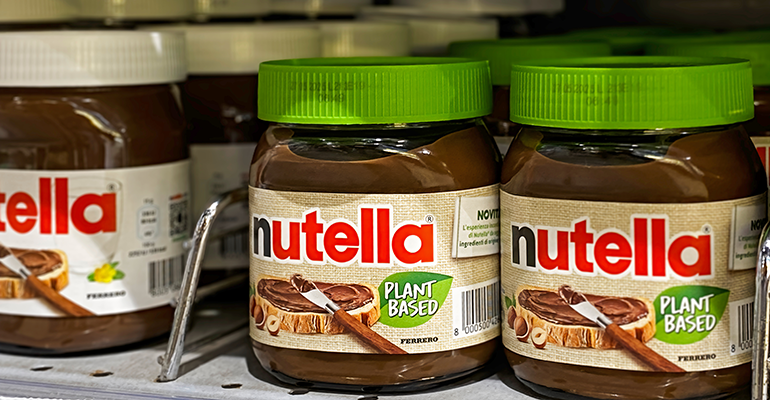
Other changes made by the Italian confectionary giants include the replacement of milk and the inclusion of rice syrup. The aim is to “embrace the growing demand for plant-based products, with increasing numbers of consumers choosing to reduce or avoid animal products whether for dietary or lifestyle reasons”, said Ferrero.
Plant-based Nutella to roll out in Italy, France, Belgium, and Germany
Expected to launch in Autumn 2024, plant-based Nutella will initially be available in select European markets such as Italy, France, and Belgium in a 350 g format.
In a similar vein to the original Nutella, it will be sold in a recyclable jar and made using ingredients that meet Ferrero’s stance on responsible sourcing, according to the manufacturer.
Commenting on the new spread’s launch, Vanessa Brown, head of trademarks at the Vegetarian Society said: “We welcome Ferrero’s efforts to meet the needs and expectations of the millions of consumers following plant-based and vegan diets. We are pleased to announce that the new Nutella Plant-Based meets the Vegetarian Society’s strict criteria for vegan accreditation. One of the world’s most loved brands is now offering a plant-based option.”
Whispers of Ferro’s intentions to launch a plant-based version of Nutella intensified in December of last year, when Ferrero registered the trademark “Nutella Plant-Based” at the Italian patent office (UIBM) of the Ministry of Made in Italy. Around the same time, Ferrero registered a plant-based version of the chocolate spread with Germany’s Patent and Trademark Office.
Germany has the highest share of plant-based eaters among European countries
The European plant-based market has now reached €5.8bn in sales in Europe, according to global marketing research firm Nielsen IQ.
According to the Smart Protein Project, Germany has the highest share of plant-based eaters among European countries analysed with 10% of its consumers plant-based eaters (including vegetarians and vegans). In addition, 30% of Germans identified as flexitarian. In Italy, meanwhile, the sector is worth around €680m, where one of the most successful categories is vegetable-based “milk”, which is currently worth €310.4m.
Nutella, invented by family-owned Ferrero, has annual worldwide sales of over €2 billion. With 54% share of the worldwide market for chocolate-based spreads, Nutella has practically no significant rival as a mass-marketed brand.
“We are excited to welcome even more people into the brand offering Nutella Plant-Based, the latest addition to the growing Nutella family,” said Thomas Chatenier, global president of Nutella at Ferrero. “We developed this innovation to provide a delicious new choice that delivers the unmistakable Nutella experience in a plant-based version, replacing milk with vegetal ingredients, offering the same great taste, smooth texture and excellent quality that the Nutella brand is known and loved for.”
Chocolate and hazelnut-based spread alternatives eager to grab tiny slice of market share
Despite Nutella’s dominance, a handful of chocolate and hazelnut-based alternatives have recently become available, many of which focus on sustainable production.
Vego is Germany-based brand specialising in gianduja-inspired chocolate products, one of which is a vegan spread that includes fairtrade sugar, cocoa, and vanilla to form a product that is also palm oil-free. Meanwhile Italian firm Mr Organic combines cocoa with Italian-grown hazelnuts that also negates the need for palm oil. The dairy-free spread consists of seven organic ingredients: cane sugar, sunflower oil, low fat cocoa (16%), hazelnut paste (12%), rice flour, cocoa butter, and sunflower lecithin.
Fabalous is another fledgling firm keen onto promote its sustainability credentials. The UK-based firm makes available its chickpea-based chocolate spreads which contain 57% less sugar and 81% more protein than leading products. The spreads are organic and also palm oil-free.

Get more of our news on Google
Set Ingredients Network as a 'Preferred Source' to get quicker access to the news you value.
Related news

Do the US dietary guidelines put UPFs under pressure?
10 Sep 2026
Will the US dietary guidelines change the way Americans eat, swapping ultra-processed foods for whole foods? We asked Dr Barry Popkin, renowned nutrition and obesity researcher.
Read more
Food fraud costs UK economy £2bn each year
9 Sep 2026
Food fraud is costing the UK economy up to £2 billion (€2.3 billion) every year although the food sector is more “resilient” than others, according to a recent study.
Read more
Kellogg accelerates work to remove artificial colours from all US cereals
3 Sep 2026
WK Kellogg has announced an accelerated timeline to eliminate all artificial colours and the chemical preservative, BHT, across its full US portfolio of cereals and cereal packaging.
Read more
Skimpflation: An ‘unfair’ and risky approach to keeping prices low
2 Sep 2026
Consumers see skimpflation – reducing the quality of ingredients due to rising costs – as more unfair than shrinkflation, making it a risky strategy according to recent research.
Read more
NielsenIQ’s EU barometer shows Britain leading in grocery inflation
31 Aug 2026
Britain was the only country to record grocery inflation above 2%, according to NielsenIQ data that compared Europe’s five biggest grocery markets from February to May 2026.
Read more
‘Urgent gaps’ in achieving 2030 food system goals
27 Aug 2026
Global food systems are failing to meet 2030 targets across indicators including health, environment, and resilience, according to a report co-authored by the Food and Agriculture Organisation (FAO).
Read more
Manam Chocolate aims to bring premium Indian cacao to 'the world stage'
11 Aug 2026
Craft chocolate brand Manam Chocolate is investing in local expansion and supply chain innovation throughout India as it works to build out the premium reputation of its locally produced cacao products.
Read more
Digital twin technology gains ground in food manufacturing
6 Aug 2026
Food and beverage companies are increasingly turning to digital twins to optimise and automate manufacturing processes, but opportunities stretch far beyond this, say experts.
Read more
Nestlé invests in regeneratively farmed wheat for KitKat
5 Aug 2026
Nestlé will pay a premium for Wildfarmed’s regeneratively farmed wheat but the CPG remains reticent to promote the move on packs of its KitKat bars.
Read more
EU sets maximum MOAH levels to protect human health
28 Jul 2026
The EU will adopt maximum levels for mineral oil aromatic hydrocarbons (MOAH) in food to protect human health. What do manufacturers need to know?
Read more