
Ingredients Categories
Finished Products
Finished Food Categories
- Bakery
- Beverages / Juices
- Cereal and grain products
- Confectionery
- Cooking Fats & Oils
- Dairy
- Egg products
- Fruits & Vegetables
- Infant & Baby food
- Meat, Poultry & Fish
- Nuts & Seeds products
- Other Finished Food Categories
- Pet Food
- Plant-based foods
- Prepared foods
- Sauces & Seasonings
- Sweet & Savoury Spreads
Specialised Finished Products
- Bee products
- Biotic products
- Dietary supplements
- Energy drinks
- Functional beverages
- Functional confectionery
- Functional food
- Functional powders
- Meal replacement products
- Nutricosmetics
- Other Specialised Finished Products
- Pet Dietary Supplements
- Pharma and OTC products
- Protein products
- Sugar replacers / Sweeteners
Health & Wellness Areas
Delivery Formats
Operations & Services
- 3D printing
- Analysis/ Testing
- Auditing & certifications
- Blending & mixing
- Bottling
- Certification
- Clinical trials
- Co-packing
- Coating
- Consulting
- Contract manufacturing
- Drying
- Electrospinning
- Encapsulating
- Enzymatic processing
- Extracting
- Extrusion
- Fat structuring
- Fermentation
- Filling
- Flavour development
- Freeze drying
- Granulating/ grinding/ milling / mixing
- High-pressure processing
- Labelling
- Other Operations & Services
- Packaging
- Packet filling
- Pasturising
- Quality assurance
- Saccharification
- Shear cell processing
- Spray drying
- Sterilisation
- Storage & Logistics
- Tabletting
- Toasting / roasting
- Ultra-high temperature processing
News
Functional fungi: The global rise of mushrooms
1 Feb 2023
Reishi, shiitake, chaga, and lion’s mane are just some of the mushrooms proving to be a versatile addition to global health and wellness products formulated with functional ingredients.
Everyday food and drink products such as coffee, tea, crisps, and chocolate containing mushrooms are increasingly claiming to boost immunity, reduce stress, and improve mental focus. With a rise in plant-based diets as well as consumer interest in nutritious foods that can boost health and wellbeing, some mushroom varieties are becoming a key functional ingredient for manufacturers to include in their latest product innovations.
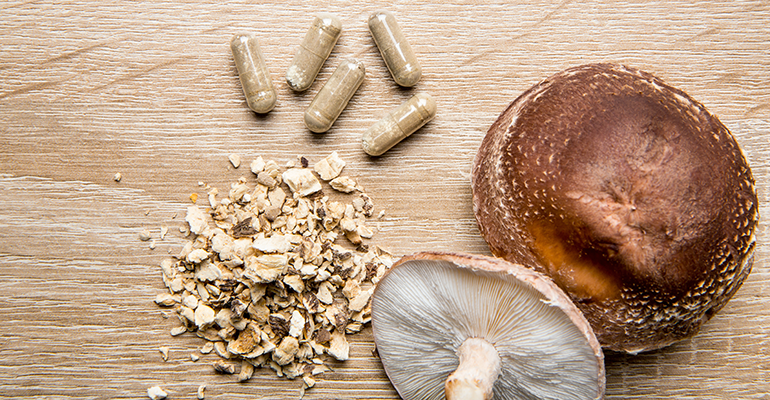
The global mushroom market including fresh, canned and dried was worth over $50 billion in 2021 and is predicted to gain a revenue of roughly $100bn by 2028. Mushrooms are low fat, high in dietary fibre and protein, complete with all essential amino acids, and are an excellent source of nutrients. Many varieties are also rich in nutrients such as polysaccharides, peptides, and polyphenols that improve human performance by promoting health and reducing disease. Cordyceps has been found to improve athletic performance and has anti-ageing properties, and lion’s mane is linked with supporting brain health.
Mounting research details the potential for ergothioneine (ERGO) a rare amino acid found in certain fungi, including mushrooms. ERGO has been shown to be an effective antioxidant and anti-inflammatory agent to prevent or mitigate chronic diseases of aging.
Emma Schofield, associate director of global food science at Mintel, reports that medicinal mushrooms are emerging as wellness ingredients in supplements and other functional products, but launches are still limited. There is also consumer interest in natural ingredients that deliver health benefits, which suggests an opportunity for mushroom ingredients to grow.
Mushroom coffee
Mushroom coffee blends coffee and medicinal mushrooms to lower caffeine levels – macroscopic fungi used in the form of extracts or powder for their anti-inflammatory properties and to maintain a healthy diet – as well as vitamins, minerals, and adaptogens.
South African brand, My Wellness, makes Mushroom Keto Coffee which contains ashwagandha root, lion's mane, chaga, and reishi along with raw cacao and arabica beans. According to the manufacturer’s website, the wide range of medicinal mushrooms provides mental focus and prevents a caffeine crash.
 © iStock/YuriiSliusar
Focus Fuel Instant Mushroom Coffee by US brand Natural Traditions was included in a roundup of functional food and drink seen at the Speciality & Fine Food Fair in London last year by Mintel. It is prepared by adding water and made with organic instant coffee, lion's mane, brahmi (used to treat poor memory in traditional Ayurvedic medicine), ahiflower (a plant-based source of omega 3 and 6 essential fatty acids), and coconut milk powder. The manufacturer notes the coffee improves focus, memory, and creativity and nourishes the brain with adaptogenic lion's mane.
US brand MUD\WTR combines mushrooms with little to no caffeine in its range of coffee alternative blends. Each blend consists of cacao, herbs, spices and contains one or more of the following mushrooms: reishi, cordyceps, chaga, and lion’s mane.
Brands leverage mushrooms’ health-boosting properties
According to Mintel, reishi (31%), shiitake (22%) and cordyceps (15%) are the top mushrooms used in new vitamin and supplement drink launches containing a mushroom ingredient.
Thai brand D Daily makes a wellness drink containing ginseng extract and reishi to boost health and wellbeing. US brand Califa Farms Mushroom Oat Barista Blend and Hemp Barista Blend claims to be the only ready-to-use mushroom oat milk containing 3,000 mg of whole cordyceps and 2,400 mg of lion’s mane. Lion's mane can be also found in US brand, IQ Bar’s Lemon Blueberry Brain + Body Bars which is made with six specific brain nutrients.
Singaporean brand Other Foods makes Crunchy Oyster Mushrooms, a vacuumed dried snack. The packaging mentions ergothioneine and notes that it features “ergothioneine, a lesser-known antioxidant amino acid to protect the cells of the body [by] reducing triglycerides that can cause cardiovascular disease”.

Get more of our news on Google
Set Ingredients Network as a 'Preferred Source' to get quicker access to the news you value.
Related news

Skimpflation: An ‘unfair’ and risky approach to keeping prices low
2 Sep 2026
Consumers see skimpflation – reducing the quality of ingredients due to rising costs – as more unfair than shrinkflation, making it a risky strategy according to recent research.
Read more
NielsenIQ’s EU barometer shows Britain leading in grocery inflation
31 Aug 2026
Britain was the only country to record grocery inflation above 2%, according to NielsenIQ data that compared Europe’s five biggest grocery markets from February to May 2026.
Read more
‘Urgent gaps’ in achieving 2030 food system goals
27 Aug 2026
Global food systems are failing to meet 2030 targets across indicators including health, environment, and resilience, according to a report co-authored by the Food and Agriculture Organisation (FAO).
Read more
China beverages: Is herbal innovation the future?
20 Aug 2026
Herbal and botanical innovation in China's drinks market continues to grow, with ingredients like astragalus root, ginger, and ginseng in the spotlight – and focus shifting far beyond refreshment.
Read more
Popular barbecue staples experience sharp price increases
19 Aug 2026
The typical cost of US shoppers’ barbecue baskets has risen by 12% over the past year – the fastest annual rise in a decade, figures from The Economist show.
Read more
Beyond 'nice to have': A spotlight on US functional beverages
12 Aug 2026
Functional beverage interest in the US is gaining important ground as consumers now expect function rather than see it as "nice to have", and there are clear market gaps for growth, according to Spate.
Read more
Manam Chocolate aims to bring premium Indian cacao to 'the world stage'
11 Aug 2026
Craft chocolate brand Manam Chocolate is investing in local expansion and supply chain innovation throughout India as it works to build out the premium reputation of its locally produced cacao products.
Read more
Digital twin technology gains ground in food manufacturing
6 Aug 2026
Food and beverage companies are increasingly turning to digital twins to optimise and automate manufacturing processes, but opportunities stretch far beyond this, say experts.
Read more
How Secon Taste is putting upcycled snacks on shelves
4 Aug 2026
Hungarian zero-waste startup Secon Taste is turning surplus food into upcycled snacks such as fibre-packed granola, instant porridge, and a circular coffee-tasting box.
Read more
Codex sets global thresholds for ‘may contain’ labels
3 Aug 2026
Codex Alimentarius has adopted its first global guidance on when to use “may contain” allergen warnings, setting thresholds intended to stop the label being used as blanket legal cover.
Read more