
Ingredients Categories
Finished Products
Finished Food Categories
- Bakery
- Beverages / Juices
- Cereal and grain products
- Confectionery
- Cooking Fats & Oils
- Dairy
- Egg products
- Fruits & Vegetables
- Infant & Baby food
- Meat, Poultry & Fish
- Nuts & Seeds products
- Other Finished Food Categories
- Pet Food
- Plant-based foods
- Prepared foods
- Sauces & Seasonings
- Sweet & Savoury Spreads
Specialised Finished Products
- Bee products
- Biotic products
- Dietary supplements
- Energy drinks
- Functional beverages
- Functional confectionery
- Functional food
- Functional powders
- Meal replacement products
- Nutricosmetics
- Other Specialised Finished Products
- Pet Dietary Supplements
- Pharma and OTC products
- Protein products
- Sugar replacers / Sweeteners
Health & Wellness Areas
Delivery Formats
Operations & Services
- 3D printing
- Analysis/ Testing
- Auditing & certifications
- Blending & mixing
- Bottling
- Certification
- Clinical trials
- Co-packing
- Coating
- Consulting
- Contract manufacturing
- Drying
- Electrospinning
- Encapsulating
- Enzymatic processing
- Extracting
- Extrusion
- Fat structuring
- Fermentation
- Filling
- Flavour development
- Freeze drying
- Granulating/ grinding/ milling / mixing
- High-pressure processing
- Labelling
- Other Operations & Services
- Packaging
- Packet filling
- Pasturising
- Quality assurance
- Saccharification
- Shear cell processing
- Spray drying
- Sterilisation
- Storage & Logistics
- Tabletting
- Toasting / roasting
- Ultra-high temperature processing
News
High-sugar Bournvita in the spotlight over misleading health claims
9 May 2023
Mondelēz-owned chocolate drink brand Bournvita has become embroiled in a legal spat with an Indian social media influencer who questioned the purported healthiness of the high-sugar product.
Indian social media influencer Revant Himatsingka, known as Food Pharmer on Instagram, released a video in April 2023 highlighting the high sugar content level in Cadbury’s Bournvita. Following the release, which received approximately 12 million views, the Mondelez India-owned drink company rejected the claims, Outlook India reported.
The malted and chocolate malt drink brand, which Cadbury manufactures, issued a legal notice to the social media influencer and certified health coach in response to his video, which has since been deleted.
Kudos for critical analysis of misleading claims
Dr Kantha Shelke, a food scientist and principal at food science and research firm Corvus Blue, said: “Kudos to social influencer Revant Himatsingka [...] for critically analysing the contents of Bournvita against the touted nutritional and health claims and alerting the public-at-large about the misleading information.
The Mondelez brand states that over the past 70 years, Bournvita has earned the trust of consumers in India by being a scientifically formulated product that adheres to the highest quality standards and complies with the law.
“That is why we were concerned by a recent unscientific video on social media that went abnormally viral, distorted facts and made false and negative inferences about Bournvita’s safety and efficacy,” a spokesperson for Bournvita told Ingredients Network.
“The presenter’s comments are not based on science and were designed to drive anxiety and fear among our loyal consumers by misrepresenting the facts and omitting factually correct information to sensationalise his view,” the spokesperson added.
Ingredient list: Malt extract, sugar, and liquid glucose
However, Shelke drew attention to the high levels of sugar in the product.
“Malt extract, which is 90% sugar, and sugar are the first two ingredients, liquid glucose is the fifth ingredient, and the rest of the ingredient consists of obviously minor ingredients,” said Shelke. “Bournvita simply is malt extract and sugar to which some cocoa and milk solids have been sprinkled along with vitamins and minerals.”
A spokesperson for Bournvita said that Bournvita is best consumed with a glass of 200 ml hot or cold milk as highlighted on the pack. Every 20 g serving of Bournvita has 7.5 grammes of added sugar, approximately one and a half teaspoons. “This is much less than the daily recommended intake limits of sugar for children,” said the spokesperson.
However, Shelke said several scientific researchers have calculated the sugar content to be almost twice that reported on the label, amounting to 14.2 g versus 7.5 g per 20-gramme serving. “That should be a major concern to the public and regulators,” Shelke added.
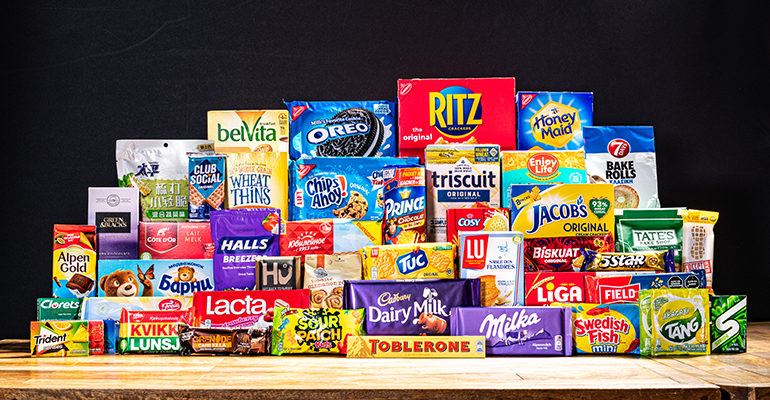 Pictured: Mondelēz product range | © MONDELĒZ INTERNATIONAL
Health claims on high-sugar products ‘erode consumer trust’
The drink contains vitamins A, C, D, B12, iron, zinc, copper and selenium.
The issue, Shelke says, is that Bournvita’s label claims can mislead consumers into thinking Bournvita is better for children than milk. “This is a serious matter because Bournvita is more expensive and does not add much besides sugar and unnecessary additives like emulsifiers and colourants.”
In the food industry, sugar claims can impact consumer trust regarding the content and broader nutritional and health benefits of the products they purchase and consume.
“Such claims are eroding consumer trust in the food industry,” said Shelke. “If food manufacturers lose consumer trust, they have little else to bank on, for trust is essential for any creature.”
Bournvita says legal action aims to ‘avoid misinformation’
According to Bournvita, the video has “created panic and anxiety and questions the trust consumers have bestowed” on it and similar brands.
“As we continued to witness an abnormal and unusual amount of traction on the post, we were constrained to take legal recourse to avoid misinformation.”
Bournvita asserts the validity of its claims. “All our claims are verified and transparent, and all ingredients have regulatory approvals. All the necessary nutritional information is mentioned on the pack for consumers to make informed choices.”
On 26 April 2023, Himatsingka said in a LinkedIn post how the think tank, Nutrition Body, Nutrition Advocacy for Public Interest (NAPi), had released an official statement “strongly supporting my video on Bournvita”.

Get more of our news on Google
Set Ingredients Network as a 'Preferred Source' to get quicker access to the news you value.
Related news

Skimpflation: An ‘unfair’ and risky approach to keeping prices low
2 Sep 2026
Consumers see skimpflation – reducing the quality of ingredients due to rising costs – as more unfair than shrinkflation, making it a risky strategy according to recent research.
Read more
NielsenIQ’s EU barometer shows Britain leading in grocery inflation
31 Aug 2026
Britain was the only country to record grocery inflation above 2%, according to NielsenIQ data that compared Europe’s five biggest grocery markets from February to May 2026.
Read more
‘Urgent gaps’ in achieving 2030 food system goals
27 Aug 2026
Global food systems are failing to meet 2030 targets across indicators including health, environment, and resilience, according to a report co-authored by the Food and Agriculture Organisation (FAO).
Read more
China beverages: Is herbal innovation the future?
20 Aug 2026
Herbal and botanical innovation in China's drinks market continues to grow, with ingredients like astragalus root, ginger, and ginseng in the spotlight – and focus shifting far beyond refreshment.
Read more
Popular barbecue staples experience sharp price increases
19 Aug 2026
The typical cost of US shoppers’ barbecue baskets has risen by 12% over the past year – the fastest annual rise in a decade, figures from The Economist show.
Read more
Beyond 'nice to have': A spotlight on US functional beverages
12 Aug 2026
Functional beverage interest in the US is gaining important ground as consumers now expect function rather than see it as "nice to have", and there are clear market gaps for growth, according to Spate.
Read more
Manam Chocolate aims to bring premium Indian cacao to 'the world stage'
11 Aug 2026
Craft chocolate brand Manam Chocolate is investing in local expansion and supply chain innovation throughout India as it works to build out the premium reputation of its locally produced cacao products.
Read more
Digital twin technology gains ground in food manufacturing
6 Aug 2026
Food and beverage companies are increasingly turning to digital twins to optimise and automate manufacturing processes, but opportunities stretch far beyond this, say experts.
Read more
How Secon Taste is putting upcycled snacks on shelves
4 Aug 2026
Hungarian zero-waste startup Secon Taste is turning surplus food into upcycled snacks such as fibre-packed granola, instant porridge, and a circular coffee-tasting box.
Read more
Codex sets global thresholds for ‘may contain’ labels
3 Aug 2026
Codex Alimentarius has adopted its first global guidance on when to use “may contain” allergen warnings, setting thresholds intended to stop the label being used as blanket legal cover.
Read more