
Ingredients Categories
Finished Products
Finished Food Categories
- Bakery
- Beverages / Juices
- Cereal and grain products
- Confectionery
- Cooking Fats & Oils
- Dairy
- Egg products
- Fruits & Vegetables
- Infant & Baby food
- Meat, Poultry & Fish
- Nuts & Seeds products
- Other Finished Food Categories
- Pet Food
- Plant-based foods
- Prepared foods
- Sauces & Seasonings
- Sweet & Savoury Spreads
Specialised Finished Products
- Bee products
- Biotic products
- Dietary supplements
- Energy drinks
- Functional beverages
- Functional confectionery
- Functional food
- Functional powders
- Meal replacement products
- Nutricosmetics
- Other Specialised Finished Products
- Pet Dietary Supplements
- Pharma and OTC products
- Protein products
- Sugar replacers / Sweeteners
Health & Wellness Areas
Delivery Formats
Operations & Services
- 3D printing
- Analysis/ Testing
- Auditing & certifications
- Blending & mixing
- Bottling
- Certification
- Clinical trials
- Co-packing
- Coating
- Consulting
- Contract manufacturing
- Drying
- Electrospinning
- Encapsulating
- Enzymatic processing
- Extracting
- Extrusion
- Fat structuring
- Fermentation
- Filling
- Flavour development
- Freeze drying
- Granulating/ grinding/ milling / mixing
- High-pressure processing
- Labelling
- Other Operations & Services
- Packaging
- Packet filling
- Pasturising
- Quality assurance
- Saccharification
- Shear cell processing
- Spray drying
- Sterilisation
- Storage & Logistics
- Tabletting
- Toasting / roasting
- Ultra-high temperature processing
News
How insecure are our global food systems?
Natasha Spencer-Jolliffe, Freelance Journalist 29 Aug 2024Countries across the globe are struggling to secure safe and accessible food, according to recent reports.
Food price inflation remains high in low- and middle-income countries’ domestic markets, according to the World Bank’s latest Food Security Update. Severe weather has destroyed crops and producers are passing increased raw material costs on to consumers, raising the prices shoppers are paying at the tills.
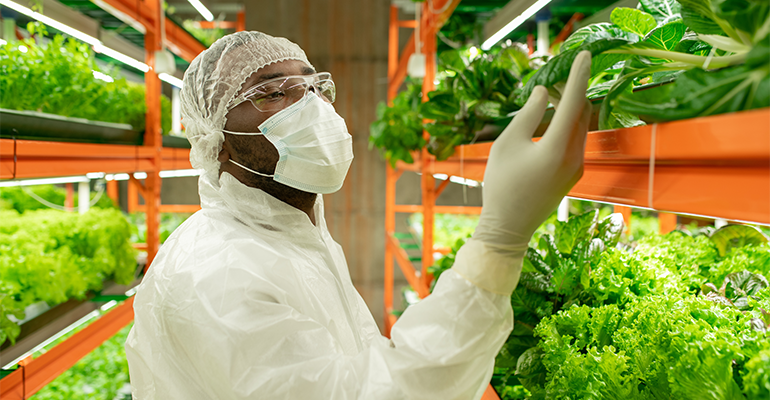
As rising costs and already-stretched budgets get tighter, consumers’ ability to access safe, affordable, available, and high-quality food becomes increasingly challenging.
Global food insecurity deepens
Food insecurity is escalating in already-critical areas around the world, the Food and Agriculture Organization (FAO) and World Food Programme (WFP) detailed in its latest Hunger Hotspots outlook report, which covers the period between June and October 2024.
The United Nations organisations subsequently issued a joint warning about the growing food insecurity crisis in 18 critical hotspots, including Nigeria, Haiti, Myanmar, the Syrian Arab Republic, and Palestine. The report calls for urgent and scaled-up assistance in all 18 areas to protect livelihoods and increase access to food.
The urgent calls come less than 18 months after FAO, WFP, International Monetary Fund, World Bank Group, and World Trade Organization leaders released a Third Joint Statement in February 2023, urging action to prevent the food and nutrition security crisis from worsening.
Together, the heads of these organisations state that further urgent actions are required to rescue hunger hotspots, facilitate trade, improve market functioning, and enhance the private sector’s role. They also call for reform and to repurpose harmful subsidies with careful targeting and efficiency.
A harmonised way forward?
Last month, Ingredients Network reported on how the food security landscape can pose a significant threat to consumer health and business stability. Food safety expert Chris Elliott described the UK’s food security landscape as being in “absolute chaos”.
He said the UK’s food system contains large players, small players, “and then there's online – which is the Wild West”. The problem, he continued, is the “huge amount” of food fraud found online.
“Without sufficient levels of officers working to ensure our food is produced and supplied to the highest levels of safety, effectively, we are allowing decriminalisation by the back door,” Jessica Merryfield, head of policy and campaigns at the Chartered Trading Standards Institute (CTSI), said at the time.
While Elliott’s warning references the UK food security landscape, the global outlook presents a worrying picture too, spurring more potential support for leaders to collaborate and implement a harmonised food security policy.
“Having safe food and a secure food supply chain is something we risk taking for granted but is fundamental to our health; we need safe food to survive as humans,” said Merryfield.
Finding solutions to secure the future of food
In their Third Joint Statement, the leading non-profit food organisations state that countries need to balance the short-term urgency of interventions to improve food security with longer-term initiatives to strengthen resilience while responding to the crisis.
Between May 2022 and November 2023, the World Bank pledged $30 billion to tackle food insecurity. After announcing it had surpassed this goal, it said that in 2024 it would dedicate $45 billion to scaling up its efforts.
It has said this will be available through a combination of $22 billion in new lending and $23 billion from existing portfolios. The money will be used to support 90 countries and is expected to help with short-term interventions, such as expanding social protection, and longer-term resiliency, like enhancing productivity and climate-smart agriculture.
Education is on the agenda, too. The CTSI, the UK’s non-profit professional association that represents and trains trading standards professionals, is producing additional standalone module qualifications in feed and animal health – with one in food coming soon – to give local authorities and other stakeholders the opportunity to train staff more quickly in these areas.
In the US, food fraud is estimated to affect 1% of the global food industry, costing $10-15 billion a year, with some expert estimates placing this figure as high as $40 billion, the US Food and Drug Administration (FDA) said.
Combining leadership and regulatory efforts that prioritise solving the food insecurity crisis, and having governance to enforce food safety and action against fraud, appears crucial.
In Europe, the European Commission aims to support policy with scientific evidence by releasing its Food Fraud summary every quarter.

Get more of our news on Google
Set Ingredients Network as a 'Preferred Source' to get quicker access to the news you value.
Related news

Do the US dietary guidelines put UPFs under pressure?
10 Sep 2026
Will the US dietary guidelines change the way Americans eat, swapping ultra-processed foods for whole foods? We asked Dr Barry Popkin, renowned nutrition and obesity researcher.
Read more
Health and wellness engagement matures across Middle East and Africa
4 Sep 2026
Many consumers in the Middle East and Africa are now proactively engaged in health and wellness, looking to integrate better habits and products into their daily lives, say experts.
Read more
Skimpflation: An ‘unfair’ and risky approach to keeping prices low
2 Sep 2026
Consumers see skimpflation – reducing the quality of ingredients due to rising costs – as more unfair than shrinkflation, making it a risky strategy according to recent research.
Read more
‘Urgent gaps’ in achieving 2030 food system goals
27 Aug 2026
Global food systems are failing to meet 2030 targets across indicators including health, environment, and resilience, according to a report co-authored by the Food and Agriculture Organisation (FAO).
Read more
Seven-Eleven uses microbial testing tech to extend katsudon shelf life
26 Aug 2026
Japanese retail company Seven-Eleven has improved its factory’s microbial environment to keep comfort-food staple, katsudon, fresher for longer.
Read more
Chimac’s fusion sauces bring Korean flavours to Europe
25 Aug 2026
Irish sauce brand Chimac is tapping into Korea’s culinary traditions, bringing its flavours and products to European consumers who want a taste of K-food.
Read more
Global demand for instant noodles continues to rise
24 Aug 2026
Global demand for instant noodles reached 124.21 billion servings last year, representing a 0.7% year-on-year increase – or 900 million extra servings.
Read more
Popular barbecue staples experience sharp price increases
19 Aug 2026
The typical cost of US shoppers’ barbecue baskets has risen by 12% over the past year – the fastest annual rise in a decade, figures from The Economist show.
Read more
Hot NPD: Nissin launches first cold-water Cup Noodles
18 Aug 2026
Nissin is taking one of Japan’s most iconic instant meals in a completely new direction with the launch of the first cold water-only Cup Noodles in the brand’s 55-year history.
Read more
Manam Chocolate aims to bring premium Indian cacao to 'the world stage'
11 Aug 2026
Craft chocolate brand Manam Chocolate is investing in local expansion and supply chain innovation throughout India as it works to build out the premium reputation of its locally produced cacao products.
Read more