
Ingredients Categories
Finished Products
Finished Food Categories
- Bakery
- Beverages / Juices
- Cereal and grain products
- Confectionery
- Cooking Fats & Oils
- Dairy
- Egg products
- Fruits & Vegetables
- Infant & Baby food
- Meat, Poultry & Fish
- Nuts & Seeds products
- Other Finished Food Categories
- Pet Food
- Plant-based foods
- Prepared foods
- Sauces & Seasonings
- Sweet & Savoury Spreads
Specialised Finished Products
- Bee products
- Biotic products
- Dietary supplements
- Energy drinks
- Functional beverages
- Functional confectionery
- Functional food
- Functional powders
- Meal replacement products
- Nutricosmetics
- Other Specialised Finished Products
- Pet Dietary Supplements
- Pharma and OTC products
- Protein products
- Sugar replacers / Sweeteners
Health & Wellness Areas
Delivery Formats
Operations & Services
- 3D printing
- Analysis/ Testing
- Auditing & certifications
- Blending & mixing
- Bottling
- Certification
- Clinical trials
- Co-packing
- Coating
- Consulting
- Contract manufacturing
- Drying
- Electrospinning
- Encapsulating
- Enzymatic processing
- Extracting
- Extrusion
- Fat structuring
- Fermentation
- Filling
- Flavour development
- Freeze drying
- Granulating/ grinding/ milling / mixing
- High-pressure processing
- Labelling
- Other Operations & Services
- Packaging
- Packet filling
- Pasturising
- Quality assurance
- Saccharification
- Shear cell processing
- Spray drying
- Sterilisation
- Storage & Logistics
- Tabletting
- Toasting / roasting
- Ultra-high temperature processing
News
How investing in sustainability drives value for brands
15 Sep 2022
Consumers are increasingly conscious of the environmental, social and corporate governance (ESG) credentials of companies and products they invest in. How can certifications such as B Corp drive value for food and beverage manufacturers?
Increasingly, key players in the food and beverage industry are shifting their corporate strategies to focus less on maximising returns for shareholders, and more on understanding the importance of stakeholder values.
Recently, this growth in ‘triple-bottom line’ thinking has driven several food and beverage giants, such as Nestlé and Danone, to shift attention towards implementing initiatives and attaining certifications to promote sustainable, responsible, and transparent business practices.
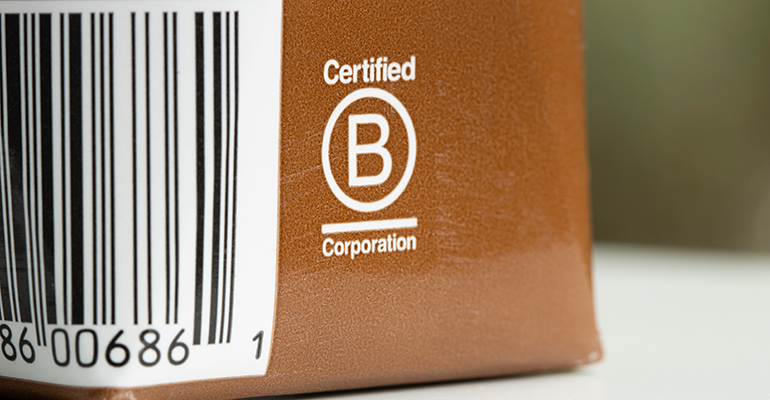
Whether driven by concern for the wellbeing of planet and its people, or by the opportunities to grow brand awareness and profit margins, the motivations behind this shift towards sustainability in the strategies of large multinationals remains somewhat ambiguous. Nevertheless, the benefits that certifications such as B Corp can offer to all three are clear.
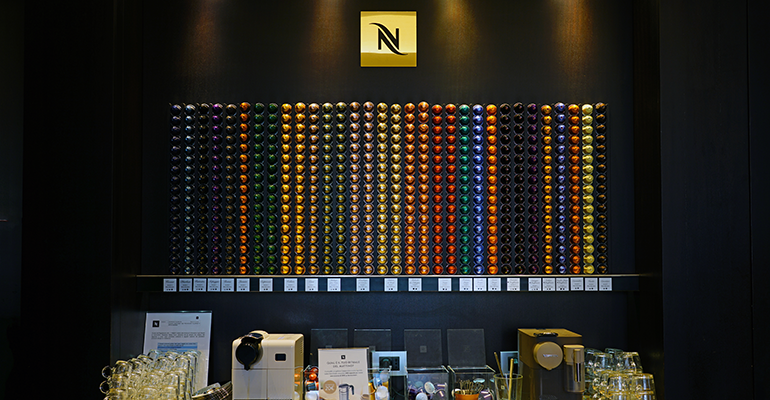
Nespresso attains B Corp status
Nespresso, Nestlé’s Swiss-based global coffee brand, recently announced that it has achieved certification as a B Corporation.
An indicator of high standards of accountability, transparency and performance, this designation adds Nespresso to a list of some 4,500 purpose-driven companies, seeking to improve their sustainability and corporate responsibility rankings.
The B Corp certification by B Lab measures a company’s performance against a range of variables from environmental impact to employee benefits and community outreach.
To achieve the certification, a company must satisfy a set of criteria which include scoring 80 or above on B Lab’s social and environmental risk review, publicly sharing the analysis online, and legally pledging accountability to stakeholders.
“The B Corp process is a rigorous and independent assessment of a company’s impact on people and planet, from its carbon footprint to the way it empowers its employees. Achieving the B Corp certification is a key milestone in the improvement and collective action journey,” said Johnathan Normand, B Lab Switzerland Founder.
The pathway to B Corp certification
To achieve B Corp certification, companies are required to undertake a stringent analysis process, ensuring all data is transparent and publicly accessible.
Although any business can apply to become a B Corp, the pathway to certification varies dependent on criteria such as revenue, company size, and industry.
Regardless of the dissimilarities between companies, certain steps must be taken by all applicants, which include undertaking the online B Impact Assessment, the Disclosure Questionnaire, and providing documentation and evidence to a B Lab analyst for verification purposes.
As well as the assessment, companies must also legally revise their corporate bylaws to accommodate a model of stakeholder governance. The purpose of this added step is to ensure that B Corps are legally accountable to all stakeholders, not just shareholders.
©AdobeStock/eqroy
How B Corp helps food & drink companies become more sustainable
The so-called B Impact Assessment (BIA) grades a company based on five factors: governance, workers, community, environment, and customers.
Across its five global hubs, Nespresso received a total score of 84, with average points ranging from 29.4% in the community category to 92% in the customer category.
As part of its pledge to positively impact the coffee industry, Nespresso has introduced initiatives such as the ‘AAA Sustainable Quality Program’ which, in partnership with the Rainforest Alliance, embeds Fairtrade coffee sourcing and sustainability initiatives worldwide.
Making sustainable production a business priority, Nespresso also previously pledged to invest CHF 500 million into sustainable operations in the six years leading to 2020.
“B Corp certification reflects a 30-year Nespresso commitment to sustainability, transparency and responsible business. We are immensely proud to be joining a community of like minds who share our belief that profit, and purpose go hand-in-hand,” Guillaume Le Cunff, Nespresso CEO said.
Also aiming to become one of the world’s first B Corp certified multinationals, Paris-headquartered food manufacturer, Danone, is currently seven years into its ten-year plan to become fully certified by 2025. As it stands, the company has an average BIA score of 90, with over 60% of global sales covered by B Corp.
As part of its sustainability drive, in 2020, Danone became the first publicly listed company to adopt the ‘Société à Mission’ status. Defined by the French ‘Pacte’ law, this title represents a company whose purpose and by-laws are determined by its social, societal, and environmental objectives.
For Danone, these aims include impacting public health locally, preserving and restoring the planet’s natural resources, empowering employees, and fostering inclusive growth in the wider community.
How sustainability strategies increase value for brands
The question as to what exactly is driving this sustainable strategy shift however, is an interesting one.
In most cases, the benefits of improving ESG business practices are obvious for both the planet and people. Yet traditionally, investing in sustainability has been seen as a financial burden with unworthy rewards.
As consumers increasingly look beyond products and place more importance on companies’ values, purpose and impact, many businesses are now realising the value and profitability that investing in sustainability can bring.
Take Nespresso’s coffee capsule recycling initiative for example, which since 1991 has sought to provide a means for consumers to recycle Nespresso capsules. With over 100,000 collection points across 59 countries globally, the company now operate at a 90% recycling capacity when it comes to coffee capsules.
In addition to offering clear benefits for the environment in reducing waste and preserving resources, initiatives like this one are also effective in boosting brand sentiment and loyalty, as consumers increasingly place importance on the ESG credentials of companies and products.
In this way, it is clear how implementing sustainable business practises and acquiring globally recognised certifications such as that offered by B Lab, can bring added benefits to brands.

Get more of our news on Google
Set Ingredients Network as a 'Preferred Source' to get quicker access to the news you value.
Related news
Kellogg accelerates work to remove artificial colours from all US cereals
3 Sep 2026
WK Kellogg has announced an accelerated timeline to eliminate all artificial colours and the chemical preservative, BHT, across its full US portfolio of cereals and cereal packaging.
Read more
‘Urgent gaps’ in achieving 2030 food system goals
27 Aug 2026
Global food systems are failing to meet 2030 targets across indicators including health, environment, and resilience, according to a report co-authored by the Food and Agriculture Organisation (FAO).
Read more
Chimac’s fusion sauces bring Korean flavours to Europe
25 Aug 2026
Irish sauce brand Chimac is tapping into Korea’s culinary traditions, bringing its flavours and products to European consumers who want a taste of K-food.
Read more
Savoury protein snacks shake up the on-the-go market
10 Aug 2026
Sweet flavours have dominated the high-protein snack category but savoury snacks, such as cheese bars and meat sticks, can appeal to health-conscious consumers.
Read more
Nestlé invests in regeneratively farmed wheat for KitKat
5 Aug 2026
Nestlé will pay a premium for Wildfarmed’s regeneratively farmed wheat but the CPG remains reticent to promote the move on packs of its KitKat bars.
Read more
How Secon Taste is putting upcycled snacks on shelves
4 Aug 2026
Hungarian zero-waste startup Secon Taste is turning surplus food into upcycled snacks such as fibre-packed granola, instant porridge, and a circular coffee-tasting box.
Read more
Codex sets global thresholds for ‘may contain’ labels
3 Aug 2026
Codex Alimentarius has adopted its first global guidance on when to use “may contain” allergen warnings, setting thresholds intended to stop the label being used as blanket legal cover.
Read more
EU sets maximum MOAH levels to protect human health
28 Jul 2026
The EU will adopt maximum levels for mineral oil aromatic hydrocarbons (MOAH) in food to protect human health. What do manufacturers need to know?
Read more
UK publishes guidance on SPS food trade agreement with EU
27 Jul 2026
The UK government has shared guidance on how food businesses can prepare for its upcoming Sanitary and Phytosanitary (SPS) agreement with the EU.
Read more
Industry hits back at UK’s proposed healthy food rules
24 Jul 2026
Food brands, including Haribo, have hit out against the UK’s proposed nutrient profiling model, which places a new focus on free sugars that are added during manufacturing.
Read more