
Ingredients Categories
Finished Products
Finished Food Categories
- Bakery
- Beverages / Juices
- Cereal and grain products
- Confectionery
- Cooking Fats & Oils
- Dairy
- Egg products
- Fruits & Vegetables
- Infant & Baby food
- Meat, Poultry & Fish
- Nuts & Seeds products
- Other Finished Food Categories
- Pet Food
- Plant-based foods
- Prepared foods
- Sauces & Seasonings
- Sweet & Savoury Spreads
Specialised Finished Products
- Bee products
- Biotic products
- Dietary supplements
- Energy drinks
- Functional beverages
- Functional confectionery
- Functional food
- Functional powders
- Meal replacement products
- Nutricosmetics
- Other Specialised Finished Products
- Pet Dietary Supplements
- Pharma and OTC products
- Protein products
- Sugar replacers / Sweeteners
Health & Wellness Areas
Delivery Formats
Operations & Services
- 3D printing
- Analysis/ Testing
- Auditing & certifications
- Blending & mixing
- Bottling
- Certification
- Clinical trials
- Co-packing
- Coating
- Consulting
- Contract manufacturing
- Drying
- Electrospinning
- Encapsulating
- Enzymatic processing
- Extracting
- Extrusion
- Fat structuring
- Fermentation
- Filling
- Flavour development
- Freeze drying
- Granulating/ grinding/ milling / mixing
- High-pressure processing
- Labelling
- Other Operations & Services
- Packaging
- Packet filling
- Pasturising
- Quality assurance
- Saccharification
- Shear cell processing
- Spray drying
- Sterilisation
- Storage & Logistics
- Tabletting
- Toasting / roasting
- Ultra-high temperature processing
News
Low-hanging fruit for the blended meat industry? Jackfruit’s potential as a high-fibre, clean-label ‘hybrid’ ingredient
Rik Moors 23 Jan 2025As consumer demand for more sustainable, clean-label meat alternatives and hybrid meat ingredients grows, Fiber Foods is positioning jackfruit as a key solution to solve taste, nutritional, and processing issues faced by other blended meat products.
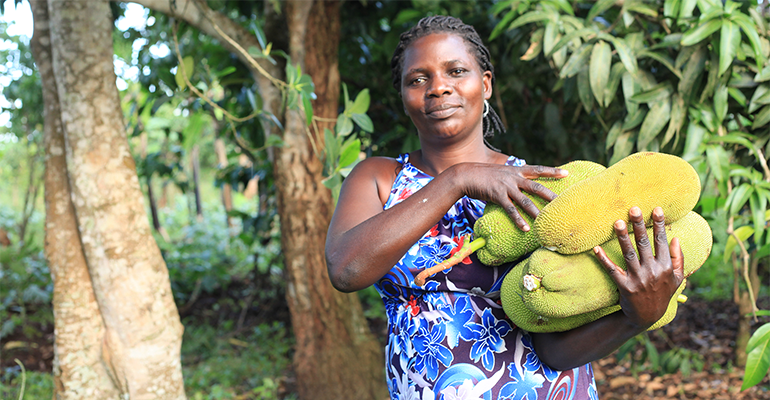
Ingredients Network spoke to Inez van Oord, co-founder of the Netherlands- and Uganda-based start-up, about jackfruit’s growing potential in blended meat – and beyond.
Blended meat gaining ground
Although it had a slow start and some marketing and nomenclature challenges, hybrid meat products – defined by the Good Food Institute (GFI) as the outcome of “combining animal proteins with plant-based ingredients that combine plant protein or mycoprotein (and sometimes vegetables) with conventional meat components to form an end product” – has seen some promising developments this year.
In September, retailer Lidl launched a ground beef product on the shelves of its Dutch supermarkets that combined meat content with 40% pea protein. The launch followed the announcement earlier in the year that mycoprotein brand Quorn was developing blended meat-mycoprotein products via its B2B division.
However, neither of these products have so far proven to be knock-out hits, and in some markets, consumer interest and enthusiasm seems to have waned due to poorly executed formulations and marketing. In mid-2024, Tyson Foods’ hybrid burger offering ‘The Blend’, which was available in the US as part of its Raised & Rooted brand, was discontinued after just one year in the market.
Flavour over sustainability
“Meat eaters are not particularly interested in beef meat mixed with fruit. It’s not appealing to them. And I don’t blame them for that,” said van Oord. Some hybrid products struggle to meet taste expectations, and other brands have made the mistake of focusing more on sustainability claims than delivering on flavour.
Another concern is that many consumers view blended products as a way for producers to cut costs, diluting the meat content without delivering equivalent value. Van Oord suggests a straightforward approach: “Be honest. You need to be crystal clear on what’s actually in the product, and accept that the consumer is not as excited by the sustainability upside.
“Nonetheless, there is a huge demand from the retail side, starting with the Netherlands. And I’m quite sure more will come from other countries where we actively need to reduce meat consumption based on EU regulations,” she said. “In order to achieve that, you need to come with products that are equally tasty or better than the 100% meat variety. And it needs to be cheaper.”
Jackfruit as a minimally processed, versatile solution
Fiber Foods sees jackfruit as a promising ingredient to enhance the appeal of blended meat products. The company’s patented process involves only dehydrating the fruit, preserving its natural qualities. “The beauty of jackfruit is that it’s 100% fruit. We’ve just taken the water out. It has zero allergens, which makes it suitable for all sorts of applications,” van Oord explained.
Many plant-based ingredients require additional additives to mask off-tastes, leading to complex ingredient lists. But with jackfruit, Fiber Foods claims you can replace 20 to 30% of any meat product without changing the taste.
Beyond its use in blended meat products, Fiber Foods is exploring additional applications of jackfruit.
Upcycling jackfruit peel into animal feed as part of a circular economy practice is one obvious avenue. The company is also investigating the potential of the fruit’s seeds, which are high in protein. “The ripe jackfruit contains big seeds, and they have a very high protein content. Being able to mix young jackfruit powder or fibres with the powder from ripe seeds something to further explore,” van Oord said.
This approach is especially promising as fibre is gaining more attention in functional foods, similar to the rise of protein-enriched products. “You can say that fibre is the new protein … Especially as gut health is becoming more prominent, even if it’s not yet fully recognised as essential by all consumers.”
Selling jackfruit sausages across East Africa: Listings in Carrefour
Fiber Foods sources its jackfruit in Uganda and Tanzania, and the company is already selling the ingredient to retailers in the region.
“I always wanted to ensure that what we source locally, we also sell locally … our biggest client currently is in Uganda and is making sausages with our jackfruit and sells them in Carrefour in East Africa.
“And we think that in terms of fortified foods, so many products are imported from Europe to Africa that our jackfruit could actually easily replace. You can think of the fibres that are in our jackfruit for all sorts of bread applications that have less allergens, but also as a meat replacer,” said van Oord.
Outside Africa, Fiber Foods is primarily focusing on the European market, where regulatory pressure and consumer interest in meat reduction are strong. The company is also considering a step-by-step approach to entering the US market. “We can only grow as fast as we can. And I think that Europe for now is a very interesting market. When we achieve certain milestones, we are aiming to go to USA,” said van Oord.
The long-term potential of the US lies in the growing market for fibre-rich food supplements. “In the US, one out of ten people is taking Ozempic. With their changing dietary patterns, many of these consumers need more food supplements with fibre,” van Oord explained.
To support its growth, Fiber Foods is seeking strategic partnerships and investment. Van Oord believes that collaborations with established meat companies could help shift consumer perceptions and scale production. The company aims to highlight its low carbon footprint, verified through a life cycle assessment (LCA), as part of its strategy to appeal to both industry partners and consumers.

Get more of our news on Google
Set Ingredients Network as a 'Preferred Source' to get quicker access to the news you value.
Related news

Do the US dietary guidelines put UPFs under pressure?
10 Sep 2026
Will the US dietary guidelines change the way Americans eat, swapping ultra-processed foods for whole foods? We asked Dr Barry Popkin, renowned nutrition and obesity researcher.
Read more
Health and wellness engagement matures across Middle East and Africa
4 Sep 2026
Many consumers in the Middle East and Africa are now proactively engaged in health and wellness, looking to integrate better habits and products into their daily lives, say experts.
Read more
Skimpflation: An ‘unfair’ and risky approach to keeping prices low
2 Sep 2026
Consumers see skimpflation – reducing the quality of ingredients due to rising costs – as more unfair than shrinkflation, making it a risky strategy according to recent research.
Read more
‘Urgent gaps’ in achieving 2030 food system goals
27 Aug 2026
Global food systems are failing to meet 2030 targets across indicators including health, environment, and resilience, according to a report co-authored by the Food and Agriculture Organisation (FAO).
Read more
Seven-Eleven uses microbial testing tech to extend katsudon shelf life
26 Aug 2026
Japanese retail company Seven-Eleven has improved its factory’s microbial environment to keep comfort-food staple, katsudon, fresher for longer.
Read more
Chimac’s fusion sauces bring Korean flavours to Europe
25 Aug 2026
Irish sauce brand Chimac is tapping into Korea’s culinary traditions, bringing its flavours and products to European consumers who want a taste of K-food.
Read more
Global demand for instant noodles continues to rise
24 Aug 2026
Global demand for instant noodles reached 124.21 billion servings last year, representing a 0.7% year-on-year increase – or 900 million extra servings.
Read more
Popular barbecue staples experience sharp price increases
19 Aug 2026
The typical cost of US shoppers’ barbecue baskets has risen by 12% over the past year – the fastest annual rise in a decade, figures from The Economist show.
Read more
Hot NPD: Nissin launches first cold-water Cup Noodles
18 Aug 2026
Nissin is taking one of Japan’s most iconic instant meals in a completely new direction with the launch of the first cold water-only Cup Noodles in the brand’s 55-year history.
Read more
Manam Chocolate aims to bring premium Indian cacao to 'the world stage'
11 Aug 2026
Craft chocolate brand Manam Chocolate is investing in local expansion and supply chain innovation throughout India as it works to build out the premium reputation of its locally produced cacao products.
Read more