
Ingredients Categories
Finished Products
Finished Food Categories
- Bakery
- Beverages / Juices
- Cereal and grain products
- Confectionery
- Cooking Fats & Oils
- Dairy
- Egg products
- Fruits & Vegetables
- Infant & Baby food
- Meat, Poultry & Fish
- Nuts & Seeds products
- Other Finished Food Categories
- Pet Food
- Plant-based foods
- Prepared foods
- Sauces & Seasonings
- Sweet & Savoury Spreads
Specialised Finished Products
- Bee products
- Biotic products
- Dietary supplements
- Energy drinks
- Functional beverages
- Functional confectionery
- Functional food
- Functional powders
- Meal replacement products
- Nutricosmetics
- Other Specialised Finished Products
- Pet Dietary Supplements
- Pharma and OTC products
- Protein products
- Sugar replacers / Sweeteners
Health & Wellness Areas
Delivery Formats
Operations & Services
- 3D printing
- Analysis/ Testing
- Auditing & certifications
- Blending & mixing
- Bottling
- Certification
- Clinical trials
- Co-packing
- Coating
- Consulting
- Contract manufacturing
- Drying
- Electrospinning
- Encapsulating
- Enzymatic processing
- Extracting
- Extrusion
- Fat structuring
- Fermentation
- Filling
- Flavour development
- Freeze drying
- Granulating/ grinding/ milling / mixing
- High-pressure processing
- Labelling
- Other Operations & Services
- Packaging
- Packet filling
- Pasturising
- Quality assurance
- Saccharification
- Shear cell processing
- Spray drying
- Sterilisation
- Storage & Logistics
- Tabletting
- Toasting / roasting
- Ultra-high temperature processing
News
NutriScore logo could help young people make healthier food choices – but more awareness is needed
22 Jun 2022
The European Nutri-Score labelling system can help young people make healthier food choices, according to a Spanish study – but one third still do not know what the label indicates.
The Nutri-Score system is an optional front-of-pack scoring label – adapted from the British Food Standards Agency (FSA) traffic light nutrition label – aimed at driving healthier food choices among consumers. It is the official nutrition logo in France, although its use is voluntary. It has also been endorsed by Belgian, Spanish, German and Dutch health authorities as well as the European Commission and the World Health Organization.
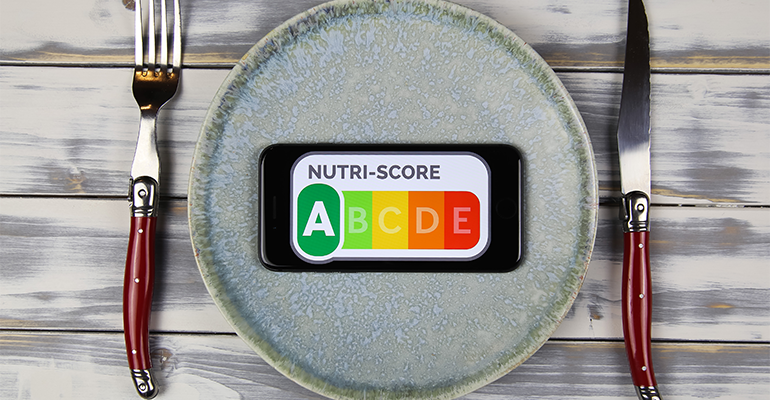
Its aim is to summarise “a set of unintelligible numbers and terms of nutritional values, located on the back of the packaging, based on a coloured logo that is easily understood by consumers,” by categorising products from a green ‘A’ to a red ‘E’, said the researchers of a recent cross-section observational survey study.
The researchers questioned 161 university students, faced for the first time with the responsibilities of living outside of the family group, in the social and contact networks of the Mediterrani University School, Barcelona.
The majority (64%) of the students surveyed did not read any labels on food products and found it difficult to identify the degree of wholesomeness of what they consume, said the authors, led by Joan-Francesc Fondevila-Gascón, from Blanquerna-Universitat Ramon Llull, Barcelona.
Most (72%) also admitted to buying a food product only for the information shown on the front of the packaging, a fact which did not vary among men and women.
Better healthy food decisions with Nutri-Score labelling
Despite students making food purchasing choices based on such front-of-pack information, 33% did not know what the Nutri-Score label indicates.
Informed of the system, however, most of the participants (89%) indicated that the Nutri-Score label would help them to introduce healthy foods into their diet. The opinion was even more popular amongst women (94%) than men (82%).
The researchers also compared the labels of two products, one with the Nutri-Score scheme and the other with the Guideline Daily Amounts label, and found 88.8% of the students better interpreted the product labelled with Nutri-Score.
“Therefore, due to the easy interpretation of the Nutri-Score logo and the lack of other tools that help participants make healthier decisions, Nutri-Score is postulated as a good guidance system for healthier food purchase decisions.”
New studies needed on Nutri-Score purchasing influence
The researchers also recommended that new studies should be conducted in larger university student samples with regards to the Nutri-Score’s influence on purchase decisions.
Previous studies on the understanding of the Nutri-Score labelling system, as well as of other nutritional labels, are scarce, they added.
“Currently, there are few brands that include the Nutri-Score label, as it is not required,” the researchers continued.
“However, it is being adopted by more products every day, and awareness of proper nutrition is increasing.”
Misperception of a healthy diet
Overall, a total 86.9% of the students considered their diet to be normal, very health or quite healthy, while just 11.8% admitted having an unhealthy diet. The remainder did not know.
“The results showed that this perception is wrong,” said the researchers, adding: “The consumption of ultra-processed foods by the respondents is too high to consider that they have a normal or healthy diet.”
Weekly, 71% admitted to consuming soft drinks, 83% snacks, 83% nuggets, 67% pastries, and 68% alcohol. A total of 25.5% did not know the adequate or optimal amount of the daily consumption for salt and sugar.
The study also found that wrongful perceptions of a healthy diet were particularly rife among overweight students.
Of the participants, most (87.5%) had a body mass index (BMI) within normal range, though 11.2% were overweight or obese.
“Most of those who are overweight or obese perceive their diet in a distorted way, qualifying it as normal or even very healthy,” said the researchers.
“Neither sex nor age, the type of university, studies, or branches of knowledge influences how the study participants perceived their diet.”

Get more of our news on Google
Set Ingredients Network as a 'Preferred Source' to get quicker access to the news you value.
Related news

Kellogg accelerates work to remove artificial colours from all US cereals
3 Sep 2026
WK Kellogg has announced an accelerated timeline to eliminate all artificial colours and the chemical preservative, BHT, across its full US portfolio of cereals and cereal packaging.
Read more
‘Urgent gaps’ in achieving 2030 food system goals
27 Aug 2026
Global food systems are failing to meet 2030 targets across indicators including health, environment, and resilience, according to a report co-authored by the Food and Agriculture Organisation (FAO).
Read more
Chimac’s fusion sauces bring Korean flavours to Europe
25 Aug 2026
Irish sauce brand Chimac is tapping into Korea’s culinary traditions, bringing its flavours and products to European consumers who want a taste of K-food.
Read more
Savoury protein snacks shake up the on-the-go market
10 Aug 2026
Sweet flavours have dominated the high-protein snack category but savoury snacks, such as cheese bars and meat sticks, can appeal to health-conscious consumers.
Read more
Nestlé invests in regeneratively farmed wheat for KitKat
5 Aug 2026
Nestlé will pay a premium for Wildfarmed’s regeneratively farmed wheat but the CPG remains reticent to promote the move on packs of its KitKat bars.
Read more
How Secon Taste is putting upcycled snacks on shelves
4 Aug 2026
Hungarian zero-waste startup Secon Taste is turning surplus food into upcycled snacks such as fibre-packed granola, instant porridge, and a circular coffee-tasting box.
Read more
Codex sets global thresholds for ‘may contain’ labels
3 Aug 2026
Codex Alimentarius has adopted its first global guidance on when to use “may contain” allergen warnings, setting thresholds intended to stop the label being used as blanket legal cover.
Read more
EU sets maximum MOAH levels to protect human health
28 Jul 2026
The EU will adopt maximum levels for mineral oil aromatic hydrocarbons (MOAH) in food to protect human health. What do manufacturers need to know?
Read more
UK publishes guidance on SPS food trade agreement with EU
27 Jul 2026
The UK government has shared guidance on how food businesses can prepare for its upcoming Sanitary and Phytosanitary (SPS) agreement with the EU.
Read more
Industry hits back at UK’s proposed healthy food rules
24 Jul 2026
Food brands, including Haribo, have hit out against the UK’s proposed nutrient profiling model, which places a new focus on free sugars that are added during manufacturing.
Read more