
Ingredients Categories
Finished Products
Finished Food Categories
- Bakery
- Beverages / Juices
- Cereal and grain products
- Confectionery
- Cooking Fats & Oils
- Dairy
- Egg products
- Fruits & Vegetables
- Infant & Baby food
- Meat, Poultry & Fish
- Nuts & Seeds products
- Other Finished Food Categories
- Pet Food
- Plant-based foods
- Prepared foods
- Sauces & Seasonings
- Sweet & Savoury Spreads
Specialised Finished Products
- Bee products
- Biotic products
- Dietary supplements
- Energy drinks
- Functional beverages
- Functional confectionery
- Functional food
- Functional powders
- Meal replacement products
- Nutricosmetics
- Other Specialised Finished Products
- Pet Dietary Supplements
- Pharma and OTC products
- Protein products
- Sugar replacers / Sweeteners
Health & Wellness Areas
Delivery Formats
Operations & Services
- 3D printing
- Analysis/ Testing
- Auditing & certifications
- Blending & mixing
- Bottling
- Certification
- Clinical trials
- Co-packing
- Coating
- Consulting
- Contract manufacturing
- Drying
- Electrospinning
- Encapsulating
- Enzymatic processing
- Extracting
- Extrusion
- Fat structuring
- Fermentation
- Filling
- Flavour development
- Freeze drying
- Granulating/ grinding/ milling / mixing
- High-pressure processing
- Labelling
- Other Operations & Services
- Packaging
- Packet filling
- Pasturising
- Quality assurance
- Saccharification
- Shear cell processing
- Spray drying
- Sterilisation
- Storage & Logistics
- Tabletting
- Toasting / roasting
- Ultra-high temperature processing
News
Report reveals Nestlé as most, and Kraft Heinz as least, sustainable coffee brands
Lucy Whittaker, Food Content Editor 19 Oct 2023
A Solidaridad report, which ranks the performance of well-known coffee producers regarding sustainability, has found that the industry is in a “state of crisis”.
Coffee consumption has soared by more than 60% in the past 30 years. Coffee production is rising globally to meet this demand and in turn, is harming the environment and exploiting growers in some of the world’s most disadvantaged nations, according to Solidaridad.
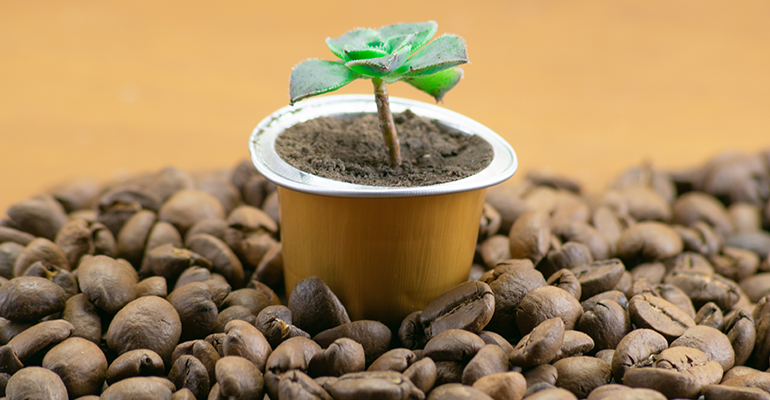
Global coffee sector in a “state of crisis,” report finds
Over 85%of the world’s coffee supply is sourced from just five countries – Brazil, Vietnam, Colombia, Indonesia, and Honduras. Most coffee producers are smallholder farmers, of which a third earn less than $100 per year from coffee production, according to coffee sustainability platform Enveritas.
A new report co-authored by not-for-profits Solidaridad and Conservation International and coffee sector experts Ethos Agriculture reveals that the future of coffee production globally is at risk, as farmers struggle to make ends meet. Rising input costs for growers paired with the negative effects of climate change and deforestation mean that while the price of coffee rises for consumers across the world, coffee farmers’ livelihoods are under threat.
“Amidst the grand claims of sustainability and rosy promises of a prosperous future in coffee agriculture, the harsh reality faced by coffee producers is marked by price volatility and rising production costs due to higher prices for fertilizers and labour,” the authors wrote.
“Coupled with rampant inflation and the profound consequences of a rapidly changing climate in the most vulnerable origins, the coffee sector finds itself immersed in a state of crisis.”
To ensure the sustainability of the coffee sector, manufacturers must invest in vulnerable regions and collaborate with local stakeholders, such as regulators, producer groups, and civil society, to provide unique solutions to supply chain challenges, the report notes.
Coffee Brew Index ranks top coffee brands on sustainability
Included in the report, the 2023 Coffee Brew Index evaluates the performance of the top 11 coffee roasters globally on the sustainability of their overall production processes.
The ranking, which analyses the policies and commitments made by companies regarding sustainability in the coffee supply chain, is based on four categories: sustainability strategy; social conditions and inclusion; environment; and sustainable purchasing and economic conditions. It is important to note, however, that the evaluation does not consider tangible impact on the ground.
“Any strategy lacking time bound and measurable goals is not a strategy. Commitments with no metric to measure success won’t incentivise the necessary engagement in the supply chain to make meaningful progress,” said Andrea Olivar, strategy and quality director for Latin America at Solidaridad.
The analysis showed that most companies fall short in implementing coherent, trackable, and time-bound targets, despite having high-level strategies to improve the sustainability of their supply chains and engaging in various coffee sustainability initiatives. The report also found that the business operations of various well-known coffee roasters do not align with their ambitious economic, social, and governance (ESG) commitments, largely due to a lack of funding, transparency, and fair pay for small-scale farmers.
Nestlé tops the list as most sustainable coffee roaster
Topping the ranking as most sustainable coffee producer, multinational food manufacturer Nestlé is home to three of the world’s largest and most iconic coffee brands - Nescafé, Nespresso, and Starbucks packaged coffee. The company scored highly in strategy and social conditions and inclusion – two areas that it has identified as corporate priorities in recent years through the implementation of sustainability strategies such as the Nescafé Plan and Nespresso AAA Sustainable Quality Programme.
 © AdobeStock/studio GDB
According to the company, 88% of its coffee was produced via sustainable means in 2022. Nestlé has committed to up this figure to 100% by 2025 and plans to implement regenerative agriculture policies across various countries, focusing on the seven from which 90% of its coffee is sourced, including Brazil, Colombia, Mexico, and Vietnam. As part of the Nescafé Plan 2030, the company has pledged to invest 1.04 billion euros before the turn of the decade in an integrated strategy to transition coffee farmers to regenerative and resilient practises, funded by Nestlé’s investments in regenerative agriculture and net zero.
Kraft Heinz comes in bottom
Global food manufacturer Kraft Heinz, which has coffee brands such as Maxwell House and Gevalia in its portfolio, ranked lowest of the 11 companies assessed in the index. Across all four criteria, the company was marked as ‘in development’ or ‘laggard’, scoring lowest (zero points) in the economic conditions category. Kraft Heinz was the only company of the 11 included in the analysis that failed to reply to questionnaires sent out by the researchers.
US-based food manufacturer J.M.Smucker, owner of brands including Folgers, Dunkin’ Donuts and Café Bustelo followed Kraft Heinz, ranking in at second-to-last position.
“The trade of commoditised coffee at affordable prices continues to promote an extractive model of production that results in widespread poverty among small-scale farmers and thus prevents comprehensive sustainability within the coffee sector,” the researchers wrote.
The complete list of companies included in the ranking from best to worst consist of: Nestlé, Starbucks, JDE Peet’s, Tchibo, Lavazza, Melitta, Massimo Zanetti, UCC, Strauss, J.M.Smucker, and KraftHeinz.

Get more of our news on Google
Set Ingredients Network as a 'Preferred Source' to get quicker access to the news you value.
Related news

Do the US dietary guidelines put UPFs under pressure?
10 Sep 2026
Will the US dietary guidelines change the way Americans eat, swapping ultra-processed foods for whole foods? We asked Dr Barry Popkin, renowned nutrition and obesity researcher.
Read more
Food fraud costs UK economy £2bn each year
9 Sep 2026
Food fraud is costing the UK economy up to £2 billion (€2.3 billion) every year although the food sector is more “resilient” than others, according to a recent study.
Read more
Skimpflation: An ‘unfair’ and risky approach to keeping prices low
2 Sep 2026
Consumers see skimpflation – reducing the quality of ingredients due to rising costs – as more unfair than shrinkflation, making it a risky strategy according to recent research.
Read more
NielsenIQ’s EU barometer shows Britain leading in grocery inflation
31 Aug 2026
Britain was the only country to record grocery inflation above 2%, according to NielsenIQ data that compared Europe’s five biggest grocery markets from February to May 2026.
Read more
‘Urgent gaps’ in achieving 2030 food system goals
27 Aug 2026
Global food systems are failing to meet 2030 targets across indicators including health, environment, and resilience, according to a report co-authored by the Food and Agriculture Organisation (FAO).
Read more
China beverages: Is herbal innovation the future?
20 Aug 2026
Herbal and botanical innovation in China's drinks market continues to grow, with ingredients like astragalus root, ginger, and ginseng in the spotlight – and focus shifting far beyond refreshment.
Read more
Popular barbecue staples experience sharp price increases
19 Aug 2026
The typical cost of US shoppers’ barbecue baskets has risen by 12% over the past year – the fastest annual rise in a decade, figures from The Economist show.
Read more
Beyond 'nice to have': A spotlight on US functional beverages
12 Aug 2026
Functional beverage interest in the US is gaining important ground as consumers now expect function rather than see it as "nice to have", and there are clear market gaps for growth, according to Spate.
Read more
Manam Chocolate aims to bring premium Indian cacao to 'the world stage'
11 Aug 2026
Craft chocolate brand Manam Chocolate is investing in local expansion and supply chain innovation throughout India as it works to build out the premium reputation of its locally produced cacao products.
Read more
Digital twin technology gains ground in food manufacturing
6 Aug 2026
Food and beverage companies are increasingly turning to digital twins to optimise and automate manufacturing processes, but opportunities stretch far beyond this, say experts.
Read more