
Ingredients Categories
Finished Products
Finished Food Categories
- Bakery
- Beverages / Juices
- Cereal and grain products
- Confectionery
- Cooking Fats & Oils
- Dairy
- Egg products
- Fruits & Vegetables
- Infant & Baby food
- Meat, Poultry & Fish
- Nuts & Seeds products
- Other Finished Food Categories
- Pet Food
- Plant-based foods
- Prepared foods
- Sauces & Seasonings
- Sweet & Savoury Spreads
Specialised Finished Products
- Bee products
- Biotic products
- Dietary supplements
- Energy drinks
- Functional beverages
- Functional confectionery
- Functional food
- Functional powders
- Meal replacement products
- Nutricosmetics
- Other Specialised Finished Products
- Pet Dietary Supplements
- Pharma and OTC products
- Protein products
- Sugar replacers / Sweeteners
Health & Wellness Areas
Delivery Formats
Operations & Services
- 3D printing
- Analysis/ Testing
- Auditing & certifications
- Blending & mixing
- Bottling
- Certification
- Clinical trials
- Co-packing
- Coating
- Consulting
- Contract manufacturing
- Drying
- Electrospinning
- Encapsulating
- Enzymatic processing
- Extracting
- Extrusion
- Fat structuring
- Fermentation
- Filling
- Flavour development
- Freeze drying
- Granulating/ grinding/ milling / mixing
- High-pressure processing
- Labelling
- Other Operations & Services
- Packaging
- Packet filling
- Pasturising
- Quality assurance
- Saccharification
- Shear cell processing
- Spray drying
- Sterilisation
- Storage & Logistics
- Tabletting
- Toasting / roasting
- Ultra-high temperature processing
News
Singapore’s Nutri Grade label spurs beverage reformulation
24 May 2023
Nearly six months after becoming mandatory for drinks, Singapore’s Nutri-Grade front-of-pack label is encouraging some beverage brands to reduce sugar and saturated fat content.
Launched in December 2022, Nutri-Grade is a mandatory nutrition label for beverages sold in Singapore in prepacked form and from automated beverage dispensers. Nutri-Grade beverages are graded as A, B, C, or D, according to their sugar and saturated fat content.
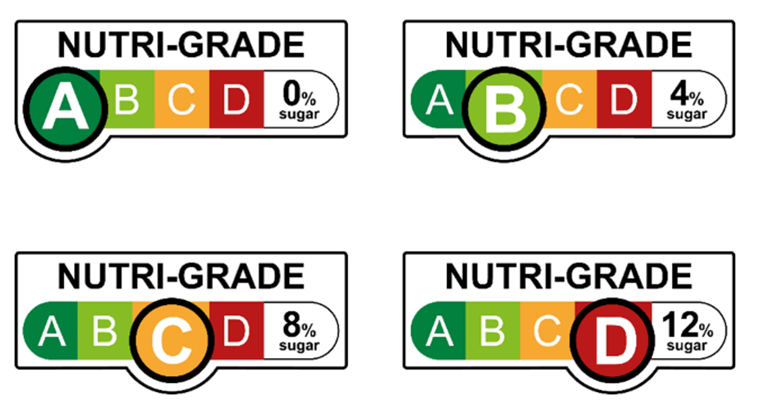
“Nutri-Grade labels are effective in increasing purchases of beverages that were rated A or B—the healthier drinks,” said Dr Soye Shin, Health Economist from Singapore’s Duke-NUS Medical School in response to her recent study looking at the impact of these labels on consumer purchases.
“Compared to what was bought during the shopping experience without the Nutri-Grade labels, those bought with the Nutri-Grade labels had a reduced sugar content of 1.5 grams per serving.”
The study was not without its negatives though as additional findings revealed that there were no significant differences in the total calories, saturated fat or other nutrients present in the purchased goods.
According to the research team, this was likely because beverages account for a small part of the total shopping basket.
Nutri Grade label to extend to freshly prepared beverages
While the study highlights the limits of the labelling system that focuses primarily on pre-packaged beverages, the findings are a good starting point to expand NG to include freshly prepared beverages - a move the Singapore government intends to implement by the end of 2023.
The beverage industry has been prepared for the sugar restrictions on pre-packaged beverages for some time now with big name brands like Yeo’s reformulating its flagship products to avoid the high-sugar ‘C’ or ‘D’ labels.
In the last 12 months, Yeo’s has made available zero-sugar and low-sugar variants of its popular chrysanthemum tea products.
“The criteria for a beverage to be labelled a Healthier Choice under the government scheme is to have 5% or less of sugar – the original chrysanthemum tea already qualified for this, and so the less-sugar (2.5%) and zero-sugar (0%) options definitely also qualify too,” said Yeo’s Singapore CEO Angela Lu.
“Similarly for Nutri-Grade, Grade C is where drinks have above 5% sugar content and Grade D beverages have more than 10% sugar content.”
Yeo’s, POKKA and Yakult joins the low sugar movement
Just as Yeo’s have taken the lead on this, so has its fellow beverage makers followed with POKKA also introducing its range of reduced-sugar alternatives such as Kiyo Kyoho Grape Juice Less Sugar.
Yakult has reformulated Yakult Original to now include 6.5 grams of total sugar per 100 ml serving as well as 1.5 µg of vitamin D added.
Now qualified as a Nutri-Grade B product, Yakult Gold has approximately 2.5 times less sugar than Yakult Original.
The pandemic’s influence on consuming less sugar
Further impacting manufacturers and consumer food choices was the pandemic, placing general health under the spotlight, and the need to keep a closer eye on food and beverage intake.
“The pandemic has changed and influenced ways of life globally,” commented Irene Ee, POKKA senior product manager, marketing division.
“This has in turn altered consumers behaviours as well as companies’ business perspectives - protecting [consumers’] health and interests are new expectations, so adaptability is a crucial driving force [for us] to push forward for the years to come.”

Get more of our news on Google
Set Ingredients Network as a 'Preferred Source' to get quicker access to the news you value.
Related news

Skimpflation: An ‘unfair’ and risky approach to keeping prices low
2 Sep 2026
Consumers see skimpflation – reducing the quality of ingredients due to rising costs – as more unfair than shrinkflation, making it a risky strategy according to recent research.
Read more
NielsenIQ’s EU barometer shows Britain leading in grocery inflation
31 Aug 2026
Britain was the only country to record grocery inflation above 2%, according to NielsenIQ data that compared Europe’s five biggest grocery markets from February to May 2026.
Read more
‘Urgent gaps’ in achieving 2030 food system goals
27 Aug 2026
Global food systems are failing to meet 2030 targets across indicators including health, environment, and resilience, according to a report co-authored by the Food and Agriculture Organisation (FAO).
Read more
China beverages: Is herbal innovation the future?
20 Aug 2026
Herbal and botanical innovation in China's drinks market continues to grow, with ingredients like astragalus root, ginger, and ginseng in the spotlight – and focus shifting far beyond refreshment.
Read more
Popular barbecue staples experience sharp price increases
19 Aug 2026
The typical cost of US shoppers’ barbecue baskets has risen by 12% over the past year – the fastest annual rise in a decade, figures from The Economist show.
Read more
Beyond 'nice to have': A spotlight on US functional beverages
12 Aug 2026
Functional beverage interest in the US is gaining important ground as consumers now expect function rather than see it as "nice to have", and there are clear market gaps for growth, according to Spate.
Read more
Manam Chocolate aims to bring premium Indian cacao to 'the world stage'
11 Aug 2026
Craft chocolate brand Manam Chocolate is investing in local expansion and supply chain innovation throughout India as it works to build out the premium reputation of its locally produced cacao products.
Read more
Digital twin technology gains ground in food manufacturing
6 Aug 2026
Food and beverage companies are increasingly turning to digital twins to optimise and automate manufacturing processes, but opportunities stretch far beyond this, say experts.
Read more
How Secon Taste is putting upcycled snacks on shelves
4 Aug 2026
Hungarian zero-waste startup Secon Taste is turning surplus food into upcycled snacks such as fibre-packed granola, instant porridge, and a circular coffee-tasting box.
Read more
Codex sets global thresholds for ‘may contain’ labels
3 Aug 2026
Codex Alimentarius has adopted its first global guidance on when to use “may contain” allergen warnings, setting thresholds intended to stop the label being used as blanket legal cover.
Read more