
Ingredients Categories
Finished Products
Finished Food Categories
- Bakery
- Beverages / Juices
- Cereal and grain products
- Confectionery
- Cooking Fats & Oils
- Dairy
- Egg products
- Fruits & Vegetables
- Infant & Baby food
- Meat, Poultry & Fish
- Nuts & Seeds products
- Other Finished Food Categories
- Pet Food
- Plant-based foods
- Prepared foods
- Sauces & Seasonings
- Sweet & Savoury Spreads
Specialised Finished Products
- Bee products
- Biotic products
- Dietary supplements
- Energy drinks
- Functional beverages
- Functional confectionery
- Functional food
- Functional powders
- Meal replacement products
- Nutricosmetics
- Other Specialised Finished Products
- Pet Dietary Supplements
- Pharma and OTC products
- Protein products
- Sugar replacers / Sweeteners
Health & Wellness Areas
Delivery Formats
Operations & Services
- 3D printing
- Analysis/ Testing
- Auditing & certifications
- Blending & mixing
- Bottling
- Certification
- Clinical trials
- Co-packing
- Coating
- Consulting
- Contract manufacturing
- Drying
- Electrospinning
- Encapsulating
- Enzymatic processing
- Extracting
- Extrusion
- Fat structuring
- Fermentation
- Filling
- Flavour development
- Freeze drying
- Granulating/ grinding/ milling / mixing
- High-pressure processing
- Labelling
- Other Operations & Services
- Packaging
- Packet filling
- Pasturising
- Quality assurance
- Saccharification
- Shear cell processing
- Spray drying
- Sterilisation
- Storage & Logistics
- Tabletting
- Toasting / roasting
- Ultra-high temperature processing
News
Traffic light label may the best fit for front-of-pack labelling in China
13 Jul 2022
Front-of-pack labels that utilize multiple traffic lights for specific nutrients are best understood and preferred by a wide variety of Chinese shoppers, according to a recent study.
The cross-sectional study of Chinese consumer preferences, published in the journal Nutrients, noted that poor diet is the biggest driver of non-communicable diseases (NCDs) globally, and causes 80% of deaths in China every year – adding that, according to a 2021 scientific research report on Chinese dietary guidelines, people in China consume excessive salt, edible oil, and added sugars.
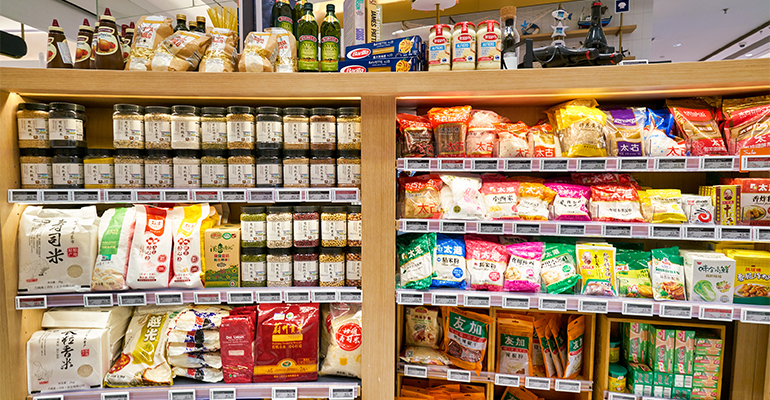
“Pre-packaged food and processed food are important components of those unhealthy diets and account for a growing proportion,” said the authors, adding that China is now one of the world’s largest consumers of pre-packaged food.
Led by first author Jia Cui from the Chinese Academy of Medical Sciences, Beijing, the research team noted that to address this problem, many countries have introduced front-of-package labelling (FOPL), adding that the World Health Organisation (WHO) recommends FOPL to help parents make healthier food choices for their children.
“Furthermore, WHO recommendations for FOPL system development should consider the difference in country context. The New World Heart Federation (WHF) also stresses that consumer literacy rate and universal cultural norms on food and nutrients should be taken into account when implementing FOPL system,” said Cui and colleagues.
“But which type of FOPL resonates with parents in China?” they questioned. “There is an urgent need to identify a culturally and socioeconomically acceptable format of FOPL for Chinese consumers.”
Front-of-pack study preferences
The research team performed a cross-sectional study to investigate parental preferences for five widely used FOPL formats: multiple traffic lights (MTL); Nutri-Score; warning labels; endorsement logos (Health logos: Smart Choice); and a Guideline Daily Amount (GDA) system.
Cui and colleagues analysed findings from surveys from the parents of students in primary and secondary schools in six provinces and municipalities. Parents’ preferences were rated by multiple dimensions, including attraction, information provision, and helpfulness for making healthier choices.
Overall, multiple traffic lights was the preferred FOPL, with 35.1% of the respondents nominating it as attracting them most. This was followed by warning labels (21.9%), Smart Choice (16.6%), GDA (13.8%), and Nutri-Score (12.5%).
When asked which format provides the information they most needed, multiple traffic lights remained the preferred format (42.4%), followed by GDA (20.8%) and warning labels (19.3%). When asked about which FOPL provided helped them to select healthier food quickly, multiple traffic lights was still the preferred FOPL (33.5%), followed by warning labels (24.2%) and GDA (17.7%).
Parents want to see sugar, salt & fat content
Additionally, the survey found that parents thought the most needed nutrients to label were sugar, salt, and total fat, while the top three pre-packaged foods to label were ‘baked food’, ‘milk and dairy products’ and ‘sugar-sweetened beverages’.
Furthermore, the results found that parents’ perceptions were relatively consistent across sociodemographic sub-groups, with few differences observed by parents’ family roles, the number of children in the family, students’ grade and weight status.
“This study provides important knowledge about the preference for FOPL among parents from a representative population from six provinces in China,” said the authors.
“Such findings provide important implications for policy decision making,” they added, noting that the findings can help inform the planning and implementation of FOPL in China and help Chinese parents make healthier food choices.

Get more of our news on Google
Set Ingredients Network as a 'Preferred Source' to get quicker access to the news you value.
Related news

Kellogg accelerates work to remove artificial colours from all US cereals
3 Sep 2026
WK Kellogg has announced an accelerated timeline to eliminate all artificial colours and the chemical preservative, BHT, across its full US portfolio of cereals and cereal packaging.
Read more
‘Urgent gaps’ in achieving 2030 food system goals
27 Aug 2026
Global food systems are failing to meet 2030 targets across indicators including health, environment, and resilience, according to a report co-authored by the Food and Agriculture Organisation (FAO).
Read more
Chimac’s fusion sauces bring Korean flavours to Europe
25 Aug 2026
Irish sauce brand Chimac is tapping into Korea’s culinary traditions, bringing its flavours and products to European consumers who want a taste of K-food.
Read more
Savoury protein snacks shake up the on-the-go market
10 Aug 2026
Sweet flavours have dominated the high-protein snack category but savoury snacks, such as cheese bars and meat sticks, can appeal to health-conscious consumers.
Read more
Nestlé invests in regeneratively farmed wheat for KitKat
5 Aug 2026
Nestlé will pay a premium for Wildfarmed’s regeneratively farmed wheat but the CPG remains reticent to promote the move on packs of its KitKat bars.
Read more
How Secon Taste is putting upcycled snacks on shelves
4 Aug 2026
Hungarian zero-waste startup Secon Taste is turning surplus food into upcycled snacks such as fibre-packed granola, instant porridge, and a circular coffee-tasting box.
Read more
Codex sets global thresholds for ‘may contain’ labels
3 Aug 2026
Codex Alimentarius has adopted its first global guidance on when to use “may contain” allergen warnings, setting thresholds intended to stop the label being used as blanket legal cover.
Read more
EU sets maximum MOAH levels to protect human health
28 Jul 2026
The EU will adopt maximum levels for mineral oil aromatic hydrocarbons (MOAH) in food to protect human health. What do manufacturers need to know?
Read more
UK publishes guidance on SPS food trade agreement with EU
27 Jul 2026
The UK government has shared guidance on how food businesses can prepare for its upcoming Sanitary and Phytosanitary (SPS) agreement with the EU.
Read more
Industry hits back at UK’s proposed healthy food rules
24 Jul 2026
Food brands, including Haribo, have hit out against the UK’s proposed nutrient profiling model, which places a new focus on free sugars that are added during manufacturing.
Read more