
Ingredients Categories
Finished Products
Finished Food Categories
- Bakery
- Beverages / Juices
- Cereal and grain products
- Confectionery
- Cooking Fats & Oils
- Dairy
- Egg products
- Fruits & Vegetables
- Infant & Baby food
- Meat, Poultry & Fish
- Nuts & Seeds products
- Other Finished Food Categories
- Pet Food
- Plant-based foods
- Prepared foods
- Sauces & Seasonings
- Sweet & Savoury Spreads
Specialised Finished Products
- Bee products
- Biotic products
- Dietary supplements
- Energy drinks
- Functional beverages
- Functional confectionery
- Functional food
- Functional powders
- Meal replacement products
- Nutricosmetics
- Other Specialised Finished Products
- Pet Dietary Supplements
- Pharma and OTC products
- Protein products
- Sugar replacers / Sweeteners
Health & Wellness Areas
Delivery Formats
Operations & Services
- 3D printing
- Analysis/ Testing
- Auditing & certifications
- Blending & mixing
- Bottling
- Certification
- Clinical trials
- Co-packing
- Coating
- Consulting
- Contract manufacturing
- Drying
- Electrospinning
- Encapsulating
- Enzymatic processing
- Extracting
- Extrusion
- Fat structuring
- Fermentation
- Filling
- Flavour development
- Freeze drying
- Granulating/ grinding/ milling / mixing
- High-pressure processing
- Labelling
- Other Operations & Services
- Packaging
- Packet filling
- Pasturising
- Quality assurance
- Saccharification
- Shear cell processing
- Spray drying
- Sterilisation
- Storage & Logistics
- Tabletting
- Toasting / roasting
- Ultra-high temperature processing
News
Turning global trade challenges into opportunities
Niamh Michail, Head of Publishing 4 Dec 2025While our food innovation ecosystem is in a healthy place, certain barriers persist. A panel of experts at Fi Europe shared their ideas and strategies for overcoming these, to fully unleash Europe’s potential.
Global trade is constantly exposed to disruption and uncertainty, caused by factors ranging from geopolitical tensions to protectionist policies. For ingredient suppliers, product manufacturers, and brands, the ability to innovate and adapt has never been greater.
This was the starting point for a panel discussion at Fi Europe’s Innovation Hub on 2 December, entitled “Europe’s edge: Navigating trade shifts and turning challenges into opportunities”.

Possibilities in fostering innovation
Karin Verzijden, attorney-at-law at AXON Lawyers, noted that Europe is a harmonised market of 450 million consumers, with a robust regulatory framework.
“Some regulation might perhaps be too strict,” she said. “My feeling is that the European Commission has understood this and is in the process of simplifying things for innovative products. This would make it easier to hit the market moving forward.”
Antoine Baule, president of Odyssée Consult, said that European diversity was a strength in fostering innovation, with its dense network of universities, research centres, and companies.
“It is rewarding to see how universities collaborate with industry,” he said. “In France, for example, we have Ferments du Future, a consortium of public universities and private companies that is fostering research activity in fermentation.”
Zarina Kanji, managing director for UK and Europe at consulting firm WPIC, noted that European regulatory rigour was a source of trust in Asian markets, something that presents an opportunity for brand growth.
Meanwhile, Matthieu Vincent, partner and co-founder of DigitalFoodLab and startup expert, identified new innovation ecosystems emerging in Europe, highlighting cocoa and coffee alternatives.
“There is a strong innovative ecosystem, and this was not the case six or seven years ago,” he said.
Regulatory strengths and weaknesses
Nonetheless, challenges remain. Major players based in Europe are often more focused on rolling out global products than investing in new innovation, while multiple markets can create inefficiencies for startups.
“Many innovative startups feel they have to go to the US first,” said Baule. “In Europe, five years are required to get a novel food product approved, while in the US, this lasts two years.”
Baule pointed out that companies are also more likely to establish manufacturing hubs where their market is.
While the EU may be fantastic for research, the commercial benefits will be taken elsewhere unless we accelerate novel food procedures, he warned.
Verzijden suggested that current discussions around rules restricting “meaty” names for plant-based products missed the point, because the important thing was that consumers understood what an innovation was about.
On a more positive note, Kanji said that while there were legitimate concerns over EU regulations, these were also a source of trust across Asia.
“Brands are often able to easily access Asian markets, and the appetite for these brands is ever-growing,” she said.
Unlocking Europe’s potential
In terms of ways forward, Verzijden discussed working on a planned EU regulatory sandbox, where national initiatives can be shared with other member states.
“This is about creating a coalition of the willing and not having to wait for things to happen at the top EU level,” she said. A brief of the initiative has been produced, entitled Closing the Food Innovation Gap.
Vincent highlighted the possibility of global brands partnering with startups in order to refocus on long-term innovation. These companies need to experiment and relearn how to launch new products, he suggested. Companies should also focus on what is happening in China, where food innovation is most likely to be scaled up.
Baules said that segmentation among consumers in terms of their focus on sustainability, taste, and casual eating, etc. presented a big opportunity for ingredients suppliers.
“It would be good if such opportunities were concretised here in Europe,” he said. The precision fermentation of proteins, for example, promises to tap into consumer concerns of health and sustainability. “Let’s unlock this potential,” he added.
Kanji encouraged innovators to think of the problem their product address and to look for where the market is, while Verzijden hoped that simplification of the rules governing food innovation was on the cards. The European Commission understands that balance is needed to ensure competitiveness, she said.

Get more of our news on Google
Set Ingredients Network as a 'Preferred Source' to get quicker access to the news you value.
Related news

M&S launches own-brand pet food range
11 Sep 2026
UK retailer Marks & Spencer has launched its own-brand pet food line Paws & Pals – a well-timed and strategic move that will appeal to loyal shoppers, says a marketing expert.
Read more
Do the US dietary guidelines put UPFs under pressure?
10 Sep 2026
Will the US dietary guidelines change the way Americans eat, swapping ultra-processed foods for whole foods? We asked Dr Barry Popkin, renowned nutrition and obesity researcher.
Read more
Food fraud costs UK economy £2bn each year
9 Sep 2026
Food fraud is costing the UK economy up to £2 billion (€2.3 billion) every year although the food sector is more “resilient” than others, according to a recent study.
Read more
Kellogg accelerates work to remove artificial colours from all US cereals
3 Sep 2026
WK Kellogg has announced an accelerated timeline to eliminate all artificial colours and the chemical preservative, BHT, across its full US portfolio of cereals and cereal packaging.
Read more
‘Urgent gaps’ in achieving 2030 food system goals
27 Aug 2026
Global food systems are failing to meet 2030 targets across indicators including health, environment, and resilience, according to a report co-authored by the Food and Agriculture Organisation (FAO).
Read more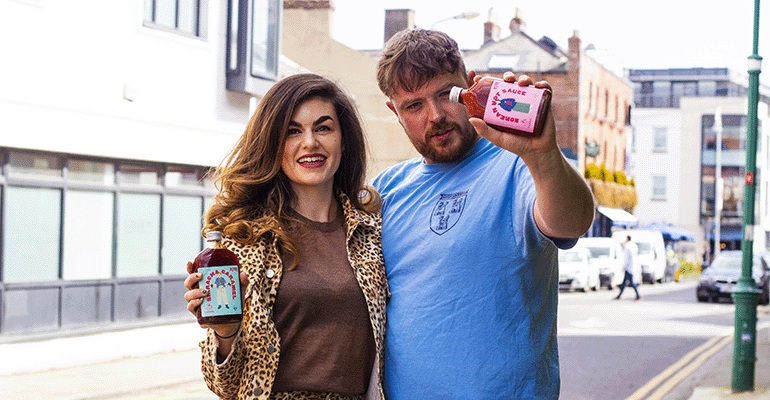
Chimac’s fusion sauces bring Korean flavours to Europe
25 Aug 2026
Irish sauce brand Chimac is tapping into Korea’s culinary traditions, bringing its flavours and products to European consumers who want a taste of K-food.
Read more
Savoury protein snacks shake up the on-the-go market
10 Aug 2026
Sweet flavours have dominated the high-protein snack category but savoury snacks, such as cheese bars and meat sticks, can appeal to health-conscious consumers.
Read more
Nestlé invests in regeneratively farmed wheat for KitKat
5 Aug 2026
Nestlé will pay a premium for Wildfarmed’s regeneratively farmed wheat but the CPG remains reticent to promote the move on packs of its KitKat bars.
Read more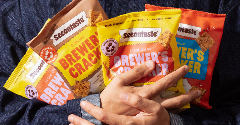
How Secon Taste is putting upcycled snacks on shelves
4 Aug 2026
Hungarian zero-waste startup Secon Taste is turning surplus food into upcycled snacks such as fibre-packed granola, instant porridge, and a circular coffee-tasting box.
Read more
Codex sets global thresholds for ‘may contain’ labels
3 Aug 2026
Codex Alimentarius has adopted its first global guidance on when to use “may contain” allergen warnings, setting thresholds intended to stop the label being used as blanket legal cover.
Read more