
Ingredients Categories
Finished Products
Finished Food Categories
- Bakery
- Beverages / Juices
- Cereal and grain products
- Confectionery
- Cooking Fats & Oils
- Dairy
- Egg products
- Fruits & Vegetables
- Infant & Baby food
- Meat, Poultry & Fish
- Nuts & Seeds products
- Other Finished Food Categories
- Pet Food
- Plant-based foods
- Prepared foods
- Sauces & Seasonings
- Sweet & Savoury Spreads
Specialised Finished Products
- Bee products
- Biotic products
- Dietary supplements
- Energy drinks
- Functional beverages
- Functional confectionery
- Functional food
- Functional powders
- Meal replacement products
- Nutricosmetics
- Other Specialised Finished Products
- Pet Dietary Supplements
- Pharma and OTC products
- Protein products
- Sugar replacers / Sweeteners
Health & Wellness Areas
Delivery Formats
Operations & Services
- 3D printing
- Analysis/ Testing
- Auditing & certifications
- Blending & mixing
- Bottling
- Certification
- Clinical trials
- Co-packing
- Coating
- Consulting
- Contract manufacturing
- Drying
- Electrospinning
- Encapsulating
- Enzymatic processing
- Extracting
- Extrusion
- Fat structuring
- Fermentation
- Filling
- Flavour development
- Freeze drying
- Granulating/ grinding/ milling / mixing
- High-pressure processing
- Labelling
- Other Operations & Services
- Packaging
- Packet filling
- Pasturising
- Quality assurance
- Saccharification
- Shear cell processing
- Spray drying
- Sterilisation
- Storage & Logistics
- Tabletting
- Toasting / roasting
- Ultra-high temperature processing
News
Yuka’s food scanning app helps consumers make healthier choices
Natasha Spencer-Jolliffe, Freelance Journalist 2 Dec 2025Global food scanning app Yuka helps consumers understand the content of their shopping baskets and shapes producers’ reformulation plans.
The mobile app can be used to scan food and cosmetic product barcodes, providing consumers with a score on how healthy they are.
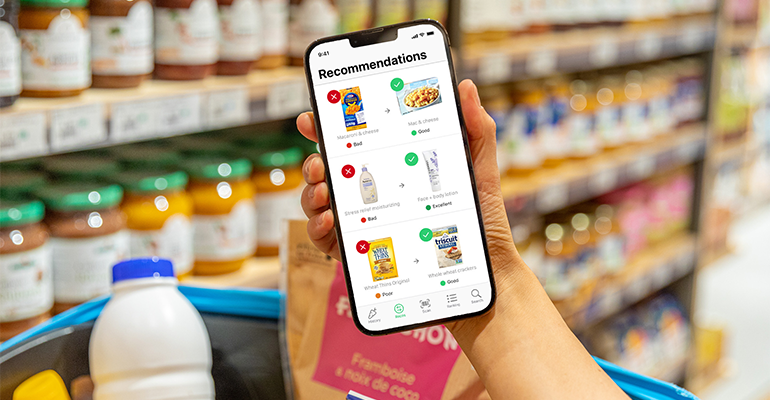
The startup’s food product scoring method is based on three criteria, taking into account nutritional and additive content, along with a product’s organic/non-organic nature.
As of 2025, Yuka’s food scanning app is available in 12 countries and five languages, with over 750 million users worldwide. To date, the Certified B Corporation has rated three million food product references, with a recognition rate of over 90% for scanned products in the app. Each month, Yuka records nearly 240 million scans – an average of 90 scans per second.
Scanning and scoring: The 60/30/10 rule
So, how does Yuka’s scoring system work?
Nutritional quality makes up 60% of the score. Yuka’s calculation method is based on the NutriScore, a science-based nutrition label adopted by seven European countries that measure the nutritional balance of food products. It takes into account the indicated – either calculated or estimated – quantity of sugar, sodium, saturated fat, calories, protein, fibre, as well as fruit and vegetable content.
The presence of additives comprises 30% of the score. The app prioritises those classified by level of supporting evidence: systematic reviews and meta-analyses, followed by cohort studies, case-control studies, animal studies and expert opinions.
Yuka says it builds its additive scoring factor based on relevant independent scientific studies and collective assessment reports from organisations including the World Health Organization (WHO), the European Food Safety Authority (EFSA), and the US Food and Drug Administration (FDA).
“Only the most reliable studies are selected,” Julie Chapon, co-founder of Yuka, told Ingredients Network.
Among its tools, Yuka utilises the Klimisch rating system, a recognised standard in toxicology, to evaluate the quality of experimental studies. The app provides information about the risks associated with each additive, along with the corresponding scientific references.
A finished product’s organic dimension accounts for 10% of Yuka’s score. “This is a bonus granted to products considered organic,” Chapon said.
Yuka identifies organic products as items with an official national or international organic label.
“They avoid chemical pesticides, which can pose a health risk,” said Chapon.
Promoting healthier choices?
Health and wellbeing remain an ever-present megatrend within the food and beverage industry. Consumers expect transparent ingredient information and front-of-pack claims to steer their purchases.
Yuka’s app has the potential to encourage consumers to choose healthier products.
“By giving consumers clear and immediate access to unbiased, scientifically grounded information, Yuka enables smarter choices at the point of purchase,” Chapon said.
According to Yuka, its data has found that 94% of users report putting back products in the supermarket if they receive a red rating, while 56% have stopped buying more than 10 processed products since using the scoring system. Furthermore, 92% of users actively buy fewer processed foods, indicating the app’s influence on shopping habits.
“Additionally, Yuka always displays better alternatives – when you scan a poorly rated item, the app recommends higher-rated options based on simple criteria: the best-rated product in that same category that’s also accessible to the everyday consumer,” said Chapon.
Reformulation: Risk with reward
As scanning apps like Yuka alert consumers to the health and nutritional credentials of food and beverages, shaping their buying decisions and consumption patterns, manufacturers are responding to avoid unfavourable sales outcomes.
“Many manufacturers monitor Yuka’s ratings and adjust their formulas in direct response to consumer feedback generated by the app,” said Chapon.
Brands have reported removing dozens of potentially harmful ingredients to increase their scores and meet customer expectations shaped by Yuka’s criteria.
“Thanks to this critical mass of consumers, brands have been forced to listen,” Chapon added.
For example, the leading French supermarket chain Intermarché has reformulated 900 products by removing 142 additives from its products in response to consumer pressure.
“These changes show that when enough people unite behind healthier choices, brands have no option but to respond,” Chapon added.
To accelerate change, Yuka launched a callout feature in 2024 that enables users to urge brands to reformulate their products.
“This has become a breakthrough tool for collective consumer influence,” Chapon said. The feature enables users to directly contact brands with pre-filled emails or public posts, urging them to remove high-risk additives and encourage product reformulation.
To date, over 1,000,000 callouts have been sent to brands, underscoring how consumers are making their voices heard.
“Brands increasingly recognise this broad consumer-driven accountability and are responding with more transparency and improved formulations that better meet public expectations,” Chapon added.

Get more of our news on Google
Set Ingredients Network as a 'Preferred Source' to get quicker access to the news you value.
Related news

M&S launches own-brand pet food range
11 Sep 2026
UK retailer Marks & Spencer has launched its own-brand pet food line Paws & Pals – a well-timed and strategic move that will appeal to loyal shoppers, says a marketing expert.
Read more
Do the US dietary guidelines put UPFs under pressure?
10 Sep 2026
Will the US dietary guidelines change the way Americans eat, swapping ultra-processed foods for whole foods? We asked Dr Barry Popkin, renowned nutrition and obesity researcher.
Read more
Food fraud costs UK economy £2bn each year
9 Sep 2026
Food fraud is costing the UK economy up to £2 billion (€2.3 billion) every year although the food sector is more “resilient” than others, according to a recent study.
Read more
Kellogg accelerates work to remove artificial colours from all US cereals
3 Sep 2026
WK Kellogg has announced an accelerated timeline to eliminate all artificial colours and the chemical preservative, BHT, across its full US portfolio of cereals and cereal packaging.
Read more
‘Urgent gaps’ in achieving 2030 food system goals
27 Aug 2026
Global food systems are failing to meet 2030 targets across indicators including health, environment, and resilience, according to a report co-authored by the Food and Agriculture Organisation (FAO).
Read more
Chimac’s fusion sauces bring Korean flavours to Europe
25 Aug 2026
Irish sauce brand Chimac is tapping into Korea’s culinary traditions, bringing its flavours and products to European consumers who want a taste of K-food.
Read more
Savoury protein snacks shake up the on-the-go market
10 Aug 2026
Sweet flavours have dominated the high-protein snack category but savoury snacks, such as cheese bars and meat sticks, can appeal to health-conscious consumers.
Read more
Nestlé invests in regeneratively farmed wheat for KitKat
5 Aug 2026
Nestlé will pay a premium for Wildfarmed’s regeneratively farmed wheat but the CPG remains reticent to promote the move on packs of its KitKat bars.
Read more
How Secon Taste is putting upcycled snacks on shelves
4 Aug 2026
Hungarian zero-waste startup Secon Taste is turning surplus food into upcycled snacks such as fibre-packed granola, instant porridge, and a circular coffee-tasting box.
Read more
Codex sets global thresholds for ‘may contain’ labels
3 Aug 2026
Codex Alimentarius has adopted its first global guidance on when to use “may contain” allergen warnings, setting thresholds intended to stop the label being used as blanket legal cover.
Read more