
Ingredients Categories
Finished Products
Finished Food Categories
- Bakery
- Beverages / Juices
- Cereal and grain products
- Confectionery
- Cooking Fats & Oils
- Dairy
- Egg products
- Fruits & Vegetables
- Infant & Baby food
- Meat, Poultry & Fish
- Nuts & Seeds products
- Other Finished Food Categories
- Pet Food
- Plant-based foods
- Prepared foods
- Sauces & Seasonings
- Sweet & Savoury Spreads
Specialised Finished Products
- Bee products
- Biotic products
- Dietary supplements
- Energy drinks
- Functional beverages
- Functional confectionery
- Functional food
- Functional powders
- Meal replacement products
- Nutricosmetics
- Other Specialised Finished Products
- Pet Dietary Supplements
- Pharma and OTC products
- Protein products
- Sugar replacers / Sweeteners
Health & Wellness Areas
Delivery Formats
Operations & Services
- 3D printing
- Analysis/ Testing
- Auditing & certifications
- Blending & mixing
- Bottling
- Certification
- Clinical trials
- Co-packing
- Coating
- Consulting
- Contract manufacturing
- Drying
- Electrospinning
- Encapsulating
- Enzymatic processing
- Extracting
- Extrusion
- Fat structuring
- Fermentation
- Filling
- Flavour development
- Freeze drying
- Granulating/ grinding/ milling / mixing
- High-pressure processing
- Labelling
- Other Operations & Services
- Packaging
- Packet filling
- Pasturising
- Quality assurance
- Saccharification
- Shear cell processing
- Spray drying
- Sterilisation
- Storage & Logistics
- Tabletting
- Toasting / roasting
- Ultra-high temperature processing
News
Ultra-processed plant-based meat alternatives: Healthy or harmful?
Rik Moors 4 Feb 2025Although plant-based meats have been under increasing scrutiny for their ultra-processed nature, they might still offer major health benefits compared with animal-based alternatives.
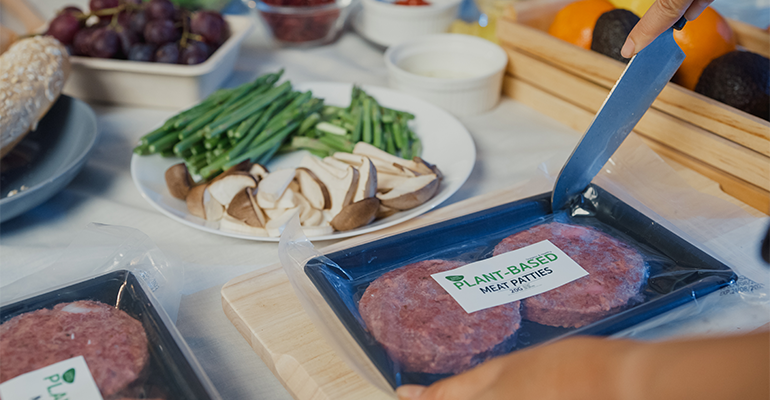
This was the focus of a webinar hosted last month by the Good Food Institute (GFI), an organisation dedicated to alternative protein innovation. The session featured Dr Michael Greger, a physician, author, and founder of NutritionFacts.org, who provided an in-depth analysis of how plant-based meats compare to conventional meat and whole plant foods in terms of health impacts.
Plant-based meats: The exception to the rule?
The Nova classification system defines ultra-processed foods (UPFs) as industrial formulations that undergo multiple stages of processing and include additives such as emulsifiers, preservatives, and artificial flavours. These foods are often energy-dense and associated with increased risks of obesity, cardiovascular disease, and type 2 diabetes.
Greger noted during the webinar that “plant-based meats appear to be the exception to the rule that ultra-processed products are necessarily worse than the foods they’re designed to replace”. While plant-based meat alternatives share some characteristics with traditional UPFs, they demonstrate significant nutritional advantages over conventional meat.
Emerging research underscores the complexity of UPF classification. Studies have highlighted that energy density, hyperpalatability, and food structure play critical roles in driving overconsumption.
For instance, reducing the calorie density and palatability of UPFs has been shown to significantly lower calorie intake, even when these foods remain the predominant source of energy in the diet. These findings suggest that reformulation could mitigate many of the risks associated with UPFs.
How plant-based meat alternatives compare to meat
According to Greger, plant-based meat alternatives consistently outperform meat in several nutritional metrics. They contain significantly lower levels of saturated fat and cholesterol, both linked to cardiovascular disease.
“Replacing even one serving of meat per day with plant-based meat could lower chronic disease risk,” Greger said.
Unlike meat, plant-based alternatives also tend to be much lower in harmful compounds such as nitrates and advanced glycation end-products (AGEs). Research shows that plant-based options contain up to 30 times fewer AGEs than beef burgers, reducing inflammatory potential.
Plant-based alternatives also offer fibre, a nutrient absent in meat, which supports digestive health and satiety.
“In a swap meat trial, participants replacing meat with plant-based options experienced lower body weight and improved satiety without changing total calorie intake,” Greger said.
Certain products, particularly those based on mycoprotein, also stand out for their cholesterol-lowering effects.
“The mycoprotein products seem to do better in terms of LDL [low-density lipoprotein] lowering,” Greger told Ingredients Network. Clinical trials suggest that mycoprotein can reduce LDL cholesterol by as much as 10-20% within weeks, potentially lowering heart disease risk.
Where plant-based meat alternatives face challenges
Despite their advantages, plant-based meat alternatives are not without limitations. Sodium remains a persistent issue.
“Less added sodium and saturated fat is preferable, but none is better,” Greger said. While some products have reduced sodium levels, others still approach daily recommended limits in a single serving.
The inclusion of emulsifiers, commonly used to improve texture and shelf life, has also raised concerns. Preliminary studies suggest these additives may disrupt the gut microbiome and promote inflammation.
“I haven’t seen this issue break through into wider consciousness yet, but it’s something to watch,” Greger said, emphasising the need for more research into additive safety.
Another challenge involves contamination issues in certain crops used for plant-based meat production. Greger noted that mould contamination, particularly in grains and legumes, can lead to health risks if not properly managed.
Finally, the hyperpalatable combinations of salt, fat, and sugar common in some plant-based alternatives echo the same concerns raised with traditional UPFs. These properties can drive overconsumption.
Why whole plant foods still lead nutritionally
Whole plant foods, such as legumes, soybeans, and whole grains, remain the benchmark for nutritional health. These foods retain their natural structure, preserving dietary fibre, phytonutrients, and antioxidants that are often reduced during processing. Unlike plant-based meat alternatives, whole foods avoid sodium and additives, offering a cleaner nutrient profile.
“Whole plant foods remain the gold standard, but plant-based meat provides a bridge for consumers transitioning away from animal products,” Greger said.
These alternatives can serve as a stepping stone for those hesitant to adopt a fully plant-based diet, reducing reliance on meat while paving the way for healthier eating habits.
Whole plant foods also contribute to gut health through their high fiber content and lack of additives. This fosters a balanced microbiome, which is increasingly linked to overall health and disease prevention.
The future of UPF research
The evolving understanding of UPFs reveals that their risks are not uniform but depend on specific properties such as energy density, texture, and nutrient composition.
Greger told Ingredients Network that while many problems with UPFs have been identified, “new heat-induced toxins or new effects (for example, on the microbiome) that we hadn’t anticipated” could emerge as research progresses.

Get more of our news on Google
Set Ingredients Network as a 'Preferred Source' to get quicker access to the news you value.
Related news

Do the US dietary guidelines put UPFs under pressure?
10 Sep 2026
Will the US dietary guidelines change the way Americans eat, swapping ultra-processed foods for whole foods? We asked Dr Barry Popkin, renowned nutrition and obesity researcher.
Read more
Food fraud costs UK economy £2bn each year
9 Sep 2026
Food fraud is costing the UK economy up to £2 billion (€2.3 billion) every year although the food sector is more “resilient” than others, according to a recent study.
Read more
Pump-based liquid pet supplement focuses on health and convenience
8 Sep 2026
Prefera Pet Food uses a plastic pump-based packaging to make administering its liquid supplements for cats and dogs easier, healthier, and more accurate.
Read more
Health and wellness engagement matures across Middle East and Africa
4 Sep 2026
Many consumers in the Middle East and Africa are now proactively engaged in health and wellness, looking to integrate better habits and products into their daily lives, say experts.
Read more
Kellogg accelerates work to remove artificial colours from all US cereals
3 Sep 2026
WK Kellogg has announced an accelerated timeline to eliminate all artificial colours and the chemical preservative, BHT, across its full US portfolio of cereals and cereal packaging.
Read more
Royal Canin launches ‘freshly-cooked’ therapeutic dog food
1 Sep 2026
Mars-owned Royal Canin has moved into the therapeutic diet sector with the launch of its Fresh Veterinary Diets range for dogs with health conditions. We asked a veterinary nutritionist for her opinion.
Read more
‘Urgent gaps’ in achieving 2030 food system goals
27 Aug 2026
Global food systems are failing to meet 2030 targets across indicators including health, environment, and resilience, according to a report co-authored by the Food and Agriculture Organisation (FAO).
Read more
Seven-Eleven uses microbial testing tech to extend katsudon shelf life
26 Aug 2026
Japanese retail company Seven-Eleven has improved its factory’s microbial environment to keep comfort-food staple, katsudon, fresher for longer.
Read more
Chimac’s fusion sauces bring Korean flavours to Europe
25 Aug 2026
Irish sauce brand Chimac is tapping into Korea’s culinary traditions, bringing its flavours and products to European consumers who want a taste of K-food.
Read more
China beverages: Is herbal innovation the future?
20 Aug 2026
Herbal and botanical innovation in China's drinks market continues to grow, with ingredients like astragalus root, ginger, and ginseng in the spotlight – and focus shifting far beyond refreshment.
Read more