
Ingredients Categories
Finished Products
Finished Food Categories
- Bakery
- Beverages / Juices
- Cereal and grain products
- Confectionery
- Cooking Fats & Oils
- Dairy
- Egg products
- Fruits & Vegetables
- Infant & Baby food
- Meat, Poultry & Fish
- Nuts & Seeds products
- Other Finished Food Categories
- Pet Food
- Plant-based foods
- Prepared foods
- Sauces & Seasonings
- Sweet & Savoury Spreads
Specialised Finished Products
- Bee products
- Biotic products
- Dietary supplements
- Energy drinks
- Functional beverages
- Functional confectionery
- Functional food
- Functional powders
- Meal replacement products
- Nutricosmetics
- Other Specialised Finished Products
- Pet Dietary Supplements
- Pharma and OTC products
- Protein products
- Sugar replacers / Sweeteners
Health & Wellness Areas
Delivery Formats
Operations & Services
- 3D printing
- Analysis/ Testing
- Auditing & certifications
- Blending & mixing
- Bottling
- Certification
- Clinical trials
- Co-packing
- Coating
- Consulting
- Contract manufacturing
- Drying
- Electrospinning
- Encapsulating
- Enzymatic processing
- Extracting
- Extrusion
- Fat structuring
- Fermentation
- Filling
- Flavour development
- Freeze drying
- Granulating/ grinding/ milling / mixing
- High-pressure processing
- Labelling
- Other Operations & Services
- Packaging
- Packet filling
- Pasturising
- Quality assurance
- Saccharification
- Shear cell processing
- Spray drying
- Sterilisation
- Storage & Logistics
- Tabletting
- Toasting / roasting
- Ultra-high temperature processing
News
Africa progresses with food transformation strategy
Natasha Spencer-Jolliffe, Freelance Journalist 19 Sep 2024Large-scale efforts are underway to drastically change the African food sector with a $61 billion (€55 bn) set of proposed transformation plans to be implemented across forty countries. Yet there are concerns that this initiative severely jeopardises small-scale farmers’ livelihoods as well as the wider agricultural landscape.
Pursuing nutrition policy
In August 2024, the African Union Commission (AUC), the African Development Bank Group’s African Leaders for Nutrition (ALN) initiative and the government of Senegal initiated plans to develop Africa x’s first-ever Multisectoral Nutrition Policy Framework (MNPF), alongside an investment target for tackling malnutrition.
The trio marked this effort by holding a two-day event, which launched a series of regional consultations to overhaul nutrition policy and financing to end malnutrition across Africa. The consultation sought to achieve several objectives, including creating a clear understanding of funding sources and financial requirements for nutrition initiatives in Africa, producing actionable insights for the MNPF development and financing strategies, and enhancing collaboration among various stakeholders in the nutrition sector.
A bold billion-backed plan to tackle food insecurity
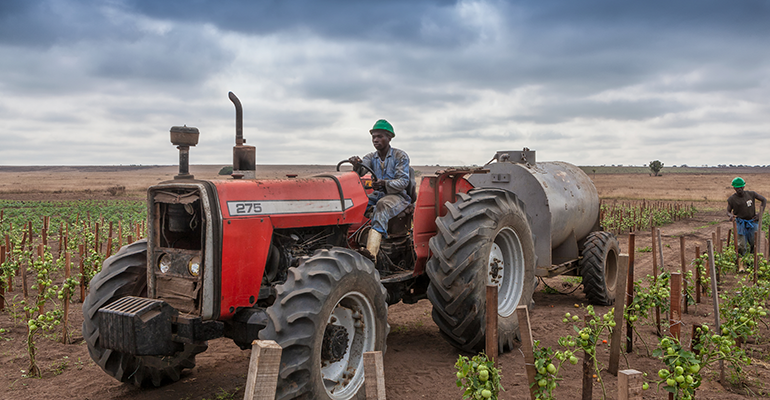
The African Development Bank’s (AfDB) Dakar II initiative, ‘Feed Africa: Food Sovereignty and Resilience’, is the financial institution’s most ambitious project yet under its Feed Africa programme. It aims to industrialise African food systems with a proposed budget of $61 billion (€55 bn), which will primarily come from private companies and development institutions.
Africa has almost two-thirds (65%) of the world’s uncultivated arable land. The AfDB believes this expanse of land gives the continent ample opportunity to feed its population and the wider globe.
Amidst rising food insecurity, African nations are among some of the world’s most vulnerable and under threat. Many of the world’s most critical levels of food insecurity are in Africa, prompting urgent and widespread calls for multifaceted, collaborative actions to push the needle as far as possible. Securing the future of the African population’s food remains fundamental to achieving the goal of providing safe, accessible and nutritious food to its1.48 billion people.
Of the 18 critical hotspots the Food and Agriculture Organization (FAO) and World Food Programme (WFP) identified in its latest Hunger Hotspots Outlook report, 12 were located in Africa: Nigeria, Sudan, Somalia, Ethiopia, South Sudan, Democratic Republic of the Congo (eastern provinces), Central African Republic, Chad, Burkina Faso, Sierra Leone, and Mali, as well as a regional risk in Malawi, Mozambique, Zambia and Zimbabwe.
The report, which covers the period between June and October 2024, indicates that these 12 countries display varying degrees of food insecurity, ranging from the lowest ‘hotspot’ classification to hotspots of very deep concern and those of the deepest concern. These nations are also not localised to one part of the continent, with the 12 countries located in North, Central, East and West Africa along with the continent’s Sahel regions.
Several of these African countries—Central African Republic, Mozambique, Nigeria, Sierra Leone, and Zambia—were added to the United Nations’ (UN) hunger hotspots list in October 2023, indicating the continent’s worsening crisis.
According to the report, various drivers are responsible for food insecurity in Africa, including high food prices and inflation, flooding, the El Niño-induced drought and lingering effects of drought, climate shocks, conflict, economic restrictions and crises, trade disruptions and macroeconomic challenges.
Publishing their joint warning earlier in the year, the UN organisations make an urgent call for immediate action and increased support for these countries experiencing critical levels of food insecurity.
Facing barriers
However, the civil society group Alliance for Food Sovereignty in Africa (AFSA) has criticised the plans for failing to provide an inclusive environment for small-scale farmers and undermining biodiversity. The group also says that the initiative furthers a dependent relationship between multinational corporations and farmers, who rely on them to provide seeds and agrochemicals to supply food systems. AFSA calls for considerable reforms to the plans to avoid posing a “significant threat to small-scale farmers”.
“The emphasis on principal commodity crops, mechanised farming tools and standardised land tenure systems condenses the practices into a uniform effort aimed at agro-industrialisation,” AFSA said in a 2024 report.
Among its criticisms, AFSA says Dakar II plans to adopt a one-size-fits-all approach to agricultural development in Africa, which may not adequately address the diverse needs and contexts of different African countries and their farmers. This uniform strategy of agricultural industrialisation risks neglecting the importance of small-scale farmers, who play a crucial role in the continent’s food security and cultural heritage.
They also threaten rights to land and the environment. The combined proposed land area for industrial production exceeds 25 million hectares, or 257,000 square kilometres, which is larger than Ghana or Uganda. This poses a significant risk of smallholder displacement through land-grabbing. It may also create additional environmental pressure due to unsustainable industrial agriculture on uncultivated land.
Redesigning Africa’s approach to securing food
Calls for recommendations centre around reconsidering the whole approach to food security and systems transformation. AFSA states this is needed to ensure the initiative’s strategies are inclusive, sustainable, and tailored to the specific needs of diverse African countries and their farmers.
Instead of prioritising traditional farming methods, AFSA recommends shifting focus to promoting agroecology and food sovereignty as well as preserving agricultural biodiversity. It also champions embracing inclusive and participatory approaches, stating the significance of sustainable agriculture and the empowerment of small-scale farmers.
Researchers are currently compiling a manuscript on Transforming African Food Systems, which will be published in the Frontiers in Sustainable Food Systems Journal. With a manuscript deadline of 15th September 2024, the food sector will soon have further insights on what the continent’s food security path may look like moving forward.

Get more of our news on Google
Set Ingredients Network as a 'Preferred Source' to get quicker access to the news you value.
Related news

Do the US dietary guidelines put UPFs under pressure?
10 Sep 2026
Will the US dietary guidelines change the way Americans eat, swapping ultra-processed foods for whole foods? We asked Dr Barry Popkin, renowned nutrition and obesity researcher.
Read more
Health and wellness engagement matures across Middle East and Africa
4 Sep 2026
Many consumers in the Middle East and Africa are now proactively engaged in health and wellness, looking to integrate better habits and products into their daily lives, say experts.
Read more
Skimpflation: An ‘unfair’ and risky approach to keeping prices low
2 Sep 2026
Consumers see skimpflation – reducing the quality of ingredients due to rising costs – as more unfair than shrinkflation, making it a risky strategy according to recent research.
Read more
‘Urgent gaps’ in achieving 2030 food system goals
27 Aug 2026
Global food systems are failing to meet 2030 targets across indicators including health, environment, and resilience, according to a report co-authored by the Food and Agriculture Organisation (FAO).
Read more
Seven-Eleven uses microbial testing tech to extend katsudon shelf life
26 Aug 2026
Japanese retail company Seven-Eleven has improved its factory’s microbial environment to keep comfort-food staple, katsudon, fresher for longer.
Read more
Chimac’s fusion sauces bring Korean flavours to Europe
25 Aug 2026
Irish sauce brand Chimac is tapping into Korea’s culinary traditions, bringing its flavours and products to European consumers who want a taste of K-food.
Read more
Global demand for instant noodles continues to rise
24 Aug 2026
Global demand for instant noodles reached 124.21 billion servings last year, representing a 0.7% year-on-year increase – or 900 million extra servings.
Read more
Popular barbecue staples experience sharp price increases
19 Aug 2026
The typical cost of US shoppers’ barbecue baskets has risen by 12% over the past year – the fastest annual rise in a decade, figures from The Economist show.
Read more
Hot NPD: Nissin launches first cold-water Cup Noodles
18 Aug 2026
Nissin is taking one of Japan’s most iconic instant meals in a completely new direction with the launch of the first cold water-only Cup Noodles in the brand’s 55-year history.
Read more
Manam Chocolate aims to bring premium Indian cacao to 'the world stage'
11 Aug 2026
Craft chocolate brand Manam Chocolate is investing in local expansion and supply chain innovation throughout India as it works to build out the premium reputation of its locally produced cacao products.
Read more