
Ingredients Categories
Finished Products
Finished Food Categories
- Bakery
- Beverages / Juices
- Cereal and grain products
- Confectionery
- Cooking Fats & Oils
- Dairy
- Egg products
- Fruits & Vegetables
- Infant & Baby food
- Meat, Poultry & Fish
- Nuts & Seeds products
- Other Finished Food Categories
- Pet Food
- Plant-based foods
- Prepared foods
- Sauces & Seasonings
- Sweet & Savoury Spreads
Specialised Finished Products
- Bee products
- Biotic products
- Dietary supplements
- Energy drinks
- Functional beverages
- Functional confectionery
- Functional food
- Functional powders
- Meal replacement products
- Nutricosmetics
- Other Specialised Finished Products
- Pet Dietary Supplements
- Pharma and OTC products
- Protein products
- Sugar replacers / Sweeteners
Health & Wellness Areas
Delivery Formats
Operations & Services
- 3D printing
- Analysis/ Testing
- Auditing & certifications
- Blending & mixing
- Bottling
- Certification
- Clinical trials
- Co-packing
- Coating
- Consulting
- Contract manufacturing
- Drying
- Electrospinning
- Encapsulating
- Enzymatic processing
- Extracting
- Extrusion
- Fat structuring
- Fermentation
- Filling
- Flavour development
- Freeze drying
- Granulating/ grinding/ milling / mixing
- High-pressure processing
- Labelling
- Other Operations & Services
- Packaging
- Packet filling
- Pasturising
- Quality assurance
- Saccharification
- Shear cell processing
- Spray drying
- Sterilisation
- Storage & Logistics
- Tabletting
- Toasting / roasting
- Ultra-high temperature processing
News
FDA to revoke 52 ‘outdated’ food standards of identity
Rik Moors 24 Jul 2025The US Food and Drug Administration (FDA) has announced plans to revoke 52 standards of identity (SOIs) for foods that it considers obsolete or unnecessary.
The changes, outlined in a press release published in July, affect canned fruits and vegetables, dairy products, bakery goods, macaroni products, and food dressings.
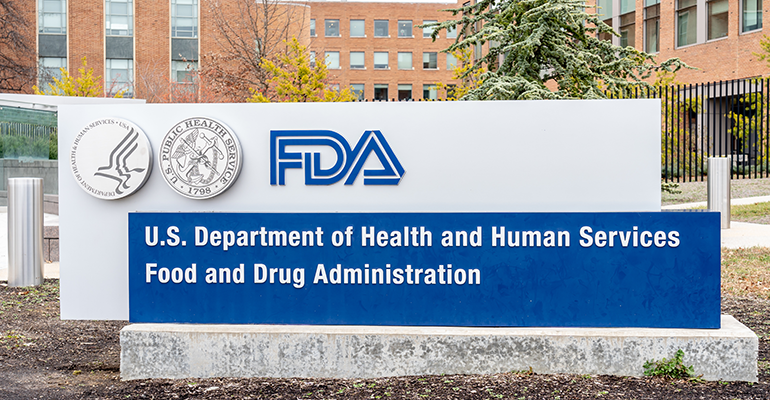
Made redundant: Dozens of standards of identity
The FDA published a direct final rule revoking 11 SOIs for canned fruits and vegetables no longer sold in US grocery stores, including seven standards for fruits containing saccharin or sodium saccharin.
It also proposed revoking 18 SOIs for dairy products, including milk, cream products, cheeses, and frozen desserts, as well as 23 SOIs covering bakery products, macaroni and noodle products, canned fruit juices, fish and shellfish, and food dressings and flavourings.
Public comments on the direct final rule are open until 18 August, while the proposed rules have a deadline of 15 September.
This marks the first stage in a broader review of the more than 250 existing SOIs, which were created in 1939 to prevent economic adulteration and ensure consistency in how foods were made and labelled. The FDA claims that many SOIs have been rendered redundant by modern ingredient labelling, food safety regulations, and advances in food production.
The action supports President Trump’s executive order 14192, Unleashing Prosperity Through Deregulation, which requires executive agencies to repeal at least ten existing regulations for every new one introduced.
Health and Human Services Secretary Robert F Kennedy Jr described the move as a way to “cut through bureaucratic red tape” and focus agency resources on what he called more urgent priorities.
Dairy industry calls for SOI modernisation
Some industry organisations, particularly in the dairy sector, have supported the modernisation of SOIs for years.
The International Dairy Foods Association (IDFA), a lobby group for the dairy industry, has noted that almost one-third of all existing SOIs apply to dairy products. It has argued that the rigidity of the rules hinders innovation.
On its website, the organisation states: “If manufacturers use a new process or ingredient not specified in the standards, the product could be considered misbranded or adulterated. That’s why it’s critical for the standards to keep pace with food science discoveries, new technology and – most important – current consumer demands.
“Unfortunately, many food standards are lagging behind the market curve, hindering innovation and stifling industry growth.”
Symbolic deregulation?
Some regulatory experts have criticised the announcement as resource-intensive symbolic deregulation.
Sarah Sorscher, director of regulatory affairs at the Center for Science in the Public Interest (CSPI), told Ingredients Network that although removing these specific SOIs would not harm consumers, the motivation behind the move was questionable.
“These are essentially the vestigial organs of the regulatory state,” she said. “They remain on the books only because removing them takes time and effort.
“You wouldn’t operate on an appendix that’s not inflamed, and typically [the] FDA has had the common sense not to waste scarce staff time combing through the books to delete old regulations that no one is using.
“The only possible reason to do this ‘busy work’ is to comply with Trump’s 10-out, one-in rule, so the administration can claim a victory in its war on regulations.”
Sorscher warned that focusing on repealing outdated rules diverts attention from more pressing food safety issues.
“We would be much better off if the FDA’s beleaguered skeleton crew of regulatory staff were focused on new standards for lead in baby foods or guidance for food safety testing,” she said.
She added that SOIs continue to play a vital public health role, citing the standard for enriched flour that requires the addition of folic acid, which prevents more than 1,300 neural tube defects annually.
By contrast, she agreed that the 52 SOIs under review are either obsolete because the products are no longer manufactured, or because they are already covered by other rules that remain in place.

Get more of our news on Google
Set Ingredients Network as a 'Preferred Source' to get quicker access to the news you value.
Related news

M&S launches own-brand pet food range
11 Sep 2026
UK retailer Marks & Spencer has launched its own-brand pet food line Paws & Pals – a well-timed and strategic move that will appeal to loyal shoppers, says a marketing expert.
Read more
Do the US dietary guidelines put UPFs under pressure?
10 Sep 2026
Will the US dietary guidelines change the way Americans eat, swapping ultra-processed foods for whole foods? We asked Dr Barry Popkin, renowned nutrition and obesity researcher.
Read more
Food fraud costs UK economy £2bn each year
9 Sep 2026
Food fraud is costing the UK economy up to £2 billion (€2.3 billion) every year although the food sector is more “resilient” than others, according to a recent study.
Read more
Kellogg accelerates work to remove artificial colours from all US cereals
3 Sep 2026
WK Kellogg has announced an accelerated timeline to eliminate all artificial colours and the chemical preservative, BHT, across its full US portfolio of cereals and cereal packaging.
Read more
‘Urgent gaps’ in achieving 2030 food system goals
27 Aug 2026
Global food systems are failing to meet 2030 targets across indicators including health, environment, and resilience, according to a report co-authored by the Food and Agriculture Organisation (FAO).
Read more
Chimac’s fusion sauces bring Korean flavours to Europe
25 Aug 2026
Irish sauce brand Chimac is tapping into Korea’s culinary traditions, bringing its flavours and products to European consumers who want a taste of K-food.
Read more
Savoury protein snacks shake up the on-the-go market
10 Aug 2026
Sweet flavours have dominated the high-protein snack category but savoury snacks, such as cheese bars and meat sticks, can appeal to health-conscious consumers.
Read more
Nestlé invests in regeneratively farmed wheat for KitKat
5 Aug 2026
Nestlé will pay a premium for Wildfarmed’s regeneratively farmed wheat but the CPG remains reticent to promote the move on packs of its KitKat bars.
Read more
How Secon Taste is putting upcycled snacks on shelves
4 Aug 2026
Hungarian zero-waste startup Secon Taste is turning surplus food into upcycled snacks such as fibre-packed granola, instant porridge, and a circular coffee-tasting box.
Read more
Codex sets global thresholds for ‘may contain’ labels
3 Aug 2026
Codex Alimentarius has adopted its first global guidance on when to use “may contain” allergen warnings, setting thresholds intended to stop the label being used as blanket legal cover.
Read more