
Ingredients Categories
Finished Products
Finished Food Categories
- Bakery
- Beverages / Juices
- Cereal and grain products
- Confectionery
- Cooking Fats & Oils
- Dairy
- Egg products
- Fruits & Vegetables
- Infant & Baby food
- Meat, Poultry & Fish
- Nuts & Seeds products
- Other Finished Food Categories
- Pet Food
- Plant-based foods
- Prepared foods
- Sauces & Seasonings
- Sweet & Savoury Spreads
Specialised Finished Products
- Bee products
- Biotic products
- Dietary supplements
- Energy drinks
- Functional beverages
- Functional confectionery
- Functional food
- Functional powders
- Meal replacement products
- Nutricosmetics
- Other Specialised Finished Products
- Pet Dietary Supplements
- Pharma and OTC products
- Protein products
- Sugar replacers / Sweeteners
Health & Wellness Areas
Delivery Formats
Operations & Services
- 3D printing
- Analysis/ Testing
- Auditing & certifications
- Blending & mixing
- Bottling
- Certification
- Clinical trials
- Co-packing
- Coating
- Consulting
- Contract manufacturing
- Drying
- Electrospinning
- Encapsulating
- Enzymatic processing
- Extracting
- Extrusion
- Fat structuring
- Fermentation
- Filling
- Flavour development
- Freeze drying
- Granulating/ grinding/ milling / mixing
- High-pressure processing
- Labelling
- Other Operations & Services
- Packaging
- Packet filling
- Pasturising
- Quality assurance
- Saccharification
- Shear cell processing
- Spray drying
- Sterilisation
- Storage & Logistics
- Tabletting
- Toasting / roasting
- Ultra-high temperature processing
News
Fibre-filled bread leads health-conscious baked buys in Asia
Natasha Spencer-Jolliffe, Freelance Journalist 17 Jun 2024Value revolves around better-for-you bakery claims and nutritious seed-rich loaves as consumers seek less sugar and more fibre from their baked goods, according to Mintel.
Bread brands are improving the fibre content of their products to appeal to consumer demands for healthier and more nutritious baked goods. Ongoing demands for sugar reduction in Asia are leading manufacturers to create new bread products and other baked items with lower sugar levels.
Clear marketing claims to communicate products’ fibre-rich and sugar-reduced content are needed to stand out on supermarket shelves.
Replacing sugar with fibre
Lowering sugar quantities in bakery and bread products is now a high priority. Consumers want to see manufacturers and brands reflect these demands with new product developments (NPD) that reflect their calls for less sugar.
Health-conscious consumers worry about their sugar intake and want healthier bread and baked goods. Health conveys value at the checkout. In Thailand, over a third (35%) of consumers are willing to pay more for bakery products with health claims, such as those with reduced added sugar, market research company Mintel finds in its May 2024 Bread Innovation report.
In Asia, consumers may be shunning sugar, but they don’t necessarily want fewer ingredients in their products. Instead, they want more of what they perceive as nutritious ingredients. There’s therefore a captive audience for baked goods with fibre. Market research company Mintel found that 40% of Chinese consumers are interested in packaged baked goods that contain dietary fibre.
Yet, while consumers crave sugar reduction in their new bread formulations, they don’t want to compromise on organoleptic properties, including taste and texture. Therefore, manufacturers need to optimise the use and application of fibre in bread and baked goods with less sugar to maintain their sensory appeal.
Due to its favourable sugar-mimicking mouthfeel and texture properties, soluble fibre like oligofructose can be used in bread-based products as an effective alternative to sugar.
New fibre-rich launches
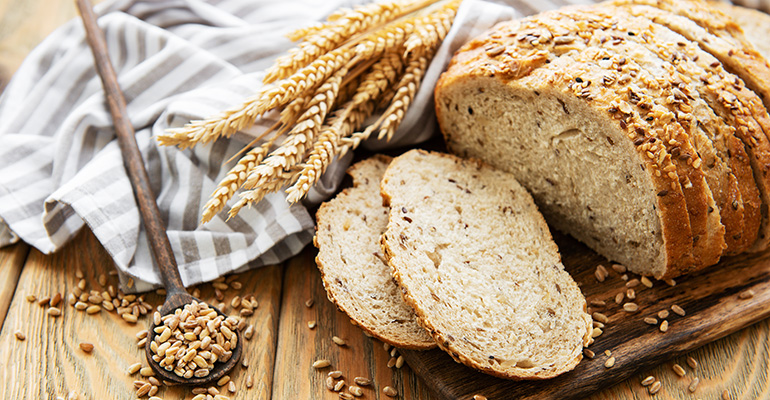
Manufacturers are using ingredients like peas, barley, and millet to highlight the high fibre content of their bread products.
Brands are responding to consumer health consciousness and concerns by launching products with reduced sugar content and rich fibre. South Korean baked goods brand Samlip Bread launched its 31 Sliced Bread variety, which, as the name suggests, contains 31 types of grains and seeds. Designed to form part of a new healthier-for-you bread range, the product is high in fibre and low in sugar.
Baked goods manufacturers are sharing their products’ fibre content with consumers in various ways. Japan-based Yamazaki Chohojun Loaf with Dietary Fibre has launched a bread product containing the recommended daily fibre nutrients. With 5.8g of dietary fibre per slice, the product contains soluble and insoluble fibres, providing a chewy texture.
Bread brands are also drawing attention to fibre-rich products using ingredients low in glycaemic index (GI) and high in fibre references. Chinese brand Slowgar Cheese Flavour Bread focuses on creating products that are low in GI and high in fibre for consumers worried about their blood sugar health.
Clear nutrition guidance is needed
While bread with a higher fibre content than traditional baked goods may be sought after, finding it on the shelves or online isn’t as easy. There’s a gap in demand for fibre-rich bread and the manufacturers actively formulating it, as well as uncertainty around how consumers can eat more fibre in their diet. Over a third (35%) of consumers in China say it’s hard to know if they consume sufficient dietary fibre in their daily diets.
New bread products with high or added fibre claims in Asia are still niche. Yet, with steady growth and ever-present consumer demand, there’s more attention on how brands can get across their products’ high-fibre content to consumers.
Front-of-pack messaging claims highlighting bread's high-fibre content remain limited. With consumers unclear about how bread products higher in fibre contribute to daily fibre intake, more on-pack information can help build consumer awareness and confidence.
Better-for-you and less sugar
Taste, ingredient and nutrition company Kerry undertook its Sensibly Sweet survey among more than 12,000 consumers in 24 countries, including Indonesia, Thailand, Malaysia and Vietnam. Kerry identified the ‘reduced sugar seeker’ as a primary consumer profile in Southeast Asia.
The vast majority (86%) of participants in Southeast Asia confirmed they had concerns about sugar overconsumption leading to diabetes. Over 70% of consumers said they wanted to lower their sugar intake to enjoy a quality of life and 62% are actively cutting the amount of sugar they eat to avoid potential health impacts.
Malaysia announced the arrival of its Sugar Reduction Advocacy Campaign in November 2023 to tackle excess sugar consumption.
Elsewhere in Asia, after delays, the Ministry of Health Singapore introduced its Nutri-grade labelling system to implement graded labelling to visually indicate a product’s sugar content. The move has encouraged producers to reformulate their products with less sugar, yet currently, the labelling system applies to sugar-sweetened beverages. With consumers in Asia wanting health-conscious launches, it prompts baked and bread brands to rethink how much sugar they put into their product developments.

Get more of our news on Google
Set Ingredients Network as a 'Preferred Source' to get quicker access to the news you value.
Related news

Do the US dietary guidelines put UPFs under pressure?
10 Sep 2026
Will the US dietary guidelines change the way Americans eat, swapping ultra-processed foods for whole foods? We asked Dr Barry Popkin, renowned nutrition and obesity researcher.
Read more
Skimpflation: An ‘unfair’ and risky approach to keeping prices low
2 Sep 2026
Consumers see skimpflation – reducing the quality of ingredients due to rising costs – as more unfair than shrinkflation, making it a risky strategy according to recent research.
Read more
‘Urgent gaps’ in achieving 2030 food system goals
27 Aug 2026
Global food systems are failing to meet 2030 targets across indicators including health, environment, and resilience, according to a report co-authored by the Food and Agriculture Organisation (FAO).
Read more
Seven-Eleven uses microbial testing tech to extend katsudon shelf life
26 Aug 2026
Japanese retail company Seven-Eleven has improved its factory’s microbial environment to keep comfort-food staple, katsudon, fresher for longer.
Read more
Chimac’s fusion sauces bring Korean flavours to Europe
25 Aug 2026
Irish sauce brand Chimac is tapping into Korea’s culinary traditions, bringing its flavours and products to European consumers who want a taste of K-food.
Read more
Global demand for instant noodles continues to rise
24 Aug 2026
Global demand for instant noodles reached 124.21 billion servings last year, representing a 0.7% year-on-year increase – or 900 million extra servings.
Read more
China beverages: Is herbal innovation the future?
20 Aug 2026
Herbal and botanical innovation in China's drinks market continues to grow, with ingredients like astragalus root, ginger, and ginseng in the spotlight – and focus shifting far beyond refreshment.
Read more
Popular barbecue staples experience sharp price increases
19 Aug 2026
The typical cost of US shoppers’ barbecue baskets has risen by 12% over the past year – the fastest annual rise in a decade, figures from The Economist show.
Read more
Hot NPD: Nissin launches first cold-water Cup Noodles
18 Aug 2026
Nissin is taking one of Japan’s most iconic instant meals in a completely new direction with the launch of the first cold water-only Cup Noodles in the brand’s 55-year history.
Read more
Manam Chocolate aims to bring premium Indian cacao to 'the world stage'
11 Aug 2026
Craft chocolate brand Manam Chocolate is investing in local expansion and supply chain innovation throughout India as it works to build out the premium reputation of its locally produced cacao products.
Read more