
Ingredients Categories
Finished Products
Finished Food Categories
- Bakery
- Beverages / Juices
- Cereal and grain products
- Confectionery
- Cooking Fats & Oils
- Dairy
- Egg products
- Fruits & Vegetables
- Infant & Baby food
- Meat, Poultry & Fish
- Nuts & Seeds products
- Other Finished Food Categories
- Pet Food
- Plant-based foods
- Prepared foods
- Sauces & Seasonings
- Sweet & Savoury Spreads
Specialised Finished Products
- Bee products
- Biotic products
- Dietary supplements
- Energy drinks
- Functional beverages
- Functional confectionery
- Functional food
- Functional powders
- Meal replacement products
- Nutricosmetics
- Other Specialised Finished Products
- Pet Dietary Supplements
- Pharma and OTC products
- Protein products
- Sugar replacers / Sweeteners
Health & Wellness Areas
Delivery Formats
Operations & Services
- 3D printing
- Analysis/ Testing
- Auditing & certifications
- Blending & mixing
- Bottling
- Certification
- Clinical trials
- Co-packing
- Coating
- Consulting
- Contract manufacturing
- Drying
- Electrospinning
- Encapsulating
- Enzymatic processing
- Extracting
- Extrusion
- Fat structuring
- Fermentation
- Filling
- Flavour development
- Freeze drying
- Granulating/ grinding/ milling / mixing
- High-pressure processing
- Labelling
- Other Operations & Services
- Packaging
- Packet filling
- Pasturising
- Quality assurance
- Saccharification
- Shear cell processing
- Spray drying
- Sterilisation
- Storage & Logistics
- Tabletting
- Toasting / roasting
- Ultra-high temperature processing
News
Has ‘clean’ had its day?
Lynda Searby, Freelance Journalist 22 Dec 2025Wielding clean-label positioning and fortification as marketing levers is a dangerous strategy, and brands would be better off explaining the hows and whys of the ingredients in their products, say experts.
The publication of the book E for Additives in 1984 started a consumer preoccupation with label-checking that continues into the present day, with so-called “clean eating” the current iteration of this trend.
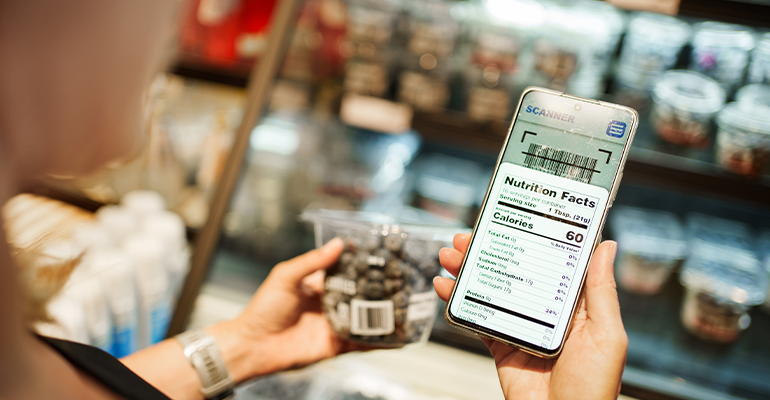
It sounds safe and wholesome, but there is growing disquiet about how this movement, based on unverified health advice, is driving consumer food choices and being exploited by marketeers.
In an article published by Forbes in July, psychologist Mark Travers put forward his case for why the clean eating trend “has to die”.
Meanwhile, at Fi Europe 2025, held in Paris in December, the consensus of a panel discussion about clean label and nutrient fortification was that the industry needs to move on.
‘Stop screaming about clean’
Addressing an audience in the Innovation Hub, Laura Shulman, founder of food marketing consultancy Future Food Strategies, said: “I would advocate that we stop screaming about clean label because it isn’t anything.
“I think it is up to marketeers to be more focused on the role that their particular product plays in culture and lifestyle, and if they are making changes, why they are better. Explain the meaning and purpose of innovation and fortification rather than just applying terminologies that do more harm than good.”
She even suggested that marketing these values is a turn-off for consumers, saying: “As a storyteller, once you start talking about attributes like ‘clean label’ and ‘fortified’, you have lost your audience – most people don’t really know what they mean, so when your brand becomes ‘clean’ or ‘fortified’, it has lost its story and why it exists, and has just become a list of attributes.”
No agreed definition of clean
Her argument touched on one of the biggest problems with the concept of clean label – that there is no agreed definition of “clean”.
Shulman said: “It’s kind of made up. There is no regulated version of it; it is subjective… What is clean to you may not be clean to me.”
Another flaw with clean labelling is that it does not necessarily mean a product is nutritionally better even though the halo of clean makes it seem like a better choice, she added.
“I think it is really important not to mistake clean for nutritionally sound – a lot of plant-based milks are clean but have no nutritional value, which is where I would argue for fortification,” she said.
However, fortification can also miss the mark if the product is an unsuitable candidate, Shulman warned.
“In the UPF space, protein fortification in particular comes into play as a marketing tool,” she said, emphasising that this is not a strategy she advocates.
“I think we risk consumer confusion and trust when we fortify something or use clean label terminology for the purposes of marketing. If we are doing it for the right reasons, with transparency and good rationale, it is an opportunity for consumers to learn and eat better,” she added.
A rigid ideology
Ruud van Burgsteden, founder of Mutrition, a consultancy that straddles both marketing and nutrition science, said he believes that clean label has become too rigid in the minds of consumers.
He told delegates: “From a consumer point of view, the shorter the ingredient list, and the simpler the names, the better it is. Only it isn’t. The challenge for industry is to bring clean label back from being a rigid ideology to a guiding principle.”
He suggested the industry reframes the concept as “cleaner label” to achieve this.
“It is a game of perception. I think as an industry we have to deal with how the consumer is looking at it and try to steer it in the right direction,” he said.
Steve Osborn, founder of innovation consultancy The Aurora Ceres Partnership, agreed that the overly simplistic rationale behind clean labelling rules is a difficulty.
“[The industry is] following these rules that have been set by consumers who don’t really understand the reasons why we use certain ingredients,” he said.
However, he is not convinced that using different terminology would bring about the desired shift in mindset.
“Whether we use the term ‘clean’, ‘clear’, or ‘cleaner’, we still have to have a rational audience,” he added.
Consumer perceptions of clean labels vs chemicals
To illustrate that consumers are far from rational when it comes to clean label, he referenced some of his past research that found there was a pushback about ingredients such as xylose and xantham gum, because the consumer’s perception is that if something has an ‘x’ or ‘y’ in it, it must be a chemical.
“If it has got an ‘x’ in it it can’t be good, regardless of why it is there,” he said, with more than a hint of irony.
Osborn expressed some serious concerns about allowing future product development to be shaped by this ideology.
“If we continue to follow this set ideology, we are at risk of making food poorer quality, less safe, more expensive, and less nutritious, as companies avoid including key ingredients because of how they sound rather than what they actually do,” he said.
“[The industry is] trying to make things better for society and if we have to avoid putting something in because of some set of arbitrary rules, I think that is a dangerous place to be.
“Maybe we should be retiring these terms and saying… it is an idealised movement that has no structure or definition, and we need to move on from it.”

Get more of our news on Google
Set Ingredients Network as a 'Preferred Source' to get quicker access to the news you value.
Related news

M&S launches own-brand pet food range
11 Sep 2026
UK retailer Marks & Spencer has launched its own-brand pet food line Paws & Pals – a well-timed and strategic move that will appeal to loyal shoppers, says a marketing expert.
Read more
Do the US dietary guidelines put UPFs under pressure?
10 Sep 2026
Will the US dietary guidelines change the way Americans eat, swapping ultra-processed foods for whole foods? We asked Dr Barry Popkin, renowned nutrition and obesity researcher.
Read more
Food fraud costs UK economy £2bn each year
9 Sep 2026
Food fraud is costing the UK economy up to £2 billion (€2.3 billion) every year although the food sector is more “resilient” than others, according to a recent study.
Read more
Health and wellness engagement matures across Middle East and Africa
4 Sep 2026
Many consumers in the Middle East and Africa are now proactively engaged in health and wellness, looking to integrate better habits and products into their daily lives, say experts.
Read more
Kellogg accelerates work to remove artificial colours from all US cereals
3 Sep 2026
WK Kellogg has announced an accelerated timeline to eliminate all artificial colours and the chemical preservative, BHT, across its full US portfolio of cereals and cereal packaging.
Read more
Skimpflation: An ‘unfair’ and risky approach to keeping prices low
2 Sep 2026
Consumers see skimpflation – reducing the quality of ingredients due to rising costs – as more unfair than shrinkflation, making it a risky strategy according to recent research.
Read more
Royal Canin launches ‘freshly-cooked’ therapeutic dog food
1 Sep 2026
Mars-owned Royal Canin has moved into the therapeutic diet sector with the launch of its Fresh Veterinary Diets range for dogs with health conditions. We asked a veterinary nutritionist for her opinion.
Read more
NielsenIQ’s EU barometer shows Britain leading in grocery inflation
31 Aug 2026
Britain was the only country to record grocery inflation above 2%, according to NielsenIQ data that compared Europe’s five biggest grocery markets from February to May 2026.
Read more
‘Urgent gaps’ in achieving 2030 food system goals
27 Aug 2026
Global food systems are failing to meet 2030 targets across indicators including health, environment, and resilience, according to a report co-authored by the Food and Agriculture Organisation (FAO).
Read more
Seven-Eleven uses microbial testing tech to extend katsudon shelf life
26 Aug 2026
Japanese retail company Seven-Eleven has improved its factory’s microbial environment to keep comfort-food staple, katsudon, fresher for longer.
Read more