
Ingredients Categories
Finished Products
Finished Food Categories
- Bakery
- Beverages / Juices
- Cereal and grain products
- Confectionery
- Cooking Fats & Oils
- Dairy
- Egg products
- Fruits & Vegetables
- Infant & Baby food
- Meat, Poultry & Fish
- Nuts & Seeds products
- Other Finished Food Categories
- Pet Food
- Plant-based foods
- Prepared foods
- Sauces & Seasonings
- Sweet & Savoury Spreads
Specialised Finished Products
- Bee products
- Biotic products
- Dietary supplements
- Energy drinks
- Functional beverages
- Functional confectionery
- Functional food
- Functional powders
- Meal replacement products
- Nutricosmetics
- Other Specialised Finished Products
- Pet Dietary Supplements
- Pharma and OTC products
- Protein products
- Sugar replacers / Sweeteners
Health & Wellness Areas
Delivery Formats
Operations & Services
- 3D printing
- Analysis/ Testing
- Auditing & certifications
- Blending & mixing
- Bottling
- Certification
- Clinical trials
- Co-packing
- Coating
- Consulting
- Contract manufacturing
- Drying
- Electrospinning
- Encapsulating
- Enzymatic processing
- Extracting
- Extrusion
- Fat structuring
- Fermentation
- Filling
- Flavour development
- Freeze drying
- Granulating/ grinding/ milling / mixing
- High-pressure processing
- Labelling
- Other Operations & Services
- Packaging
- Packet filling
- Pasturising
- Quality assurance
- Saccharification
- Shear cell processing
- Spray drying
- Sterilisation
- Storage & Logistics
- Tabletting
- Toasting / roasting
- Ultra-high temperature processing
News
Japanese-inspired umami products expand into global consumer markets
Natasha Spencer-Jolliffe, Freelance Journalist 17 May 2024Brands are responding to shoppers' interest in cooking ingredients with deep flavours, by launching new products that emphasise umami-rich flavours inspired by Japanese cuisine.
An umami substance in Japanese cooking is typically delicate and complex. Popular ingredients include soy sauce, miso paste, shiitake mushrooms, kombu, and katsuobushi.
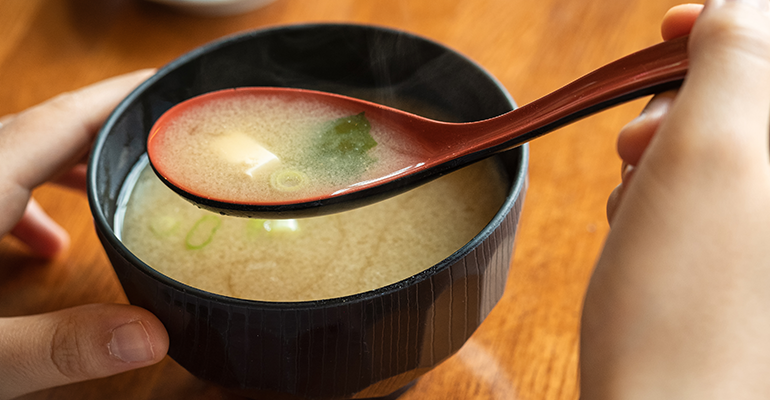
“We believe the recent popularity of umami can be attributed to the growing worldwide interest in Washoku [a traditional style of Japanese cooking], [which is] driven by growing health and environmental awareness,” a spokesperson from Japan’s Umami Information Center told Ingredients Network.
Washoku-led launches
Cooking ingredients and products focusing on umami-enhancement and Washoku are entering the market. Food producer Kokonoe Mirin unveiled its Mirin Okomedake for the first time in the UK via Japanese ingredient online retailer Wasabi Company. Mirin, made from sticky rice, rice shochu, and malted rice, is a common ingredient in cooking. The product is designed for “a refined natural sweetness and a deep umami” in robust dishes with strong-tasting meats and fish.
The online store Wasabi Company features’ umami boosters’ designed to add rich, savoury flavours to meat dishes, stir-fries, and soups. Kochia Scoparia Tonburi’s Field Caviar, suitable for vegan and vegetarian consumers, comprises 100% Kochia scoparia seeds. The edible seeds contain antioxidants, potassium, fibre, phosphorus, and folic acid.
Hinode’s Sakura Cherry Wood Smoked Rice Vinegar, a vegan and vegetarian product, is designed as a glaze, a marinade for fish or meat dishes, or an addition to salad dressings. Another vegan and vegetarian product offering geared towards enhancing umami flavours is Goto Soy Sauce Co’s Gyoza Sauce. It features kombu seaweed and vegetables such as leek, daikon radish, shiitake, and enoki mushrooms to boost the umami richness.
In March 2024, Japanese Otsuka Foods announced it was preparing to launch two new “Bon Curry Umami wo Ajiwau Curry Udon no Moto” (Bon Curry Umami-Rich Curry Udon Noodles Topping) products, the first from the Bon Curry brand to be made especially for use with curry udon noodles.
Dishes with dashi
While the cuisines of many countries worldwide consist mainly of fats and oils to make up the deliciousness characterised by umami substances, Washoku is composed primarily of dashi. Retaining its ability to enhance natural ingredient flavours to make them more palatable and satisfying, dashi is considered “less bland than soup stocks from other countries”, the spokesperson says.
“Dashi bouillon of Washoku specialises only in umami components such as glutamate, inosinate, and guanylate,” adds the Umami Information Center’s spokesperson.
Glutamate, found in a variety of foods, including meat, fish, and vegetables, is one of the most popular types of umami currently in this space. Dried mushroom products also contain high amounts of glutamate, the spokesperson adds. Inosinate is also appealing and is found in generous quantities in animal-based foods such as meat and fish.
Yutaka Foods Dashi-Tori Shokunin Premium Umami Dashi Stock is an example of a dashi-based product. The made-in-Japan soup stock contains seaweed salt and is shipped to US and UK customers via The Japan Centre store. Katsuo dashi stock from dried and smoked skipjack tuna makes 160-200 ml of dashi and is recommended for soups and stews.
Dashi is part of consumer product offerings ranging from broths and ramen noodle soup bases to pastes, including umami-enhancing products like Cooks’ Ingredients, Bart, and stock paste, to seasoning sauces like Yondu.
Global launches
Umami seasoning in other food cultures might include Worcestershire sauce, oyster sauce, tomato paste, malt vinegar, or fish sauce, often with lemon juice.
Designed to help consumers rediscover the pleasure of food after experiencing changes to taste and smell, UK health and wellbeing store Holland & Barrett launched its umami-centric product collection in January 2024. The range comprises sensation salt, miso honey, soy & honey umami paste, and white chocolate & miso raspberries.
Following the release of its fish ball laksa, which it hailed as a “world first”, and partnering with Ingredion to launch its fish cakes and fillets, Singaporean startup UMAMI Bioworks is teaming up with Shiok Meats to bring cultivated seafood to the Asian region in 2025. Starting with the release of its eel product, the duo strives to develop their combined cultivated eel, groupers, halibut, and cell-based crustacean offerings to reach consumers in line with regulatory timelines.
Current research drives B2C vegan launches
In 2023, University of Copenhagen researchers found umami was an important factor in consumers’ expectations of plant-based foods, stating: “For PB beef alternatives, the products in the category should have a more umami taste and beef-like taste and odour.”
The Good Food Institute’s new State Of The Industry report, published in April 2024, highlighted how the Dutch company Revyve introduced an egg white replacer made from upcycled spent brewer’s yeast. This replacer can be used as a binder in plant-based meats and adds an umami flavour.
Companies such as Belgium’s Bolder Foods and Finland’s BioMush are also working on developing umami flavours for consumers to access through new product developments (NPDs).
Researchers at Wageningen University and Research in the Netherlands are developing a fermentation method similar to tempeh production. This method has produced a prototype product with large concentrations of umami flavours associated with meat.

Get more of our news on Google
Set Ingredients Network as a 'Preferred Source' to get quicker access to the news you value.
Related news

Do the US dietary guidelines put UPFs under pressure?
10 Sep 2026
Will the US dietary guidelines change the way Americans eat, swapping ultra-processed foods for whole foods? We asked Dr Barry Popkin, renowned nutrition and obesity researcher.
Read more
Skimpflation: An ‘unfair’ and risky approach to keeping prices low
2 Sep 2026
Consumers see skimpflation – reducing the quality of ingredients due to rising costs – as more unfair than shrinkflation, making it a risky strategy according to recent research.
Read more
‘Urgent gaps’ in achieving 2030 food system goals
27 Aug 2026
Global food systems are failing to meet 2030 targets across indicators including health, environment, and resilience, according to a report co-authored by the Food and Agriculture Organisation (FAO).
Read more
Seven-Eleven uses microbial testing tech to extend katsudon shelf life
26 Aug 2026
Japanese retail company Seven-Eleven has improved its factory’s microbial environment to keep comfort-food staple, katsudon, fresher for longer.
Read more
Chimac’s fusion sauces bring Korean flavours to Europe
25 Aug 2026
Irish sauce brand Chimac is tapping into Korea’s culinary traditions, bringing its flavours and products to European consumers who want a taste of K-food.
Read more
Global demand for instant noodles continues to rise
24 Aug 2026
Global demand for instant noodles reached 124.21 billion servings last year, representing a 0.7% year-on-year increase – or 900 million extra servings.
Read more
China beverages: Is herbal innovation the future?
20 Aug 2026
Herbal and botanical innovation in China's drinks market continues to grow, with ingredients like astragalus root, ginger, and ginseng in the spotlight – and focus shifting far beyond refreshment.
Read more
Popular barbecue staples experience sharp price increases
19 Aug 2026
The typical cost of US shoppers’ barbecue baskets has risen by 12% over the past year – the fastest annual rise in a decade, figures from The Economist show.
Read more
Hot NPD: Nissin launches first cold-water Cup Noodles
18 Aug 2026
Nissin is taking one of Japan’s most iconic instant meals in a completely new direction with the launch of the first cold water-only Cup Noodles in the brand’s 55-year history.
Read more
Manam Chocolate aims to bring premium Indian cacao to 'the world stage'
11 Aug 2026
Craft chocolate brand Manam Chocolate is investing in local expansion and supply chain innovation throughout India as it works to build out the premium reputation of its locally produced cacao products.
Read more