
Ingredients Categories
Finished Products
Finished Food Categories
- Bakery
- Beverages / Juices
- Cereal and grain products
- Confectionery
- Cooking Fats & Oils
- Dairy
- Egg products
- Fruits & Vegetables
- Infant & Baby food
- Meat, Poultry & Fish
- Nuts & Seeds products
- Other Finished Food Categories
- Pet Food
- Plant-based foods
- Prepared foods
- Sauces & Seasonings
- Sweet & Savoury Spreads
Specialised Finished Products
- Bee products
- Biotic products
- Dietary supplements
- Energy drinks
- Functional beverages
- Functional confectionery
- Functional food
- Functional powders
- Meal replacement products
- Nutricosmetics
- Other Specialised Finished Products
- Pet Dietary Supplements
- Pharma and OTC products
- Protein products
- Sugar replacers / Sweeteners
Health & Wellness Areas
Delivery Formats
Operations & Services
- 3D printing
- Analysis/ Testing
- Auditing & certifications
- Blending & mixing
- Bottling
- Certification
- Clinical trials
- Co-packing
- Coating
- Consulting
- Contract manufacturing
- Drying
- Electrospinning
- Encapsulating
- Enzymatic processing
- Extracting
- Extrusion
- Fat structuring
- Fermentation
- Filling
- Flavour development
- Freeze drying
- Granulating/ grinding/ milling / mixing
- High-pressure processing
- Labelling
- Other Operations & Services
- Packaging
- Packet filling
- Pasturising
- Quality assurance
- Saccharification
- Shear cell processing
- Spray drying
- Sterilisation
- Storage & Logistics
- Tabletting
- Toasting / roasting
- Ultra-high temperature processing
News
PepsiCo’s prebiotic pivot: Innovative move, or identity crisis?
Tessa Wiles, Content Editor - Food 6 Aug 2025After acquiring Poppi in May, PepsiCo is betting on its own legacy brand and launching Pepsi prebiotic cola. But not everyone is leaning in, with some raising questions about authenticity.
In July, PepsiCo announced its latest launch, a prebiotic soda range under its legacy brand, Pepsi. In a press release, the company claimed that the product line, which comes in two flavours – original cola and cherry vanilla – is “the first significant innovation in the traditional cola category in 20 years”.
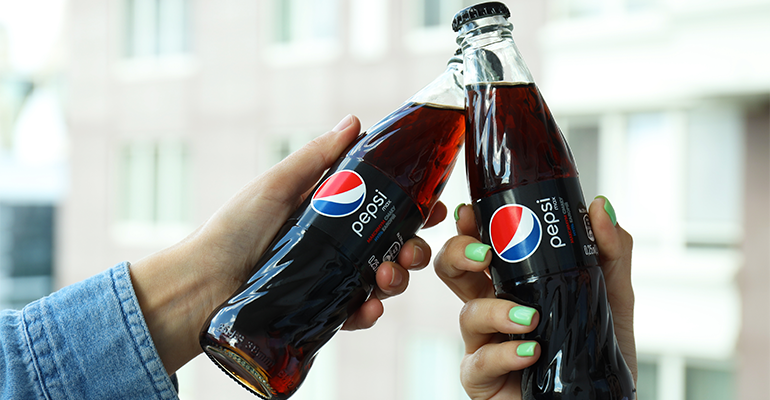
It says the functional soda “tastes like only Pepsi can” but has been reformulated to “meet the changing consumer preferences for more functional ingredients” – and, with 5 grams of cane sugar, 5 grams of prebiotic fibre, and 30 calories per 250ml can, Pepsi claims the product line “rounds out a full portfolio of cola choices for today's consumer”.
PepsiCo’s prebiotic cola: ‘Less like a brand-building move and more like a defensive one’
The launch comes just two months after PepsiCo acquired cult favourite prebiotic soda brand Poppi for almost $2 billion, raising questions over PepsiCo’s strategy.
Ingredients Network sat down with brand strategy expert Christy Lebor to get her take on the launch.
Lebor has worked for prominent brands such as PepsiCo and Kraft Heinz and now holds the position of partner and head of strategy group at SmashBrand, a data-driven brand development firm specialising in CPG brands for retail.
Asked what acquiring Poppi, only to launch a prebiotic Pepsi, says about the company’s strategy, Lebor said: “To me, it says they're hedging. Instead of betting on Poppi, they’re betting around it.”
In the press release, Ram Krishnan, CEO of PepsiCo Beverages US, said the launch “represents the next leap forward in giving consumers choice, optionality, and functional ingredients in their cola experience, without sacrificing the iconic Pepsi taste we're known for delivering”.
Lebor, however, said the launch “feels less like a brand-building move and more like a defensive one”, adding that the acquisition of Poppi gave PepsiCo a front-row seat to a fast-growing disruptor, “and now they’re using that intel to retrofit the Pepsi brand into the same space”.
Running the risk of ‘turning a movement into a line extension’
Poppi is known for its distinctive neon-coloured cans and gut health-first approach, whereas Pepsi’s prebiotic soda retains its legacy cola look.
By keeping this new soda line under the Pepsi label, Lebor believes the company “risks turning a movement into a line extension, and in doing so, they [PepsiCo] lose the credibility and cultural cachet Poppi worked so hard to earn”.
She added: “Poppi isn’t just a drink – it’s a brand people want to be seen with. It stands for something new, fresh, and culturally in tune.”
Can dual positioning work in the wellness aisle?
Lebor described the launch as a “classic big-co trap” -which, to her, refers to the reflex to force innovation through the legacy brand instead of letting the new brand lead.
“Big companies often struggle to pick a lane – they want to protect the core while also chasing the next big thing,” she said, adding that brands can’t play offense and defence at the same time.
“When you put Pepsi Prebiotic on the shelf next to Poppi, you’re not expanding the market – you’re confusing it,” Lebor added.
This confusion extends to consumers choices.
“When in doubt, [consumers] default to the brand they feel better about. Poppi has the emotional edge. Pepsi has the distribution muscle. But only one has built its brand authentically around this ‘modern soda’ without any artificial baggage to lug around or explain away,” she said.
Can legacy brands retrofit themselves into wellness trends?
Lebor said that if PepsiCo truly believes in prebiotic soda as the future, it already owns the frontrunner, Poppi. Her advice would be to double down on Poppi and give it wings.
“Don’t dilute the movement by dragging it backwards into a brand that was built in a different era, for a different consumer,” she said.
She noted that other big food and beverage brands have fallen victim to this same act of retrofitting, and that in many cases, these moves can do more harm than good.
“Wellness isn’t a flavour. It’s a belief system. And when legacy brands try to wear it like a costume, people notice,” she added.

Get more of our news on Google
Set Ingredients Network as a 'Preferred Source' to get quicker access to the news you value.
Related news

Do the US dietary guidelines put UPFs under pressure?
10 Sep 2026
Will the US dietary guidelines change the way Americans eat, swapping ultra-processed foods for whole foods? We asked Dr Barry Popkin, renowned nutrition and obesity researcher.
Read more
Food fraud costs UK economy £2bn each year
9 Sep 2026
Food fraud is costing the UK economy up to £2 billion (€2.3 billion) every year although the food sector is more “resilient” than others, according to a recent study.
Read more
Skimpflation: An ‘unfair’ and risky approach to keeping prices low
2 Sep 2026
Consumers see skimpflation – reducing the quality of ingredients due to rising costs – as more unfair than shrinkflation, making it a risky strategy according to recent research.
Read more
NielsenIQ’s EU barometer shows Britain leading in grocery inflation
31 Aug 2026
Britain was the only country to record grocery inflation above 2%, according to NielsenIQ data that compared Europe’s five biggest grocery markets from February to May 2026.
Read more
‘Urgent gaps’ in achieving 2030 food system goals
27 Aug 2026
Global food systems are failing to meet 2030 targets across indicators including health, environment, and resilience, according to a report co-authored by the Food and Agriculture Organisation (FAO).
Read more
China beverages: Is herbal innovation the future?
20 Aug 2026
Herbal and botanical innovation in China's drinks market continues to grow, with ingredients like astragalus root, ginger, and ginseng in the spotlight – and focus shifting far beyond refreshment.
Read more
Popular barbecue staples experience sharp price increases
19 Aug 2026
The typical cost of US shoppers’ barbecue baskets has risen by 12% over the past year – the fastest annual rise in a decade, figures from The Economist show.
Read more
Beyond 'nice to have': A spotlight on US functional beverages
12 Aug 2026
Functional beverage interest in the US is gaining important ground as consumers now expect function rather than see it as "nice to have", and there are clear market gaps for growth, according to Spate.
Read more
Manam Chocolate aims to bring premium Indian cacao to 'the world stage'
11 Aug 2026
Craft chocolate brand Manam Chocolate is investing in local expansion and supply chain innovation throughout India as it works to build out the premium reputation of its locally produced cacao products.
Read more
Digital twin technology gains ground in food manufacturing
6 Aug 2026
Food and beverage companies are increasingly turning to digital twins to optimise and automate manufacturing processes, but opportunities stretch far beyond this, say experts.
Read more