
Ingredients Categories
Finished Products
Finished Food Categories
- Bakery
- Beverages / Juices
- Cereal and grain products
- Confectionery
- Cooking Fats & Oils
- Dairy
- Egg products
- Fruits & Vegetables
- Infant & Baby food
- Meat, Poultry & Fish
- Nuts & Seeds products
- Other Finished Food Categories
- Pet Food
- Plant-based foods
- Prepared foods
- Sauces & Seasonings
- Sweet & Savoury Spreads
Specialised Finished Products
- Bee products
- Biotic products
- Dietary supplements
- Energy drinks
- Functional beverages
- Functional confectionery
- Functional food
- Functional powders
- Meal replacement products
- Nutricosmetics
- Other Specialised Finished Products
- Pet Dietary Supplements
- Pharma and OTC products
- Protein products
- Sugar replacers / Sweeteners
Health & Wellness Areas
Delivery Formats
Operations & Services
- 3D printing
- Analysis/ Testing
- Auditing & certifications
- Blending & mixing
- Bottling
- Certification
- Clinical trials
- Co-packing
- Coating
- Consulting
- Contract manufacturing
- Drying
- Electrospinning
- Encapsulating
- Enzymatic processing
- Extracting
- Extrusion
- Fat structuring
- Fermentation
- Filling
- Flavour development
- Freeze drying
- Granulating/ grinding/ milling / mixing
- High-pressure processing
- Labelling
- Other Operations & Services
- Packaging
- Packet filling
- Pasturising
- Quality assurance
- Saccharification
- Shear cell processing
- Spray drying
- Sterilisation
- Storage & Logistics
- Tabletting
- Toasting / roasting
- Ultra-high temperature processing
News
Superfood shots: Nigerian startup creates ginger-based drinks to boost health
2 Nov 2022
Nigerian startup, Futurefood Tech makes ginger-based shots to boost health and wellbeing using all natural ingredients, herbs and spices such as black pepper, beetroot, and cayenne pepper that give a nutritional boost to the typically starch-heavy Nigerian diet.
Futurefood Tech uses locally sourced ingredients found across Nigeria to formulate its products. Health and wellness as a concept is still “growing like a baby in the country” but the healthy drinks brand hopes to “disrupt the beverage space, says Joy Adewuyi, founder of Futurefood Tech.
The range comprises of three ginger-based shots for specific health outcomes: wellness (ginger and lemon), immunity (ginger, turmeric, pineapple and black pepper), and energy (ginger and beetroot).
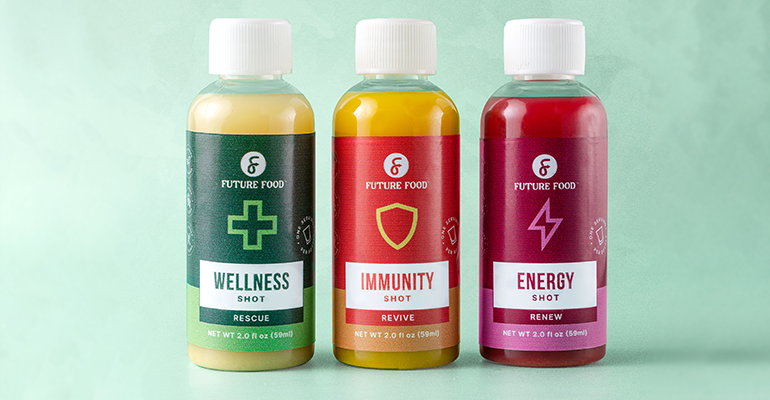
The idea for the brand’s health shots came from its first product, large food delivery boxes, which the company found was not as popular with customers.
“...we realised food boxes delivered to unwell customers were not receiving frequent return purchases and so we decided to come up with a product that would be a valuable addition [...] to help us retain customers, reduce the ambiguity of products, and improve the overall quality of our product offer,” says Joy Adewuyi.
To create the final formulations, the startup identified brands in the UK and US that were well established in processing natural ingredients. Production took place locally with the help of Nigerian food technologists and nutritionists.
Prized local ingredients
Ginger is a key ingredient in Futurefood Tech’s formulation since it is found abundantly in northern Nigeria and has beneficial properties,“..Kaduna State is where we have comparative advantage in the production of our ginger in Nigeria,” says Joy Adewuyi, founder of Futurefood Tech. The reason we infuse ginger as the base ingredient is that it contains a lot of antioxidants and people are beginning to understand, especially since Covid began, the [value] of such herbs, roots and spices to provide [healing] in the body.”
The health shots startup is based in Lagos which “is for business and not necessarily farming” and sources ingredients across the country.
“...we purchase some of our ingredients from Kaduna. The apples, pineapples, and beetroot that we use all come from Port Harcourt whilst ginger, turmeric, and other spices like cayenne and black pepper come from the north-west and north-central areas like Sokoto,” says Adewuyi.
Broad consumer base
Initially targeting seniors, the brand slowly widened its audience to consumers with busy lifestyles, “health enthusiasts” and even those experiencing specific “health challenges such as diabetes and other cardiovascular diseases”, says Adewuyi.
With investment the company hope to develop its line-up and create bigger bottles as well as canned drinks. However, for health-focused consumers, the current packaging format, which consists of a box of ten small shots, already appeals as part of a healthy diet on the go.
 Futurefood Tech Immunity Shot © Futurefood Tech
“You can put it in your fridge at home or you can take it to work or early in the morning. It is for the typical Nigerian who consumes meals that are mainly starch-based and [who] is always on the move, eating lots of carbs and unhealthy food,” adds Adewuyi.
Futurefood Tech hopes to continue to expand its customer segments with the health shots as it believes many Nigerian consumers need education around maintaining healthy diets. “We realise that a lot of people actually need this solution and not people who are necessarily trying to be healthier, but people who need nutrition advocacy,” says Adewuyi.
Beetroot: Popular with male consumers for natural energy
The beverage company’s “energy” shot made with ginger beetroot is popular with male consumers looking for a boost of energy. Drinking fresh beetroot juice has been linked to reducing the risk of cardiovascular diseases and used widely by athletes to replenish energy.
“We're currently trying to improve our ginger beetroot shots because we have a lot of male consumers interested in [it] and who use it to assist with stamina. We're also trying to improve it so it could be a specific product in our lineup for our male customer base,” says Adewuyi.
Taking on customer feedback is important to the startup, says Adewuyi. Going back to the lab to refine products and to “provide solutions for [the] local community” is all part of helping the average person make the choice between a healthy beverage and a not so healthy one, she says.

Get more of our news on Google
Set Ingredients Network as a 'Preferred Source' to get quicker access to the news you value.
Related news

Skimpflation: An ‘unfair’ and risky approach to keeping prices low
2 Sep 2026
Consumers see skimpflation – reducing the quality of ingredients due to rising costs – as more unfair than shrinkflation, making it a risky strategy according to recent research.
Read more
NielsenIQ’s EU barometer shows Britain leading in grocery inflation
31 Aug 2026
Britain was the only country to record grocery inflation above 2%, according to NielsenIQ data that compared Europe’s five biggest grocery markets from February to May 2026.
Read more
‘Urgent gaps’ in achieving 2030 food system goals
27 Aug 2026
Global food systems are failing to meet 2030 targets across indicators including health, environment, and resilience, according to a report co-authored by the Food and Agriculture Organisation (FAO).
Read more
China beverages: Is herbal innovation the future?
20 Aug 2026
Herbal and botanical innovation in China's drinks market continues to grow, with ingredients like astragalus root, ginger, and ginseng in the spotlight – and focus shifting far beyond refreshment.
Read more
Popular barbecue staples experience sharp price increases
19 Aug 2026
The typical cost of US shoppers’ barbecue baskets has risen by 12% over the past year – the fastest annual rise in a decade, figures from The Economist show.
Read more
Beyond 'nice to have': A spotlight on US functional beverages
12 Aug 2026
Functional beverage interest in the US is gaining important ground as consumers now expect function rather than see it as "nice to have", and there are clear market gaps for growth, according to Spate.
Read more
Manam Chocolate aims to bring premium Indian cacao to 'the world stage'
11 Aug 2026
Craft chocolate brand Manam Chocolate is investing in local expansion and supply chain innovation throughout India as it works to build out the premium reputation of its locally produced cacao products.
Read more
Digital twin technology gains ground in food manufacturing
6 Aug 2026
Food and beverage companies are increasingly turning to digital twins to optimise and automate manufacturing processes, but opportunities stretch far beyond this, say experts.
Read more
How Secon Taste is putting upcycled snacks on shelves
4 Aug 2026
Hungarian zero-waste startup Secon Taste is turning surplus food into upcycled snacks such as fibre-packed granola, instant porridge, and a circular coffee-tasting box.
Read more
Codex sets global thresholds for ‘may contain’ labels
3 Aug 2026
Codex Alimentarius has adopted its first global guidance on when to use “may contain” allergen warnings, setting thresholds intended to stop the label being used as blanket legal cover.
Read more