
Ingredients Categories
Finished Products
Finished Food Categories
- Bakery
- Beverages / Juices
- Cereal and grain products
- Confectionery
- Cooking Fats & Oils
- Dairy
- Egg products
- Fruits & Vegetables
- Infant & Baby food
- Meat, Poultry & Fish
- Nuts & Seeds products
- Other Finished Food Categories
- Pet Food
- Plant-based foods
- Prepared foods
- Sauces & Seasonings
- Sweet & Savoury Spreads
Specialised Finished Products
- Bee products
- Biotic products
- Dietary supplements
- Energy drinks
- Functional beverages
- Functional confectionery
- Functional food
- Functional powders
- Meal replacement products
- Nutricosmetics
- Other Specialised Finished Products
- Pet Dietary Supplements
- Pharma and OTC products
- Protein products
- Sugar replacers / Sweeteners
Health & Wellness Areas
Delivery Formats
Operations & Services
- 3D printing
- Analysis/ Testing
- Auditing & certifications
- Blending & mixing
- Bottling
- Certification
- Clinical trials
- Co-packing
- Coating
- Consulting
- Contract manufacturing
- Drying
- Electrospinning
- Encapsulating
- Enzymatic processing
- Extracting
- Extrusion
- Fat structuring
- Fermentation
- Filling
- Flavour development
- Freeze drying
- Granulating/ grinding/ milling / mixing
- High-pressure processing
- Labelling
- Other Operations & Services
- Packaging
- Packet filling
- Pasturising
- Quality assurance
- Saccharification
- Shear cell processing
- Spray drying
- Sterilisation
- Storage & Logistics
- Tabletting
- Toasting / roasting
- Ultra-high temperature processing
News
The future of UPF regulation: Stricter labelling, more taxation, and no more conflicts of interest?
Rik Moors 10 Feb 2025Policymakers are intensifying efforts to regulate ultra-processed foods (UPFs), as mounting evidence links their consumption to increased risks of obesity, cardiovascular disease, and other chronic health issues.
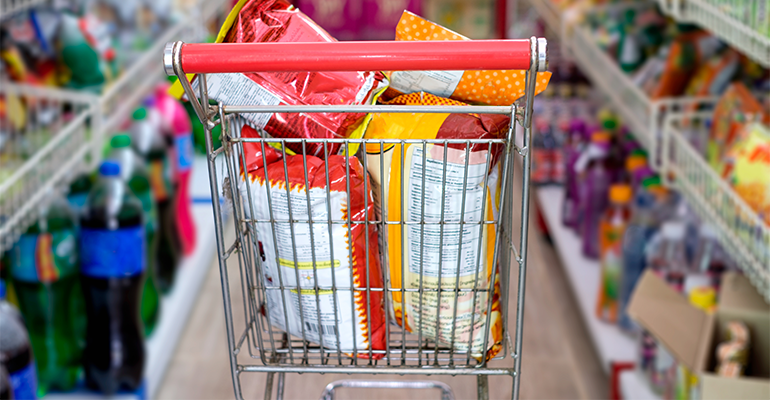
At an Imperial College London conference on UPF regulation, public health experts, policymakers, and academics from institutions such as the World Health Organization (WHO), Pan American Health Organization (PAHO), and the universities of Chile and Melbourne gathered to assess existing regulations and explore next steps in public policy.
Countries including Chile, Mexico, and Brazil have already adopted comprehensive policies targeting UPFs, while the United Nations and the WHO are working to formalise global strategies aimed at reducing consumption in the coming years.
Building on these policies, experts recommended included more precise definitions, expanded front-of-pack labelling systems, finding ways to tax UPFs, setting stricter school food standards, and enforcing comprehensive UPF marketing bans.
Ultra-processed foods: Establishing a universal definition
A persistent barrier in regulating UPFs has been the lack of a universally enforceable definition. The widely cited Nova classification, which categorises foods based on their degree of processing, has shaped public health discussions and research, but lacks specificity for regulatory enforcement.
Dr Francesco Branca, director at the department of nutrition for health and development at the WHO, explained his organisation’s ongoing attempts to arrive at a single clear objective operational definition of UPFs.
“[A clear definition is necessary] for both the dietary guidelines and communication to the general population, but particularly for policy and regulatory applications,” he said.
However, there are several different approaches to consider, including mechanisms of action, nutrient thresholds, energy density, and ingredient signatures. And when using a definition that includes specific ingredients associated with UPFs, the wide range of ingredients and naming conventions poses a challenge for a comprehensive global definition.
While the process of drawing up a final WHO definition could take up to two years, some countries already have working definitions that they apply to UPF policies. Ecuador is one example taking steps in this direction, becoming the first country in Latin America to legally define UPFs in 2019, relying primarily on specific ingredients.
Ultra-processed foods: Front-of-pack labelling
Several Latin American countries have implemented front-of-pack (FoP) labelling systems aimed at discouraging UPF consumption. Chile was the first country to introduce black octagonal warning labels highlighting excessive sugar, salt, and fat content.
Dr Camila Corvalan, from the University of Chile, described the significant impact of the policy.
“We have observed a very high compliance of over 95% of the products that should be carrying labels actually carrying the label in Chile,” she said. “About 50% of all packaged foods carry one kind of label... [This has resulted in] very important changes on the food environment, with some types of products disappearing from the market, some products changing their packaging to comply with the regulation.”
Mexico has further expanded its policy by including warnings for non-nutritive sweeteners and caffeine, alongside imposing additional restrictions on child-targeted marketing and the use of cartoon characters for foods and beverages.
Barbara Crowther, campaign manager for the Children's Food Campaign at Sustain, an organisation dedicated to advocating for better food practice and policies, proposed an amended Nutri-Score label that included a black frame and warning message for UPF products. According to Crowther, tests with the logo showed promise.
She said: “It was very efficient to be able to rank foods according to nutritional profile, but also to pick the ones that are UPF[s] without being blinded by the marketing of the product.”
UPF taxation
Fiscal measures targeting UPFs are slowly being introduced, but their scope varies across regions.
Dr Fabio Da Silva Gomes, from the PAHO, noted that Colombia implemented a tax on UPFs, based on both nutrient profiling and cosmetic additives, that covers approximately 95% of the country’s UPF market. Ecuador has taken a different approach by restricting tax deductions for companies marketing UPFs.
Baroness Joan Walmsley, who chairs the UK House of Lords’ inquiry on food, diet and obesity, said that her committee’s report also called for taxation.
“There should be a tax on salt and sugar in processed meals, and... the revenue from that should be used to subsidise healthier food, particularly focusing on infants and children and young people,” she added.
Banning UPFs from schools
School food policies targeting UPFs have seen varying degrees of success.
Brazil’s National School Feeding Programme (PNAE) requires that at least 75% of school meal procurement funds be allocated to minimally processed foods while capping UPF content at 20%.
In the UK, the universal infant free school meals policy, introduced in 2014, resulted in an 80% uptake of school meals and an approximately 7% reduction in UPF consumption among children aged four to seven years, according to Dr Eszter Vamos, from Imperial College London.
However, Vamos highlighted gaps in the UK’s policy enforcement, with UPFs still making up 61% of school meal energy content.
“School food policy is an urgent imperative in the UK when UPF consumption is one of the highest in the world,” she said. “Schools represent the unique opportunity to make substantial benefits to children's health.
“These benefits are the greatest in the most disadvantaged children’s nutrition, and school interventions could drive transformations towards healthy and sustainable diets towards minimally processed foods.”
Marketing restrictions
Professor Emma Boyland, of the University of Liverpool, highlighted the critical link between food marketing and UPFs, describing marketing as central to how large transnational corporations drive UPF consumption.
She pointed to extensive evidence showing a causal link between food marketing and poor dietary outcomes, particularly in children.
“There's a growing body of evidence to show that food marketing affects the eating behaviour of people, particularly children, and it has adverse effects on dietary outcomes and body weight,” she said.
She emphasised that mandatory policies have consistently been more effective than voluntary industry agreements, which have often failed to reduce marketing exposure, with self-regulation measures “in some cases were actually associated with poorer outcomes than no policy at all”.
Boyland argued that current nutrient-based marketing restrictions might not go far enough and suggested that UPFs should be integrated into future regulations. She also raised concerns about evolving tactics like brand-based and “alibi” marketing, where companies promote healthier versions while profiting from unhealthy products.
“The top brands are making around 90% of their sales from unhealthy products,” she noted, calling for policies that regulate entire brand portfolios rather than just individual products.
Limiting industry influence
An overarching concern discussed at the conference was the extensive influence of UPF corporations on public health policymaking, often undermining regulatory efforts through lobbying and strategic partnerships.
Several speakers emphasised the need for stricter policies to curb conflicts of interest, frequently citing parallels with the tobacco industry’s historical tactics of delaying regulation.
Dr Chris van Tulleken highlighted how corporate influence often infiltrates the regulatory environment, describing the UK’s Scientific Advisory Committee on Nutrition as being compromised by industry connections.
“A BMJ investigation revealed that 65% of the committee's members had conflicts of interest with companies such as Nestlé and Coca-Cola,” he said.
He further described how the British Nutrition Foundation, funded by major food corporations, regularly influences public health messaging while maintaining the appearance of neutrality.
Dr Phillip Baker, from the University of Sydney, explained how the profit-driven structure of UPF production facilitates this influence.
“Corporate social responsibility initiatives can outspend governments in almost every different sphere, especially when governments are structurally constrained and spend as little as they do on promoting good nutrition and public health,” he said.
In response to concerns over corporate influence on public health policymaking, mandatory public registries that would disclose industry funding of public health research and reveal policymaker affiliations with food corporations could expose financial relationships that risk compromising the integrity of regulatory decisions.
Several experts also called for a complete ban on industry involvement in the development of public health policies, drawing comparisons to regulatory frameworks used in tobacco control.
“Having a zero-tolerance approach to conflicts of interest seems like a no-brainer to me,” said van Tulleken.

Get more of our news on Google
Set Ingredients Network as a 'Preferred Source' to get quicker access to the news you value.
Related news

M&S launches own-brand pet food range
11 Sep 2026
UK retailer Marks & Spencer has launched its own-brand pet food line Paws & Pals – a well-timed and strategic move that will appeal to loyal shoppers, says a marketing expert.
Read more
Do the US dietary guidelines put UPFs under pressure?
10 Sep 2026
Will the US dietary guidelines change the way Americans eat, swapping ultra-processed foods for whole foods? We asked Dr Barry Popkin, renowned nutrition and obesity researcher.
Read more
Food fraud costs UK economy £2bn each year
9 Sep 2026
Food fraud is costing the UK economy up to £2 billion (€2.3 billion) every year although the food sector is more “resilient” than others, according to a recent study.
Read more
Kellogg accelerates work to remove artificial colours from all US cereals
3 Sep 2026
WK Kellogg has announced an accelerated timeline to eliminate all artificial colours and the chemical preservative, BHT, across its full US portfolio of cereals and cereal packaging.
Read more
‘Urgent gaps’ in achieving 2030 food system goals
27 Aug 2026
Global food systems are failing to meet 2030 targets across indicators including health, environment, and resilience, according to a report co-authored by the Food and Agriculture Organisation (FAO).
Read more
Chimac’s fusion sauces bring Korean flavours to Europe
25 Aug 2026
Irish sauce brand Chimac is tapping into Korea’s culinary traditions, bringing its flavours and products to European consumers who want a taste of K-food.
Read more
Savoury protein snacks shake up the on-the-go market
10 Aug 2026
Sweet flavours have dominated the high-protein snack category but savoury snacks, such as cheese bars and meat sticks, can appeal to health-conscious consumers.
Read more
Nestlé invests in regeneratively farmed wheat for KitKat
5 Aug 2026
Nestlé will pay a premium for Wildfarmed’s regeneratively farmed wheat but the CPG remains reticent to promote the move on packs of its KitKat bars.
Read more
How Secon Taste is putting upcycled snacks on shelves
4 Aug 2026
Hungarian zero-waste startup Secon Taste is turning surplus food into upcycled snacks such as fibre-packed granola, instant porridge, and a circular coffee-tasting box.
Read more
Codex sets global thresholds for ‘may contain’ labels
3 Aug 2026
Codex Alimentarius has adopted its first global guidance on when to use “may contain” allergen warnings, setting thresholds intended to stop the label being used as blanket legal cover.
Read more