
Ingredients Categories
Finished Products
Finished Food Categories
- Bakery
- Beverages / Juices
- Cereal and grain products
- Confectionery
- Cooking Fats & Oils
- Dairy
- Egg products
- Fruits & Vegetables
- Infant & Baby food
- Meat, Poultry & Fish
- Nuts & Seeds products
- Other Finished Food Categories
- Pet Food
- Plant-based foods
- Prepared foods
- Sauces & Seasonings
- Sweet & Savoury Spreads
Specialised Finished Products
- Bee products
- Biotic products
- Dietary supplements
- Energy drinks
- Functional beverages
- Functional confectionery
- Functional food
- Functional powders
- Meal replacement products
- Nutricosmetics
- Other Specialised Finished Products
- Pet Dietary Supplements
- Pharma and OTC products
- Protein products
- Sugar replacers / Sweeteners
Health & Wellness Areas
Delivery Formats
Operations & Services
- 3D printing
- Analysis/ Testing
- Auditing & certifications
- Blending & mixing
- Bottling
- Certification
- Clinical trials
- Co-packing
- Coating
- Consulting
- Contract manufacturing
- Drying
- Electrospinning
- Encapsulating
- Enzymatic processing
- Extracting
- Extrusion
- Fat structuring
- Fermentation
- Filling
- Flavour development
- Freeze drying
- Granulating/ grinding/ milling / mixing
- High-pressure processing
- Labelling
- Other Operations & Services
- Packaging
- Packet filling
- Pasturising
- Quality assurance
- Saccharification
- Shear cell processing
- Spray drying
- Sterilisation
- Storage & Logistics
- Tabletting
- Toasting / roasting
- Ultra-high temperature processing
News
Chile's food labelling laws produce healthy results
David Burrows, Freelance Journalist 23 Dec 2024Chile’s warning labelling and marketing rules for unhealthy foods led to “significant decreases” in purchases of food and drinks with high levels of sugar, salt and fat, according to a study published in the journal PLOS Medicine.
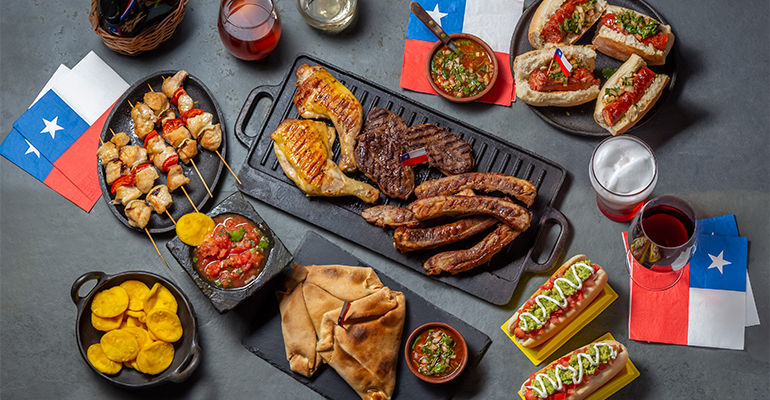
The Chilean Law of Food Labelling and Advertising, implemented in three phases in 2016, 2018 and 2019, mandated front-of-pack warning labels on food and beverages, restricted food marketing to children, and banned the sales of products ‘high-in’ nutrients of concern – like sugar and saturated fats – in schools.
Each phase brought increasingly strict nutrition thresholds, with a daytime marketing ban for unhealthy food ads on television, regardless of audience, coming into effect in phase 2 as well.
In the study, the academics from Chile and the US compared data on purchases from 2,844 households from 1 July 2013 to 25 June 2019 to a ‘counterfactual scenario’ (hypothetical food purchases if the policies were not in place).
After phase 2 they found purchases of foods high in nutrients of concern decreased: 36.8% in sugar; 23% in energy; 21.9% in sodium; and 15.7% in saturated fat. “The declines in ‘high in’ products purchased were partially offset by increased purchases from ‘not high-in’ products,” they wrote. “Still, the overall changes resulted in net declines in nutrients of concern purchase ranging from 8.3% to 20.2%.”
The effects were “more pronounced” in phase 2. Also of note was the fact that in phase 1 the reductions seemed to be driven by a large immediate drop in the concerning nutrients – perhaps due to reformulation – whereas in the second phase there were “larger changes over time, possibly representing behavioural shifts”.
Front-of-pack labels used by low socioeconomic groups
The academics also found that the results were “similar” across socioeconomic groups: focus groups showed that low-SES parents paid attention to, understood and used warning labels. However, one limitation was that the data used was up until mid-2019, after which there was Chilean social unrest, food supply chain volatility, global food price inflation and the covid-19 pandemic – all events which could have “blunted” the effect of the policies in low-SES households, according to the experts.
Further studies will be needed of whether front-of-pack labels are still working in a different price environment, said Chris Hilson, professor of environmental law at the University of Reading, UK. “That will presumably depend on whether the ‘not-high in’ foods have gone up in price more than the ‘high-in’ ones. If they have, then labels will clearly need to be mixed with other policy levers like nutrient taxes and subsidies.”
Indeed, the authors of the paper noted in their conclusion that "... marketing and labelling policies to disincentivise unhealthy food choices may have limited effect if not implemented alongside policies that increase affordability or availability of healthier food choices". In other words, regulation on labels and adverts will not be enough to improve people’s health.
They also highlighted that their data only included a portion of what Chilean households purchase – total dietary intake data would be needed to fully evaluate these policies. However, the results are promising, said nutritionists.
“Chile has a comprehensive package of children's health and nutrition policies which overall ladder up to improve food environments and protect children's health,” said Ali Morpeth, a registered nutritionist and consultant on sustainable food and diets, based in the UK. The restrictions of junk food in and around schools alongside front of pack labelling laws puts the country in a “leadership position”, she added.
Chile’s policy requiring mandatory warning labels on the front of ‘high-in’ foods has snowballed across South and North America with a number of countries having implemented or started the process of implementing similar policies. There is interest further afield too in standardised front-of-pack labelling, which is on the World Health Organization’s ‘best buys’ for combatting non-communicable diseases.
Industry’s high compliance with front-of-pack labelling laws
A separate study, published in the American Journal of Public Health, showed high compliance with the front-of-pack labelling laws in Chile from across the food industry. The law requires packaged food and drinks with added saturated fats, sugars or sodium and exceeding set limits to carry a mandatory warning label on the front with the words ‘high-in’ saturated fats, sugars, sodium or calories.
The government provided detailed guidance for industry to follow. For example, if a product displays any ‘high-in’ label, it cannot include health descriptors or any nutritional descriptors that are incompatible with the nutrient in question, explained Natalia Rebolledo, an assistant professor from the Institute of Nutrition and Food Technology (CIAPEC) at the University of Chile, who led the research (and who was also involved in the PLOS Medicine study).
The team, which also included academics from the University of North Carolina in the US and the Autonomous University of Barcelona in Spain, found 62.5% of packaged food and beverages displayed a front-of-pack label, with compliance reaching 93.6% for any ‘high-in’ regulated nutrients.
The experts said it is difficult to isolate the impact of the labels since they were implemented alongside other measures under the food labelling and advertising law. However, focus group discussions with parents indicated that they perceive products with more labels as less healthy than those with fewer labels, Rebolledo told Ingredients Network.
“Other governments can learn that the food industry can adapt to mandatory display of FoPLs when clear guidelines and effective monitoring systems are in place,” she added. “In Chile, the Ministry of Health played an important role in ensuring and sustaining high compliance.”
Mandatory labelling rules require effective monitoring … by supermarkets
Professor Hilson said that what “comes out clearly” from this study is the need for detailed guidance for industry so they know precisely what is required of them and how to comply”. That compliance in Chile’s case is the responsibility of retailers also appeared crucial. “That’s perhaps unexpected,” he explained. “Most would assume the responsibility for complying with front-of-pack labelling rules would be on manufacturers. But the study shows that supermarket supply chain power seems to work rather effectively.”

Get more of our news on Google
Set Ingredients Network as a 'Preferred Source' to get quicker access to the news you value.
Related news

Do the US dietary guidelines put UPFs under pressure?
10 Sep 2026
Will the US dietary guidelines change the way Americans eat, swapping ultra-processed foods for whole foods? We asked Dr Barry Popkin, renowned nutrition and obesity researcher.
Read more
Food fraud costs UK economy £2bn each year
9 Sep 2026
Food fraud is costing the UK economy up to £2 billion (€2.3 billion) every year although the food sector is more “resilient” than others, according to a recent study.
Read more
Kellogg accelerates work to remove artificial colours from all US cereals
3 Sep 2026
WK Kellogg has announced an accelerated timeline to eliminate all artificial colours and the chemical preservative, BHT, across its full US portfolio of cereals and cereal packaging.
Read more
Skimpflation: An ‘unfair’ and risky approach to keeping prices low
2 Sep 2026
Consumers see skimpflation – reducing the quality of ingredients due to rising costs – as more unfair than shrinkflation, making it a risky strategy according to recent research.
Read more
NielsenIQ’s EU barometer shows Britain leading in grocery inflation
31 Aug 2026
Britain was the only country to record grocery inflation above 2%, according to NielsenIQ data that compared Europe’s five biggest grocery markets from February to May 2026.
Read more
‘Urgent gaps’ in achieving 2030 food system goals
27 Aug 2026
Global food systems are failing to meet 2030 targets across indicators including health, environment, and resilience, according to a report co-authored by the Food and Agriculture Organisation (FAO).
Read more
Chimac’s fusion sauces bring Korean flavours to Europe
25 Aug 2026
Irish sauce brand Chimac is tapping into Korea’s culinary traditions, bringing its flavours and products to European consumers who want a taste of K-food.
Read more
Global demand for instant noodles continues to rise
24 Aug 2026
Global demand for instant noodles reached 124.21 billion servings last year, representing a 0.7% year-on-year increase – or 900 million extra servings.
Read more
Popular barbecue staples experience sharp price increases
19 Aug 2026
The typical cost of US shoppers’ barbecue baskets has risen by 12% over the past year – the fastest annual rise in a decade, figures from The Economist show.
Read more
Hot NPD: Nissin launches first cold-water Cup Noodles
18 Aug 2026
Nissin is taking one of Japan’s most iconic instant meals in a completely new direction with the launch of the first cold water-only Cup Noodles in the brand’s 55-year history.
Read more