
Ingredients Categories
Finished Products
Finished Food Categories
- Bakery
- Beverages / Juices
- Cereal and grain products
- Confectionery
- Cooking Fats & Oils
- Dairy
- Egg products
- Fruits & Vegetables
- Infant & Baby food
- Meat, Poultry & Fish
- Nuts & Seeds products
- Other Finished Food Categories
- Pet Food
- Plant-based foods
- Prepared foods
- Sauces & Seasonings
- Sweet & Savoury Spreads
Specialised Finished Products
- Bee products
- Biotic products
- Dietary supplements
- Energy drinks
- Functional beverages
- Functional confectionery
- Functional food
- Functional powders
- Meal replacement products
- Nutricosmetics
- Other Specialised Finished Products
- Pet Dietary Supplements
- Pharma and OTC products
- Protein products
- Sugar replacers / Sweeteners
Health & Wellness Areas
Delivery Formats
Operations & Services
- 3D printing
- Analysis/ Testing
- Auditing & certifications
- Blending & mixing
- Bottling
- Certification
- Clinical trials
- Co-packing
- Coating
- Consulting
- Contract manufacturing
- Drying
- Electrospinning
- Encapsulating
- Enzymatic processing
- Extracting
- Extrusion
- Fat structuring
- Fermentation
- Filling
- Flavour development
- Freeze drying
- Granulating/ grinding/ milling / mixing
- High-pressure processing
- Labelling
- Other Operations & Services
- Packaging
- Packet filling
- Pasturising
- Quality assurance
- Saccharification
- Shear cell processing
- Spray drying
- Sterilisation
- Storage & Logistics
- Tabletting
- Toasting / roasting
- Ultra-high temperature processing
News
The ultra-processed debate moves to pet food
Tessa Wiles, Content Editor - Food 11 Feb 2026Pet owners' interest in less processed products is growing, pointing to opportunities for brands to rethink formulations, Mintel says.
Pet owners are increasingly treating their pets like “fur babies” and, in turn, applying human health standards to pet nutrition, Kate Vlietstra, senior director of research and insight at Mintel, told an audience at Fi Europe 2025.

According to Mintel data, in Poland, two-thirds of pet owners surveyed “like to stay on top of diet trends” as a way to enhance their pets' lives, and in Germany, 36% agree that taking care of their pets' health is more important to them than the cost of doing so.
The effect of this, Vlietsra explained, is that consumers are both interested and concerned about what exactly goes into the food they feed their pets. “Around half of UK pet owners say they are worried about the processing levels in manufactured pet food because of health concerns,” she said.
The shift toward ‘simpler’ processed pet foods
Many consumers are turning away from purchasing ultra-processed food (UPF) products for their pets, which in turn has led many brands to distance themselves from the label, too.
Some brands are responding by employing “simpler” production methods and communicating this to pet owners, Vlietsra said, discussing the German pet food brand Josera as an example.
The brand claims to employ “gentle processing of selected raw ingredients” in many of its formulations. It says it uses minimal intervention techniques that avoid harsh heat, chemicals, or high pressure to retain nutrients, colour, and texture.
Another way brands are combating consumers' processing fears is through packaging and labelling.
Digging into global pet food launch data, Vlietsra discussed the surge in the use of the term “naturality” on packaging, as well as the five-point increase – from three percent to eight percent – in freeze-dried, cold-pressed, or air-dried products launched over the past five years.
Simpler processing techniques are still niche right now, “but that growth is indicative of a trend to come”, she said.
Unpacking the link between diet and pet lifespan
The number of studies exploring the link between UPF consumption and early death in humans has been mounting over the years. Meanwhile, genetic testing suggests humans and dogs share 84% of their DNA. Vlietstra said this finding has led many experts to believe that human longevity principles can be directly applied to pets.
“It stands to reason that many of those principles about longevity […] would also be relevant in the pet space,” she said, pointing to a 2023 study by the DogRisk research group at the University of Helsinki in Finland.
The study found that dogs consuming raw, non-processed meat-based diets had a lower risk of otitis (ear infection) later in life, compared with those given ultra-processed, carbohydrate-based diets.
However, not all research suggests that consuming UPFs is inherently bad and that no- or low-processing is good. For example, a December 2025 review published in the Animals journal concluded that processing intensity, taken alone, was not a reliable predictor of nutritional outcomes.
The researchers evaluated 102 comparisons between processing and ingredient digestibility and 137 comparisons between processing and nutrient density. They found significant variability: some processing methods enhanced bioavailability, improved protein digestibility, and reduced anti-nutrients.
Pet food transparency: Made clearer by the Processed App?
The current acceleration of AI has also opened the door for consumers to see how the products they’re feeding themselves and their pets are made.
Processed, an app that scans the barcode or ingredient list of any food product, claims to “fight back against ultra-processed foods”. After scanning, the app uses AI to analyse the ingredients in a given product and categorise it using the NOVA system.
Processed recently expanded its capabilities beyond human nutrition and launched a “paw mode” feature.
“This allows pet owners to also scan pet foods to understand more about the levels of processing in them,” Vlietstra said.

Get more of our news on Google
Set Ingredients Network as a 'Preferred Source' to get quicker access to the news you value.
Related news

M&S launches own-brand pet food range
11 Sep 2026
UK retailer Marks & Spencer has launched its own-brand pet food line Paws & Pals – a well-timed and strategic move that will appeal to loyal shoppers, says a marketing expert.
Read more
Do the US dietary guidelines put UPFs under pressure?
10 Sep 2026
Will the US dietary guidelines change the way Americans eat, swapping ultra-processed foods for whole foods? We asked Dr Barry Popkin, renowned nutrition and obesity researcher.
Read more
Food fraud costs UK economy £2bn each year
9 Sep 2026
Food fraud is costing the UK economy up to £2 billion (€2.3 billion) every year although the food sector is more “resilient” than others, according to a recent study.
Read more
Kellogg accelerates work to remove artificial colours from all US cereals
3 Sep 2026
WK Kellogg has announced an accelerated timeline to eliminate all artificial colours and the chemical preservative, BHT, across its full US portfolio of cereals and cereal packaging.
Read more
‘Urgent gaps’ in achieving 2030 food system goals
27 Aug 2026
Global food systems are failing to meet 2030 targets across indicators including health, environment, and resilience, according to a report co-authored by the Food and Agriculture Organisation (FAO).
Read more
Chimac’s fusion sauces bring Korean flavours to Europe
25 Aug 2026
Irish sauce brand Chimac is tapping into Korea’s culinary traditions, bringing its flavours and products to European consumers who want a taste of K-food.
Read more
Savoury protein snacks shake up the on-the-go market
10 Aug 2026
Sweet flavours have dominated the high-protein snack category but savoury snacks, such as cheese bars and meat sticks, can appeal to health-conscious consumers.
Read more
Nestlé invests in regeneratively farmed wheat for KitKat
5 Aug 2026
Nestlé will pay a premium for Wildfarmed’s regeneratively farmed wheat but the CPG remains reticent to promote the move on packs of its KitKat bars.
Read more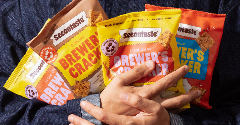
How Secon Taste is putting upcycled snacks on shelves
4 Aug 2026
Hungarian zero-waste startup Secon Taste is turning surplus food into upcycled snacks such as fibre-packed granola, instant porridge, and a circular coffee-tasting box.
Read more
Codex sets global thresholds for ‘may contain’ labels
3 Aug 2026
Codex Alimentarius has adopted its first global guidance on when to use “may contain” allergen warnings, setting thresholds intended to stop the label being used as blanket legal cover.
Read more