
Ingredients Categories
Finished Products
Finished Food Categories
- Bakery
- Beverages / Juices
- Cereal and grain products
- Confectionery
- Cooking Fats & Oils
- Dairy
- Egg products
- Fruits & Vegetables
- Infant & Baby food
- Meat, Poultry & Fish
- Nuts & Seeds products
- Other Finished Food Categories
- Pet Food
- Plant-based foods
- Prepared foods
- Sauces & Seasonings
- Sweet & Savoury Spreads
Specialised Finished Products
- Bee products
- Biotic products
- Dietary supplements
- Energy drinks
- Functional beverages
- Functional confectionery
- Functional food
- Functional powders
- Meal replacement products
- Nutricosmetics
- Other Specialised Finished Products
- Pet Dietary Supplements
- Pharma and OTC products
- Protein products
- Sugar replacers / Sweeteners
Health & Wellness Areas
Delivery Formats
Operations & Services
- 3D printing
- Analysis/ Testing
- Auditing & certifications
- Blending & mixing
- Bottling
- Certification
- Clinical trials
- Co-packing
- Coating
- Consulting
- Contract manufacturing
- Drying
- Electrospinning
- Encapsulating
- Enzymatic processing
- Extracting
- Extrusion
- Fat structuring
- Fermentation
- Filling
- Flavour development
- Freeze drying
- Granulating/ grinding/ milling / mixing
- High-pressure processing
- Labelling
- Other Operations & Services
- Packaging
- Packet filling
- Pasturising
- Quality assurance
- Saccharification
- Shear cell processing
- Spray drying
- Sterilisation
- Storage & Logistics
- Tabletting
- Toasting / roasting
- Ultra-high temperature processing
News
UK baby food brand unveils recyclable pouch in sector sustainability drive
16 Sep 2022
Baby food maker Little Freddie has launched a fully recyclable baby food pouch and is calling for other baby food manufacturers to follow by adopting more sustainable forms of packaging.
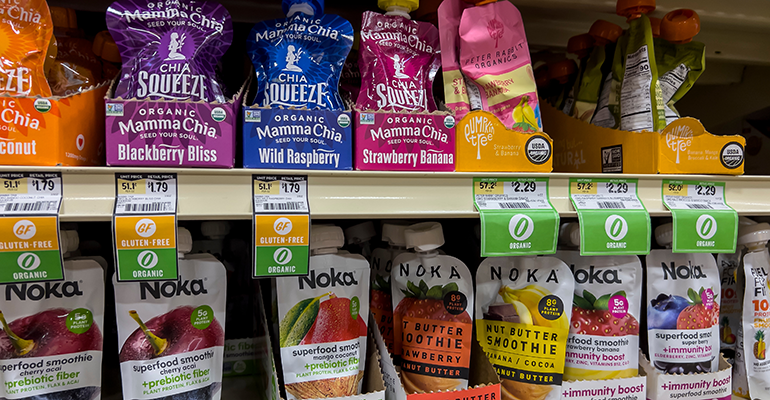
Made from a single layer of polypropylene, the pouch veers away from traditional multi-layered packaging that uses aluminium sandwiched between different plastic layers.
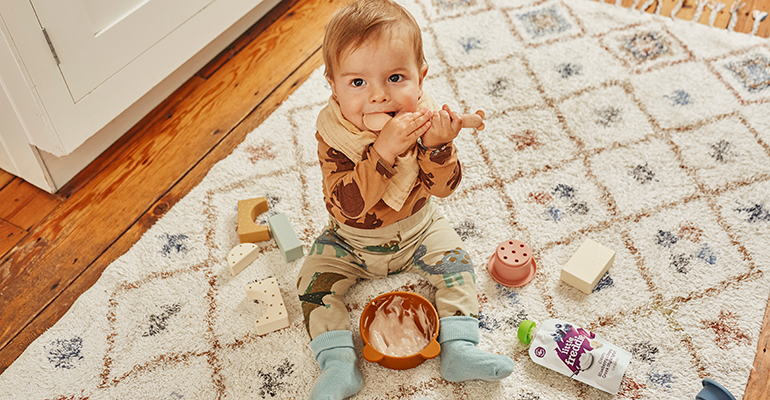
Whilst these flexible laminate pouches excel at keeping food safe and fresh, the packaging cannot be recycled by councils owing to insufficient resources, infrastructure, or technology to separate the multi-material layers.
“We hope to inspire other brands, not only in the baby food sector, but within the flexible packaging industry to join them in adopting recyclable pouches as well as quantifying their climate footprints,” says Little Freddie.
Alice Harlock, membership and services manager at On-Pack Recycling Label (OPRL) adds, “We’re thrilled to see Little Freddie launch the very first baby food pouch which has gone through stringent testing to achieve our Certified As Recyclable marque.
“As a result, it carries our ‘Recycle - Cap On’ label which makes recycling much easier for busy parents by adding these pouches to home recycling collections and preventing them from ending up in landfill.
“This innovation is a fine example of brands helping their customers to do the right thing by making recycling simple.”
Mono-material pouches are almost cost equivalent
Compared to its aluminium pouches, the mono-material pouches cost 1p (€0.01/$0.01) more so was not a prohibiting factor in the decision-making process, the company says.
Reckoned to be 20% lighter, the mono pouch is also said to save 0.1 kg of carbon dioxide equivalent (CO2e) per pouch, with the firm conducting product carbon footprint tests to compare the two forms of packaging.
“With the help of CarbonCloud, all of the greenhouse gases emitted during the ‘farm-to-shelf’ journey have been calculated and presented as a climate footprint,” Little Freddie explains.
The London-based firm thinks it could save over 350,000 pouches from landfill annually – the equivalent of 2.5 tonnes of plastic through this new packaging.
© AdobeStock/ColleenMichaels
No size or shape difference
Currently sold as part of a multipack, the new mono-material pouches do not impact the shelf-life of 12 months for both types of pouches. The firm adds that there is no difference in size or shape.
“The key difference between the two pouches is the green banner stating fully recyclable at the top of the pouch and the OPRL ‘recycle’ label on the back of these pouches,” says a spokesperson for the company.
“We are currently trialling mono-material for the rest of our pouch range. Next year we will be carrying out shelf-life validation tests therefore we should see mono-material pouches hit shelves towards the end of the year/into early 2024.”
The two flavours launching first are ‘Super Strawberries & Bananas’ and ‘Mighty Mango & Passionfruit.’
The pouches are already available in UK’s Sainsbury’s and Ocado. They are also available in a multipack, using FSC certified cardboard and are printed using eco-friendly vegetable-based inks.

Get more of our news on Google
Set Ingredients Network as a 'Preferred Source' to get quicker access to the news you value.
Related news

Kellogg accelerates work to remove artificial colours from all US cereals
3 Sep 2026
WK Kellogg has announced an accelerated timeline to eliminate all artificial colours and the chemical preservative, BHT, across its full US portfolio of cereals and cereal packaging.
Read more
‘Urgent gaps’ in achieving 2030 food system goals
27 Aug 2026
Global food systems are failing to meet 2030 targets across indicators including health, environment, and resilience, according to a report co-authored by the Food and Agriculture Organisation (FAO).
Read more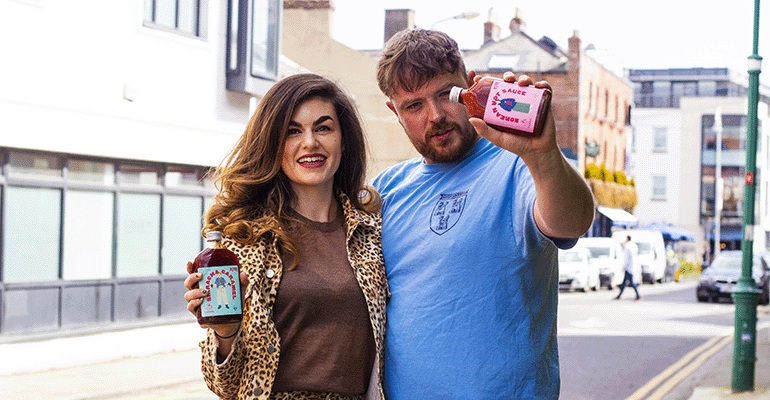
Chimac’s fusion sauces bring Korean flavours to Europe
25 Aug 2026
Irish sauce brand Chimac is tapping into Korea’s culinary traditions, bringing its flavours and products to European consumers who want a taste of K-food.
Read more
Savoury protein snacks shake up the on-the-go market
10 Aug 2026
Sweet flavours have dominated the high-protein snack category but savoury snacks, such as cheese bars and meat sticks, can appeal to health-conscious consumers.
Read more
Nestlé invests in regeneratively farmed wheat for KitKat
5 Aug 2026
Nestlé will pay a premium for Wildfarmed’s regeneratively farmed wheat but the CPG remains reticent to promote the move on packs of its KitKat bars.
Read more
How Secon Taste is putting upcycled snacks on shelves
4 Aug 2026
Hungarian zero-waste startup Secon Taste is turning surplus food into upcycled snacks such as fibre-packed granola, instant porridge, and a circular coffee-tasting box.
Read more
Codex sets global thresholds for ‘may contain’ labels
3 Aug 2026
Codex Alimentarius has adopted its first global guidance on when to use “may contain” allergen warnings, setting thresholds intended to stop the label being used as blanket legal cover.
Read more
EU sets maximum MOAH levels to protect human health
28 Jul 2026
The EU will adopt maximum levels for mineral oil aromatic hydrocarbons (MOAH) in food to protect human health. What do manufacturers need to know?
Read more
UK publishes guidance on SPS food trade agreement with EU
27 Jul 2026
The UK government has shared guidance on how food businesses can prepare for its upcoming Sanitary and Phytosanitary (SPS) agreement with the EU.
Read more
Industry hits back at UK’s proposed healthy food rules
24 Jul 2026
Food brands, including Haribo, have hit out against the UK’s proposed nutrient profiling model, which places a new focus on free sugars that are added during manufacturing.
Read more