
Ingredients Categories
Finished Products
Finished Food Categories
- Bakery
- Beverages / Juices
- Cereal and grain products
- Confectionery
- Cooking Fats & Oils
- Dairy
- Egg products
- Fruits & Vegetables
- Infant & Baby food
- Meat, Poultry & Fish
- Nuts & Seeds products
- Other Finished Food Categories
- Pet Food
- Plant-based foods
- Prepared foods
- Sauces & Seasonings
- Sweet & Savoury Spreads
Specialised Finished Products
- Bee products
- Biotic products
- Dietary supplements
- Energy drinks
- Functional beverages
- Functional confectionery
- Functional food
- Functional powders
- Meal replacement products
- Nutricosmetics
- Other Specialised Finished Products
- Pet Dietary Supplements
- Pharma and OTC products
- Protein products
- Sugar replacers / Sweeteners
Health & Wellness Areas
Delivery Formats
Operations & Services
- 3D printing
- Analysis/ Testing
- Auditing & certifications
- Blending & mixing
- Bottling
- Certification
- Clinical trials
- Co-packing
- Coating
- Consulting
- Contract manufacturing
- Drying
- Electrospinning
- Encapsulating
- Enzymatic processing
- Extracting
- Extrusion
- Fat structuring
- Fermentation
- Filling
- Flavour development
- Freeze drying
- Granulating/ grinding/ milling / mixing
- High-pressure processing
- Labelling
- Other Operations & Services
- Packaging
- Packet filling
- Pasturising
- Quality assurance
- Saccharification
- Shear cell processing
- Spray drying
- Sterilisation
- Storage & Logistics
- Tabletting
- Toasting / roasting
- Ultra-high temperature processing
News
Unilever reduces plastic in Pot Noodle packaging
Will Chu, Freelance Journalist 21 Aug 2023
Unilever is trialling new packaging for its Pot Noodle brand in the UK that is 90% paper and will reduce the use of virgin plastic, it says.
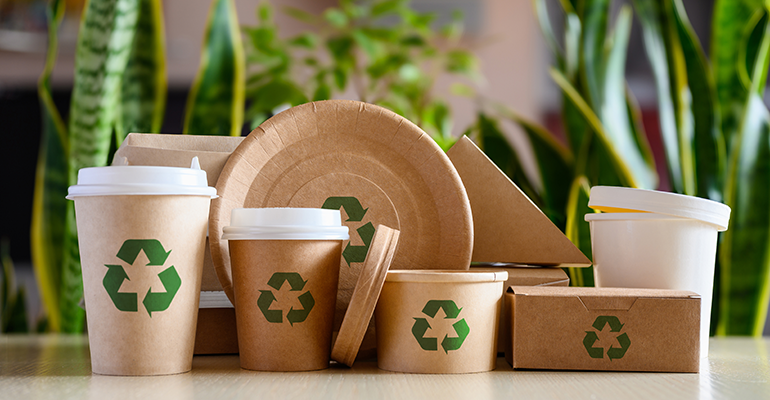
According to the food giant, the new recyclable pot, which is 90% paper, is made with Forest Stewardship Council (FSC)-certified paper and could remove 4,000 tonnes of virgin plastic each year.
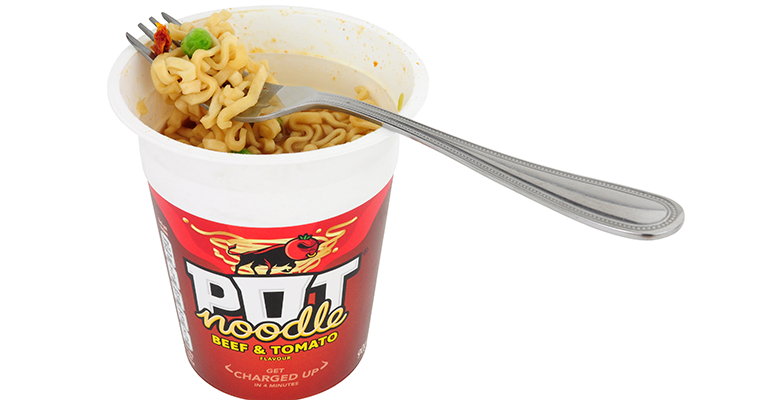
Launched exclusively in UK retailer Tesco last month, the trial begun with an initial stock of 500,000 of the brand’s most popular flavour, Chicken & Mushroom with a view to switch the full range to paper pots, if successful.
“From material development and testing through to new manufacturing processes and capabilities, big packaging innovations require the investment of time and expertise across many teams and partners,” said Andre Burger, General Manager Foods (Nutrition) at Unilever UK & Ireland.
The pros and cons of paper-based packaging
The issue of recycling and the switch to a more sustainable option brings with it a whole host of considerations, many of which the typical shopper is unaware of.
These include the infinite amounts of raw material required to produce the more sustainable option (paper in this case), the energy consumed, and by association, the issue around deforestation.
There are also issues around degree of recyclability, with accusations in the past of recyclable materials, such as paper bonded to non-recyclable materials that render the packaging only partially recyclable.
Unilever points out that with the new Pot Noodle packaging, a single layer of ultra-thin plastic film is used to provide barrier protection, which protects the paper when water is added but doesn’t inhibit the pot’s recyclability.
The new pots can be recycled at home with other cardboard and paper and include on-pack recycling labels to provide guidance to UK shoppers on how to dispose of the packaging.
 © AdobeStock/Zigmunds
Plastic-based packaging still has a role to play?
Naturally, news of this paper-based innovation was met with a mixed response on social media as critics were quick to point out the influence of the Plastic Packaging Tax, the material cost of innovation and development, and even the benefits of continuing to use the plastic that paper is replacing.
Equally relevant was a post highlighting the reasons behind the trial with Tesco if the infrastructure was in place and developing in the UK to recycle Polyprop post-consumer products.
The post goes on to point out that most council material recycling facilities (MRFs) are capable of producing either mixed plastic grades for onward journey to one of many developing PRFs.
Equally, these council sites are capable of producing segregated plastic fractions on site for sale as a recycled commodity.
 © AdobeStock/Nikita
UK retail riding the paper-based packaging wave
Nevertheless, the drive towards paper-based packaging appears to have struck a chord with consumers, who want to see a reduction in plastic usage with paper almost becoming the default option.
Along with Tesco, Sainsbury’s, recently introduced cardboard trays to its steak range, with claims the move would reduce over 10 million pieces of plastic annually.
Tesco appears to be somewhat of a testbed for food brands after rivals PepsiCo and Mars also announcing a trial of sustainable packaging options.
Mars’ limited run of Mars bars in paper packaging was rolled out in May, with PepsiCo joining the movement by elimination the outer bags from its Snack-a-Jacks multipacks.
Mars has already experimented with cardboard boxes for Walkers crisps multipacks and paper-based outer packaging for Walkers Baked multipacks.
Discussing the implications of the Plastic Packaging Tax
So, what next? The revised Plastic Packaging Tax (PPT) in the UK could have an increasingly larger say in the direction of choice of packaging material.
Briefly, the tax, introduced on 1 April 2022 aims to encourage the use of recycled plastic instead of new plastic within packaging.
 © AdobeStock/fotofuerst
PPT applies to plastic packaging manufactured in or imported into the UK which does not contain at least 30% recycled plastic by weight. The rate of tax increased from 1 April 2023 to €244.20 (£210.82) per tonne of plastic packaging.
Naturally, the tax has also come in for some fierce criticism as packaging firm Go Plastic Pallets’ managing director Jim Hardisty said, “I do believe HMRC started off with good intentions – by looking to drive down the use of single-use and limited-use plastics and packaging, such as plastic water bottles, food packaging, shrink wrap.”
“As more people asked questions due to a lack of clarity, it became apparent there was no logic or consistency around qualifying criteria. We were recently informed our virgin products would be subject to the tax – which is baffling.”
UK trade association, The British Plastics Federation (BPF), described the tax as “not an effective option for reducing plastic waste.”
“Recycled content should be maximised where it delivers the most benefit to the environment,” they added. “There needs to be exemptions when recycled content cannot be incorporated due to food safety or other regulations.”

Get more of our news on Google
Set Ingredients Network as a 'Preferred Source' to get quicker access to the news you value.
Related news

Do the US dietary guidelines put UPFs under pressure?
10 Sep 2026
Will the US dietary guidelines change the way Americans eat, swapping ultra-processed foods for whole foods? We asked Dr Barry Popkin, renowned nutrition and obesity researcher.
Read more
Food fraud costs UK economy £2bn each year
9 Sep 2026
Food fraud is costing the UK economy up to £2 billion (€2.3 billion) every year although the food sector is more “resilient” than others, according to a recent study.
Read more
Skimpflation: An ‘unfair’ and risky approach to keeping prices low
2 Sep 2026
Consumers see skimpflation – reducing the quality of ingredients due to rising costs – as more unfair than shrinkflation, making it a risky strategy according to recent research.
Read more
NielsenIQ’s EU barometer shows Britain leading in grocery inflation
31 Aug 2026
Britain was the only country to record grocery inflation above 2%, according to NielsenIQ data that compared Europe’s five biggest grocery markets from February to May 2026.
Read more
‘Urgent gaps’ in achieving 2030 food system goals
27 Aug 2026
Global food systems are failing to meet 2030 targets across indicators including health, environment, and resilience, according to a report co-authored by the Food and Agriculture Organisation (FAO).
Read more
China beverages: Is herbal innovation the future?
20 Aug 2026
Herbal and botanical innovation in China's drinks market continues to grow, with ingredients like astragalus root, ginger, and ginseng in the spotlight – and focus shifting far beyond refreshment.
Read more
Popular barbecue staples experience sharp price increases
19 Aug 2026
The typical cost of US shoppers’ barbecue baskets has risen by 12% over the past year – the fastest annual rise in a decade, figures from The Economist show.
Read more
Beyond 'nice to have': A spotlight on US functional beverages
12 Aug 2026
Functional beverage interest in the US is gaining important ground as consumers now expect function rather than see it as "nice to have", and there are clear market gaps for growth, according to Spate.
Read more
Manam Chocolate aims to bring premium Indian cacao to 'the world stage'
11 Aug 2026
Craft chocolate brand Manam Chocolate is investing in local expansion and supply chain innovation throughout India as it works to build out the premium reputation of its locally produced cacao products.
Read more
Digital twin technology gains ground in food manufacturing
6 Aug 2026
Food and beverage companies are increasingly turning to digital twins to optimise and automate manufacturing processes, but opportunities stretch far beyond this, say experts.
Read more