
Ingredients Categories
Finished Products
Finished Food Categories
- Bakery
- Beverages / Juices
- Cereal and grain products
- Confectionery
- Cooking Fats & Oils
- Dairy
- Egg products
- Fruits & Vegetables
- Infant & Baby food
- Meat, Poultry & Fish
- Nuts & Seeds products
- Other Finished Food Categories
- Pet Food
- Plant-based foods
- Prepared foods
- Sauces & Seasonings
- Sweet & Savoury Spreads
Specialised Finished Products
- Bee products
- Biotic products
- Dietary supplements
- Energy drinks
- Functional beverages
- Functional confectionery
- Functional food
- Functional powders
- Meal replacement products
- Nutricosmetics
- Other Specialised Finished Products
- Pet Dietary Supplements
- Pharma and OTC products
- Protein products
- Sugar replacers / Sweeteners
Health & Wellness Areas
Delivery Formats
Operations & Services
- 3D printing
- Analysis/ Testing
- Auditing & certifications
- Blending & mixing
- Bottling
- Certification
- Clinical trials
- Co-packing
- Coating
- Consulting
- Contract manufacturing
- Drying
- Electrospinning
- Encapsulating
- Enzymatic processing
- Extracting
- Extrusion
- Fat structuring
- Fermentation
- Filling
- Flavour development
- Freeze drying
- Granulating/ grinding/ milling / mixing
- High-pressure processing
- Labelling
- Other Operations & Services
- Packaging
- Packet filling
- Pasturising
- Quality assurance
- Saccharification
- Shear cell processing
- Spray drying
- Sterilisation
- Storage & Logistics
- Tabletting
- Toasting / roasting
- Ultra-high temperature processing
News
What do falling sales and disappointing profits mean for the plant-based category?
25 Jan 2023
Beyond Meat, Impossible Foods, and Oatly are restructuring amid falling sales and one plant-based brand, Tatooed Chef, is considering adding meat to a new range to boost profits. Is there light at the end of the tunnel for plant-based meat and dairy alternatives?
Following weak third-quarter results, Oatly’s shift to a “hybrid” manufacturing model and a reduced headcount, mirroring the actions of Beyond Meat, which a week prior cut 19% of its staff.
Meanwhile, San Franciso-based Impossible Foods laid off 6% of its workforce in October last year following the appointment of Peter McGuinness as CEO in April.
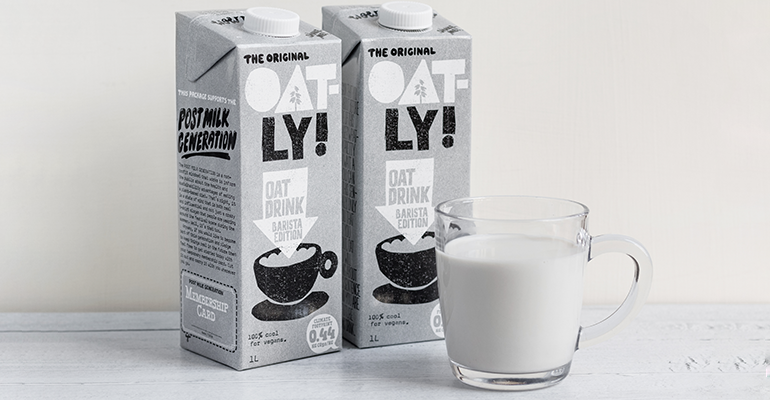
Discussing the firm’s plans, Toni Petersson, Oatly’s CEO, said it would involve striking deals with manufacturing partners to create a more hybrid production network across certain geographies.
Other actions include a focus on investing in its proprietary oat-based technology and capacity.
Petersson revealed that the firm was to carry out an overhead and headcount reduction impacting up to 25% of the costs in the EMEA region.
“By doing this, the company expects annual savings up to $25m (€23m) from the reorganisation, which will take effect starting in the first quarter 2023,” he said in a statement.
“The company has identified incremental opportunities in the rest of the organisation, from which it expects up to $25m (€23m) in additional annual savings in the first half of 2023.”
 © AdobeStock/MaddieRedPhotography
Increased competition in the plant-based food segment
The plant-based category seen increased competition in recent years but is also suffering the effects of high inflation and higher operating costs.
MorningStar Farms, a division of the Kellogg Company that produces vegan and vegetarian food, also reported a double-digit decline in revenue throughout most of 2022.
The snack and convenience food giant had announced in June it intended to spin off and potentially sell MorningStar Farms.
One plant-based brand considers adding meat to products
Other firms within this space include Tattooed Chef, a publicly traded food company once valued at $1.7bn (€1.6bn), which is now considering adding real meat to a new product line in order to boost profits.
Most plant-based meat companies have been struggling in the past year, especially when it comes to cash flow, said John Baumgartner, Mizhuo Group agribusiness senior analyst, cited in Forbes.
He explained that, as Tattooed Chef’s plant-based products had not been generating enough, it may make sense to temporarily pivot and wait for the market to regroup. However, this could risk alienating loyal customers.
“If it’s still not working and they have to come out with animal protein, it contradicts the core principles of these companies,” Baumgartner added. “Does it turn off part of the market because they’re not considered pure anymore or committed to the cause of plant-based? Maybe.”
Healthy sales for some plant-based brands
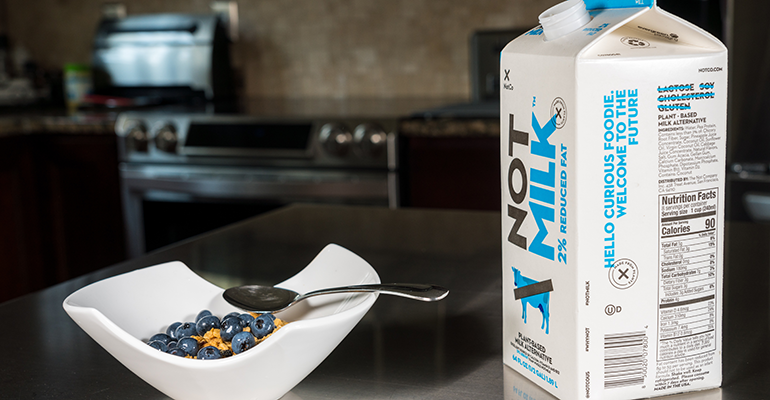
While sales of many alternative protein brands have been disappointing of late, others such as NotCo is reporting growth.
 © AdobeStock/steheap
Meanwhile McDonalds’ vegan burger, the McPlant, is posting healthy sales in Europe although demand has somewhat stalled in the US.
Reports of the category’s demise have been greatly exaggerated
A Boston Consulting Group report backs up the potential of the alternative protein space, highlighting an investment boost from $1 bn in 2019 to $5bn in 2021.
The group believes alternative proteins will command 11% of global retail sales of meat, eggs and dairy in 2035 — a rise from 2% currently.
“It’s still very early in the game,” said Po Bronson, managing director of investment firm IndieBio. “Alternative meats are poised for incredible improvements — better textures and flavours, whole-cut products and far more scalability.
“There are still tremendous economic gains and efficiencies to be had from growing this sector.”

Get more of our news on Google
Set Ingredients Network as a 'Preferred Source' to get quicker access to the news you value.
Related news

Skimpflation: An ‘unfair’ and risky approach to keeping prices low
2 Sep 2026
Consumers see skimpflation – reducing the quality of ingredients due to rising costs – as more unfair than shrinkflation, making it a risky strategy according to recent research.
Read more
NielsenIQ’s EU barometer shows Britain leading in grocery inflation
31 Aug 2026
Britain was the only country to record grocery inflation above 2%, according to NielsenIQ data that compared Europe’s five biggest grocery markets from February to May 2026.
Read more
‘Urgent gaps’ in achieving 2030 food system goals
27 Aug 2026
Global food systems are failing to meet 2030 targets across indicators including health, environment, and resilience, according to a report co-authored by the Food and Agriculture Organisation (FAO).
Read more
China beverages: Is herbal innovation the future?
20 Aug 2026
Herbal and botanical innovation in China's drinks market continues to grow, with ingredients like astragalus root, ginger, and ginseng in the spotlight – and focus shifting far beyond refreshment.
Read more
Popular barbecue staples experience sharp price increases
19 Aug 2026
The typical cost of US shoppers’ barbecue baskets has risen by 12% over the past year – the fastest annual rise in a decade, figures from The Economist show.
Read more
Beyond 'nice to have': A spotlight on US functional beverages
12 Aug 2026
Functional beverage interest in the US is gaining important ground as consumers now expect function rather than see it as "nice to have", and there are clear market gaps for growth, according to Spate.
Read more
Manam Chocolate aims to bring premium Indian cacao to 'the world stage'
11 Aug 2026
Craft chocolate brand Manam Chocolate is investing in local expansion and supply chain innovation throughout India as it works to build out the premium reputation of its locally produced cacao products.
Read more
Digital twin technology gains ground in food manufacturing
6 Aug 2026
Food and beverage companies are increasingly turning to digital twins to optimise and automate manufacturing processes, but opportunities stretch far beyond this, say experts.
Read more
How Secon Taste is putting upcycled snacks on shelves
4 Aug 2026
Hungarian zero-waste startup Secon Taste is turning surplus food into upcycled snacks such as fibre-packed granola, instant porridge, and a circular coffee-tasting box.
Read more
Codex sets global thresholds for ‘may contain’ labels
3 Aug 2026
Codex Alimentarius has adopted its first global guidance on when to use “may contain” allergen warnings, setting thresholds intended to stop the label being used as blanket legal cover.
Read more