
Ingredients Categories
Finished Products
Finished Food Categories
- Bakery
- Beverages / Juices
- Cereal and grain products
- Confectionery
- Cooking Fats & Oils
- Dairy
- Egg products
- Fruits & Vegetables
- Infant & Baby food
- Meat, Poultry & Fish
- Nuts & Seeds products
- Other Finished Food Categories
- Pet Food
- Plant-based foods
- Prepared foods
- Sauces & Seasonings
- Sweet & Savoury Spreads
Specialised Finished Products
- Bee products
- Biotic products
- Dietary supplements
- Energy drinks
- Functional beverages
- Functional confectionery
- Functional food
- Functional powders
- Meal replacement products
- Nutricosmetics
- Other Specialised Finished Products
- Pet Dietary Supplements
- Pharma and OTC products
- Protein products
- Sugar replacers / Sweeteners
Health & Wellness Areas
Delivery Formats
Operations & Services
- 3D printing
- Analysis/ Testing
- Auditing & certifications
- Blending & mixing
- Bottling
- Certification
- Clinical trials
- Co-packing
- Coating
- Consulting
- Contract manufacturing
- Drying
- Electrospinning
- Encapsulating
- Enzymatic processing
- Extracting
- Extrusion
- Fat structuring
- Fermentation
- Filling
- Flavour development
- Freeze drying
- Granulating/ grinding/ milling / mixing
- High-pressure processing
- Labelling
- Other Operations & Services
- Packaging
- Packet filling
- Pasturising
- Quality assurance
- Saccharification
- Shear cell processing
- Spray drying
- Sterilisation
- Storage & Logistics
- Tabletting
- Toasting / roasting
- Ultra-high temperature processing
News
Climate-friendly shopping tops led to more sustainable and healthier purchases
Tessa Wiles, Content Editor - Food 16 Sep 2026Shoppers offered climate-friendly grocery swaps in a simulated online store lowered their carbon footprint and purchased healthier foods.
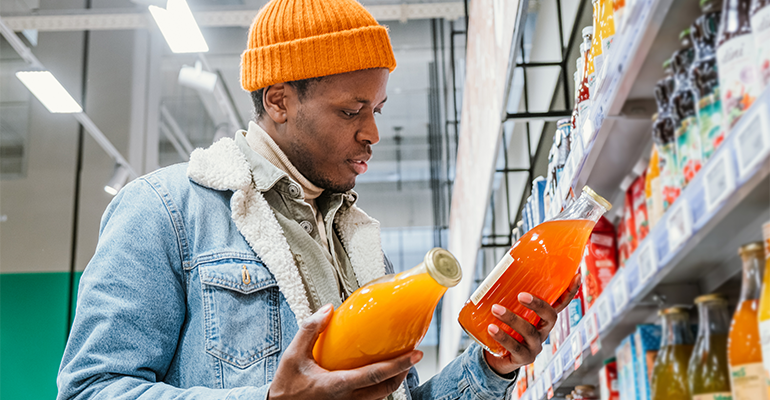
In a randomised trial, published in the PLOS Medicine journal, 1,201 US participants visited a simulated online grocery store designed to mirror the look and feel of a real store – it contained over 5,000 products and six departments.
At a glance:
- On average, shoppers accepted one in four swaps, and spent between $1.40 and $2.30 less per visit.
- Shoppers perceived lower-carbon products as more healthful but did not consider healthier products as lower-carbon.
- Swaps offered to shoppers were not price-matched, which leaves cost as an untested factor.
Participants were assigned to one of four groups – climate swaps; health swaps; climate and health swaps; and control. They visited the simulated store on three separate occasions, were given $50 per trip, and asked to shop as they usually would.
Every grocery item had a colour code – from A to F – aligned to the three conditions. When a participant chose an item with a code from C to F, they were offered a higher-rated alternative.
In all three conditions, shoppers made healthier choices compared to the control. Those in the health swap condition made the highest number of healthy swaps, while those in the climate and the climate + health swap condition were the only ones to reduce the carbon footprint of their baskets.
“Many consumers want to eat more healthfully and make choices that are better for the environment,” Anna Grummon, director of the Stanford Food Policy Lab and lead author of the study, told Ingredients Network.
“Our study shows that even small changes, such as swapping just a few products for similar alternatives, can add up to meaningful improvements in the overall healthfulness and environmental impact of our food purchases,” she added.
Climate-related messaging might encourage people to buy healthier foods
The healthiness of baskets was scored using the Ofcom Nutrient Profiling model – which was converted to a 1-100 scale, where a higher score is healthier.
In the climate swap condition, the healthiness of baskets improved by 2.4 points, and carbon footprints were cut by 3.3 kilograms CO2-eq per kg – which refers to the kilos of carbon dioxide equivalent emitted for every kilogram of a physical product produced.
The healthiness of baskets in the health swap condition improved by 4.7 points, while carbon footprints were cut by only 0.4 CO2-eq per kg, which the authors concluded was not a real difference.
Although the health swap group did not reduce the overall carbon footprint, the authors did note that “they reduced the carbon footprint of milk and dairy selections and sweets and snacks selections”.
Participants in the climate + health swap condition improved both the healthiness of baskets (4.0 points) and cut carbon footprints (2.8 CO2-eq per kg).
“The climate swaps also led participants to think more about health while shopping, while the health swaps did not increase thinking about climate impact,” the authors wrote.
They suggested that the results point to “asymmetric halo effects,” in which consumers perceive products with lower carbon impacts as more healthful, but do not consider a more healthful product to have a lower impact on the climate.
“Survey responses showed that the lower-climate-impact swap recommendations prompted participants to think more about health while they were shopping. This suggests that climate-related messaging might encourage people to buy healthier foods, even when health is not mentioned,” Grummon explained.
Retailers could tailor recommendations to consumers’ purchase history
Participants in the climate condition accepted around 25% of the swaps offered, while those in the health and the climate + health condition both accepted approximately 27%.
When asked if any strategies could lead to a higher number of swaps, Grummon said there may well be ways to encourage consumers to accept more swap recommendations.
“For example, retailers could try out different messages to accompany the swap recommendations or could try tailoring the recommendations based on a consumer’s purchase history,” she added.
Swaps were offered in around 20-30% of selections, given that these were choices that contained a C, D, or F grade.
“These results suggest that health and climate labels alone may have encouraged participants to select healthful or low-climate-impact items even before they were offered swaps,” the authors wrote. “However, because labels and swaps were always delivered together in our study, we cannot disentangle their independent effects.”
What are the key takeaways for consumers and retailers?
Total spending for all three groups was reduced, with baskets coming in between $1.40 and $2.30 less per trip.
The caveat is that the swaps offered to shoppers were not price-matched.
When asked whether shoppers would likely make the same decisions if the swaps offered cost more, Grummon said: “We know that consumers care about cost, especially given rising grocery prices.
“This suggests that consumers might be more likely to accept a swap recommendation if the suggested product is cheaper than the one they selected originally, but we did not test this in our study.”
As for the applicability of these results in the real world, Grummon had key takeaways for both consumers and retailers.
For consumers, Grummon highlighted how small changes, such as swapping a few products for those that are healthier or have a lower impact on the climate, can add up in the long run.
And for retailers looking to help their customers make healthier or more sustainable choices, she said that these types of swap recommendations may be a promising tool.

Get more of our news on Google
Set Ingredients Network as a 'Preferred Source' to get quicker access to the news you value.
Related news
Lidl says Britain 'significantly off track' with healthy and sustainable eating
15 Sep 2026
Discounter retailer Lidl has raised concerns about healthy and sustainable eating habits across Britain, spotlighting how affordability remains a barrier for consumers.
Read more
M&S launches own-brand pet food range
11 Sep 2026
UK retailer Marks & Spencer has launched its own-brand pet food line Paws & Pals – a well-timed and strategic move that will appeal to loyal shoppers, says a marketing expert.
Read more
Do the US dietary guidelines put UPFs under pressure?
10 Sep 2026
Will the US dietary guidelines change the way Americans eat, swapping ultra-processed foods for whole foods? We asked Dr Barry Popkin, renowned nutrition and obesity researcher.
Read more
Food fraud costs UK economy £2bn each year
9 Sep 2026
Food fraud is costing the UK economy up to £2 billion (€2.3 billion) every year although the food sector is more “resilient” than others, according to a recent study.
Read more
Kellogg accelerates work to remove artificial colours from all US cereals
3 Sep 2026
WK Kellogg has announced an accelerated timeline to eliminate all artificial colours and the chemical preservative, BHT, across its full US portfolio of cereals and cereal packaging.
Read more
‘Urgent gaps’ in achieving 2030 food system goals
27 Aug 2026
Global food systems are failing to meet 2030 targets across indicators including health, environment, and resilience, according to a report co-authored by the Food and Agriculture Organisation (FAO).
Read more
Chimac’s fusion sauces bring Korean flavours to Europe
25 Aug 2026
Irish sauce brand Chimac is tapping into Korea’s culinary traditions, bringing its flavours and products to European consumers who want a taste of K-food.
Read more
Savoury protein snacks shake up the on-the-go market
10 Aug 2026
Sweet flavours have dominated the high-protein snack category but savoury snacks, such as cheese bars and meat sticks, can appeal to health-conscious consumers.
Read more
Nestlé invests in regeneratively farmed wheat for KitKat
5 Aug 2026
Nestlé will pay a premium for Wildfarmed’s regeneratively farmed wheat but the CPG remains reticent to promote the move on packs of its KitKat bars.
Read more
How Secon Taste is putting upcycled snacks on shelves
4 Aug 2026
Hungarian zero-waste startup Secon Taste is turning surplus food into upcycled snacks such as fibre-packed granola, instant porridge, and a circular coffee-tasting box.
Read more