
Ingredients Categories
Finished Products
Finished Food Categories
- Bakery
- Beverages / Juices
- Cereal and grain products
- Confectionery
- Cooking Fats & Oils
- Dairy
- Egg products
- Fruits & Vegetables
- Infant & Baby food
- Meat, Poultry & Fish
- Nuts & Seeds products
- Other Finished Food Categories
- Pet Food
- Plant-based foods
- Prepared foods
- Sauces & Seasonings
- Sweet & Savoury Spreads
Specialised Finished Products
- Bee products
- Biotic products
- Dietary supplements
- Energy drinks
- Functional beverages
- Functional confectionery
- Functional food
- Functional powders
- Meal replacement products
- Nutricosmetics
- Other Specialised Finished Products
- Pet Dietary Supplements
- Pharma and OTC products
- Protein products
- Sugar replacers / Sweeteners
Health & Wellness Areas
Delivery Formats
Operations & Services
- 3D printing
- Analysis/ Testing
- Auditing & certifications
- Blending & mixing
- Bottling
- Certification
- Clinical trials
- Co-packing
- Coating
- Consulting
- Contract manufacturing
- Drying
- Electrospinning
- Encapsulating
- Enzymatic processing
- Extracting
- Extrusion
- Fat structuring
- Fermentation
- Filling
- Flavour development
- Freeze drying
- Granulating/ grinding/ milling / mixing
- High-pressure processing
- Labelling
- Other Operations & Services
- Packaging
- Packet filling
- Pasturising
- Quality assurance
- Saccharification
- Shear cell processing
- Spray drying
- Sterilisation
- Storage & Logistics
- Tabletting
- Toasting / roasting
- Ultra-high temperature processing
News
Nestlé invests in regeneratively farmed wheat for KitKat
David Burrows, Freelance Journalist 5 Aug 2026Nestlé will pay a premium for Wildfarmed’s regeneratively farmed wheat but the CPG remains reticent to promote the move on packs of its KitKat bars.
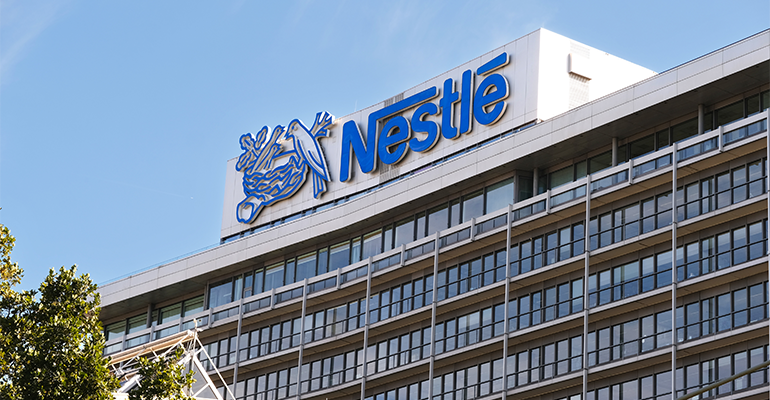
Nestlé is working with a community of British farmers to trial regeneratively farmed “environment-restoring” wheat in its KitKat chocolate bars.
At a glance:
- Nestlé is to use 51% regeneratively farmed wheat in its UK KitKat bars.
- The move shows broadening appeal of "regen ag" to major FMCGs as they look to improve supply chain resilience and lower emissions.
- New analysis shows many commitments still remain ‘hype’.
The new wheat for the wafer “won’t change the taste or snap”, the company said. However, “[i]t is more expensive, because farmers are rewarded for growing the crop in a more regenerative way”, a spokeswoman told Ingredients Network.
She added that the “ambition is to increase the proportion blend over time. Using 51% allows us to help support the transition, guarantee supply, quality and quantity, and test, learn, and scale responsibly.”
The move will not be promoted on packaging. Experts were divided in whether this made sense or was a missed opportunity.
“A lot of companies in the space are interested in regenerative agriculture because a giant like Nestlé goes there,” said Ivo Degn, founder of Re:source, a platform for all those in the regenerative agriculture supply chain.
Trials to use a proportion of the wheat in the wafer started last year in Nestlé’s York factory, and now it will be used in the 1.5 billion KitKat bars made in the city every year.
The wheat comes from Wildfarmed’s British farmers, who all follow a set of standards that are “in line with regenerative principles, such as reducing soil disturbance, growing cover crops, and increasing diversity to promote healthy soils”.
The Wildfarmed flour boasts fewer greenhouse gas emissions than conventional flour through, for example, reduced use of fertilisers and other synthetic inputs. Wildfarmed was approached for more details on the specifics of its standards.
The rules of regenerative farming
As more of the world’s largest agrifood companies make commitments about their use of regenerative ingredients – from wheat to meat – attention has turned to how the products are certified and marketed.
Organic ingredients are regulated by law but regenerative crops and livestock rely on voluntary standards and schemes.
Nestlé is among the 40 or so companies, including McCain Foods, Diageo, and Louis Dreyfus, involved in the Sustainable Agriculture Initiative (SAI) Platform’s work to produce a global framework for regenerative practices. The Regenerating Together Programme (RTP) provides a framework, practical guidance, and implementation support to “accelerate regenerative agriculture across global supply chains”.
Speaking at the RTP’s launch in June, Pascal Chapot, head of agriculture at Nestlé, said the approaches show “great potential to strengthen supply chain resilience against climate change while improving farmers’ livelihoods. [...] we need practical and credible frameworks that can be consistently applied across the value chain, from farmers and cooperatives, to suppliers, manufacturers and retailers,” he added.
Nestlé hopes to source 50% of its key ingredients from farmers adopting regenerative agriculture practices by 2030.
PepsiCo, Mars, and Danone’s regenerative agriculture commitments
In an update in July, PepsiCo said it has now expanded “regenerative, restorative, and protective practices” to 4.7 million acres globally; the target is to reach 10 million acres by 2030. Mars, meanwhile, has committed to “deliver more than 1 million acres of regenerative agriculture practices by 2030”.
Danone is involved with the RTP but currently continues to report against its own scorecard. An update, published in April as part of written questions submitted by shareholders, noted that in 2025 it had exceeded the 30% target set for the year: 42% of the volumes of key ingredients sourced directly came from producers engaged in a transition towards regenerative agriculture.
“For the 2026–2030 period, Danone intends to step up this momentum and aims for 45% of volumes of key at-risk ingredients to be sourced directly from farms engaged in regenerative practices by 2030,” the owner of Activia, Alpro, and Actimel added.
Corporate targets lack consistency
Danone, PepsiCo, and Nestlé were among the 78 publicly listed companies assessed by the $95 trillion investor network Fairr recently. The regenerative programmes of ADM, Barry Callebaut, Bunge, Charoen Pokphand Foods, Kraft Heinz, and Masan Group were also unpicked.
The research found just 4% of companies have set outcome-based targets despite 54% claiming they now measure regenerative agriculture outcomes. Quantified regenerative agriculture targets have fallen from 35% of assessed companies in 2023 to just 28% in 2026. This left investors “unable to properly assess the credibility of corporate programmes”.
María Montosa Ródenas, technical specialist for nature at the FAIRR Initiative, a global network of investors addressing material risks and opportunities in protein supply chains, said regenerative agriculture may be reaching a similar stage to the net-zero commitments of a few years ago.
“Early announcements and broad ambitions attracted attention, but investors are now demanding more transparency, interim milestones and evidence of real-world impact,” she told Ingredients Network. “Companies that cannot provide that level of detail may find it harder to convince investors that their regenerative agriculture strategies are contributing meaningfully to environmental goals or reducing business risk,” she added.

Get more of our news on Google
Set Ingredients Network as a 'Preferred Source' to get quicker access to the news you value.
Related news

Do the US dietary guidelines put UPFs under pressure?
10 Sep 2026
Will the US dietary guidelines change the way Americans eat, swapping ultra-processed foods for whole foods? We asked Dr Barry Popkin, renowned nutrition and obesity researcher.
Read more
Skimpflation: An ‘unfair’ and risky approach to keeping prices low
2 Sep 2026
Consumers see skimpflation – reducing the quality of ingredients due to rising costs – as more unfair than shrinkflation, making it a risky strategy according to recent research.
Read more
‘Urgent gaps’ in achieving 2030 food system goals
27 Aug 2026
Global food systems are failing to meet 2030 targets across indicators including health, environment, and resilience, according to a report co-authored by the Food and Agriculture Organisation (FAO).
Read more
Seven-Eleven uses microbial testing tech to extend katsudon shelf life
26 Aug 2026
Japanese retail company Seven-Eleven has improved its factory’s microbial environment to keep comfort-food staple, katsudon, fresher for longer.
Read more
Chimac’s fusion sauces bring Korean flavours to Europe
25 Aug 2026
Irish sauce brand Chimac is tapping into Korea’s culinary traditions, bringing its flavours and products to European consumers who want a taste of K-food.
Read more
Global demand for instant noodles continues to rise
24 Aug 2026
Global demand for instant noodles reached 124.21 billion servings last year, representing a 0.7% year-on-year increase – or 900 million extra servings.
Read more
China beverages: Is herbal innovation the future?
20 Aug 2026
Herbal and botanical innovation in China's drinks market continues to grow, with ingredients like astragalus root, ginger, and ginseng in the spotlight – and focus shifting far beyond refreshment.
Read more
Popular barbecue staples experience sharp price increases
19 Aug 2026
The typical cost of US shoppers’ barbecue baskets has risen by 12% over the past year – the fastest annual rise in a decade, figures from The Economist show.
Read more
Hot NPD: Nissin launches first cold-water Cup Noodles
18 Aug 2026
Nissin is taking one of Japan’s most iconic instant meals in a completely new direction with the launch of the first cold water-only Cup Noodles in the brand’s 55-year history.
Read more
Manam Chocolate aims to bring premium Indian cacao to 'the world stage'
11 Aug 2026
Craft chocolate brand Manam Chocolate is investing in local expansion and supply chain innovation throughout India as it works to build out the premium reputation of its locally produced cacao products.
Read more